-
Shop
- Advanced Technologies
- AI Career Advantage Collection
- AI Skills Mastery 2026 Collection
- Arts, Crafts & Hobbies
- Bathroom
- Best-Sellers
- Car Accessories
- Dating & Social Skills
- Denim
- 7FOR
- AGOLDE
- Antony Morato
- Armani Exchange
- Boss
- Brunello Cucinelli
- Calvin Klein Jeans
- Costume National
- Desigual
- Diesel
- Dolce & Gabbana
- Dsquared²
- Ermanno Scervino
- Fendi
- Gianni Lupo
- Guess Jeans
- Ichi
- Just Cavalli
- Lee
- Levi's
- Liu Jo
- Morgan De Toi
- Mother Denim
- Only
- Pepe Jeans
- Pinko
- Replay
- Valentino
- Vero Moda
- Digital Resources
- Education & Learning
- Family & Parenting
- Fashion
- Furniture
- Gadgets
- Health & Beauty
- Health & Wellness
- Home & Garden
- Kids & Babies
- Kitchen
- Lighting
- Patio, Lawn & Garden
- Personal Growth
- Pet Care
- Pet Supplies
- Pets
- Sport & Outdoors
- TikTok Growth & Monetization Mastery
- Travel
- Wealth
- Popular
- Best deals
Odor-Free Shoes Routine: Natural Freshness Checklist
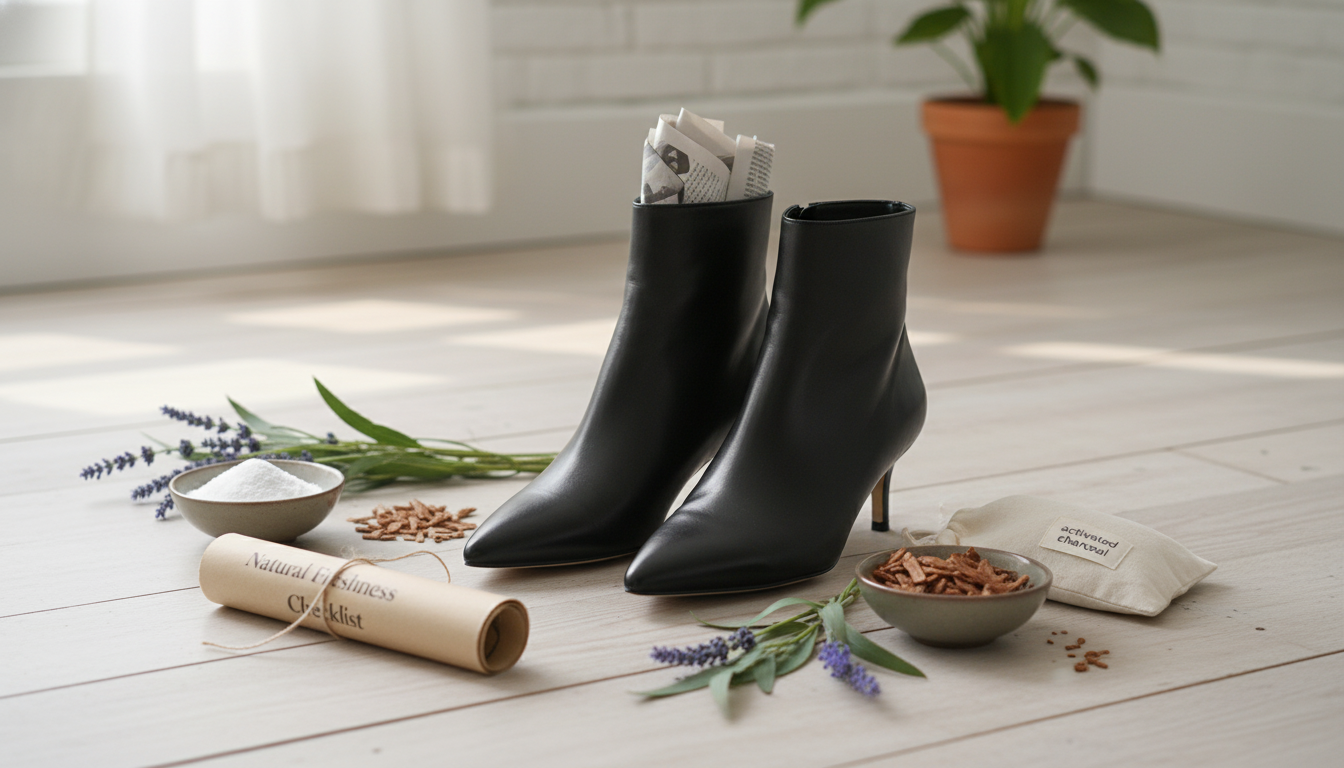
Odor-Free Shoes Checklist: Natural Steps for Fresh Shoes Every Day
Shoe odor builds when sweat, warmth, and trapped moisture feed bacteria. A simple routine—cleaning, drying, deodorizing, and prevention—keeps shoes fresh without harsh chemicals. Use the steps below as a repeatable system, then follow a quick checklist to stay consistent.
What Causes Shoe Odor (and Why It Keeps Coming Back)
Most shoe odor starts when bacteria break down sweat that soaks into insoles and inner linings. The stronger the moisture problem, the faster the smell returns.
- Bacteria + sweat: Warm, damp interiors are ideal for odor-causing microbes.
- Moisture is the main trigger: Damp shoes with limited airflow encourage rapid growth and stubborn smells.
- Materials matter: Many synthetics hold odor longer, while leather can be damaged if it’s over-wetted or dried with high heat.
- Not enough dry time: Re-wearing shoes before they fully dry is one of the biggest reasons odor “mysteriously” comes back.
- Feet and socks contribute: Sweaty feet, worn-out socks, and fungal issues can transfer odor back into shoes. For foot-odor basics, see guidance from the American Academy of Dermatology Association.
Fast Freshen-Up (10 Minutes or Less)
When you need a quick reset (after a workout, a rainy commute, or a hot day), focus on exposing the interior, removing moisture, and using a gentle absorbent.
- Remove insoles and laces: This opens up the areas that trap the most odor.
- Air out with intent: Loosen laces, pull the tongue forward, and set shoes in a well-ventilated spot.
- Wipe, then dry immediately: Use a lightly damp cloth with water and a drop of mild soap. Follow with a dry cloth so the lining doesn’t stay wet.
- Use baking soda smartly: Sprinkle a small amount into the shoe (or into a sock sachet) and leave for a few hours or overnight; shake out thoroughly.
- Travel hack: Stuff the toe box with paper towels or unprinted newspaper to pull moisture out while you’re on the go.
Deep Clean Without Damaging the Shoe
A deep clean works best when you treat each part separately and avoid soaking materials that don’t tolerate it. The goal is to remove residue and bacteria without warping the shoe.
- Start with removable parts: Wash laces by hand or on a gentle cycle in a mesh bag. If laces hold odor after washing, replacing them is an easy win.
- Clean insoles separately: Scrub gently with mild soap and warm water, rinse lightly, press-dry with a towel, and air dry completely before reinserting.
- Washable sneakers (only if allowed): If the brand permits, use a gentle cycle and skip high heat. Air drying protects glue and cushioning.
- Leather or suede: Avoid soaking. Use a barely damp cloth for the interior and a cleaner designed for the material on the exterior.
- Drying is non-negotiable: Odor control fails when shoes go back together while even slightly damp.
Natural Deodorizing Methods (Choose One, Then Rotate)
Deodorizing works best when shoes are already dry (or actively drying). Pick one method, then rotate as needed so you don’t overload shoes with powders or fragrances.
Drying and Storage Habits That Prevent Odor
If boots and cold-weather gear are part of your routine, a simple packing and drying plan helps prevent odor during winter activities, too. The Ready for Winter Ready for Anything – Winter Sport Gear Basics eBook pairs well with a shoe-rotation habit for snow days and long outings.
Printable Shoe Care Checklist (Daily, Weekly, Monthly)
For the quickest results, set a baseline with one deep clean, then maintain freshness with short, repeatable steps tied to real-life triggers (after workouts, after rain, and before putting shoes away). If odor comes with itching, peeling, or persistent foot issues, foot hygiene matters too; see prevention tips in the Mayo Clinic overview of athlete’s foot.
Shoe Odor Maintenance Checklist
| Timing | Action | Notes |
|---|---|---|
| After each wear | Remove insoles (if possible) and air out shoes | Open tongue and loosen laces for better airflow |
| After sweaty workouts | Wipe interior lightly; dry fully | Add baking soda or charcoal sachet overnight |
| Weekly | Wash or wipe insoles; clean laces as needed | Replace laces if they retain odor |
| Monthly | Deep clean appropriate to material | Check for cracks, trapped moisture, and worn linings |
| Seasonal | Replace insoles; refresh storage area | Discard shoes that stay damp or smell after repeated cleaning |
When Odor Means It’s Time to Replace Something
Keep It Simple with a Ready-to-Print Checklist
For an easy, reusable system, use the Odor-Free Shoes Checklist (printable) to track quick daily steps, weekly refreshes, and monthly deep cleaning—so shoes actually dry between wears and stay fresh longer.
FAQ
How long should baking soda stay in shoes to remove odor?
A few hours is often enough, and overnight works well for stronger smells. Shake or vacuum it out thoroughly afterward, and avoid leaving heavy amounts sitting on delicate materials for long periods.
Can shoes be deodorized without washing them?
Yes. Prioritize drying and airflow, remove insoles when possible, and use absorbents like baking soda or charcoal; a light interior wipe can help without doing a full wash.
Why do my shoes smell again right after cleaning?
Most often the shoes were worn again before they fully dried, or the insoles/linings still hold bacteria. It can also happen when socks or feet reintroduce odor quickly, so focus on dry time, insole cleaning, and sock upgrades.












Leave a comment