-
Shop
- Advanced Technologies
- AI Career Advantage Collection
- AI Skills Mastery 2026 Collection
- Arts, Crafts & Hobbies
- Bathroom
- Best-Sellers
- Car Accessories
- Dating & Social Skills
- Denim
- 7FOR
- AGOLDE
- Antony Morato
- Armani Exchange
- Boss
- Brunello Cucinelli
- Calvin Klein Jeans
- Costume National
- Desigual
- Diesel
- Dolce & Gabbana
- Dsquared²
- Ermanno Scervino
- Fendi
- Gianni Lupo
- Guess Jeans
- Ichi
- Just Cavalli
- Lee
- Levi's
- Liu Jo
- Morgan De Toi
- Mother Denim
- Only
- Pepe Jeans
- Pinko
- Replay
- Valentino
- Vero Moda
- Digital Resources
- Education & Learning
- Family & Parenting
- Fashion
- Furniture
- Gadgets
- Health & Beauty
- Health & Wellness
- Home & Garden
- Kids & Babies
- Kitchen
- Lighting
- Patio, Lawn & Garden
- Personal Growth
- Pet Care
- Pet Supplies
- Pets
- Sport & Outdoors
- TikTok Growth & Monetization Mastery
- Travel
- Wealth
- Popular
- Best deals
Curved Faux Slate LED Waterfall Fountain: Setup & Care
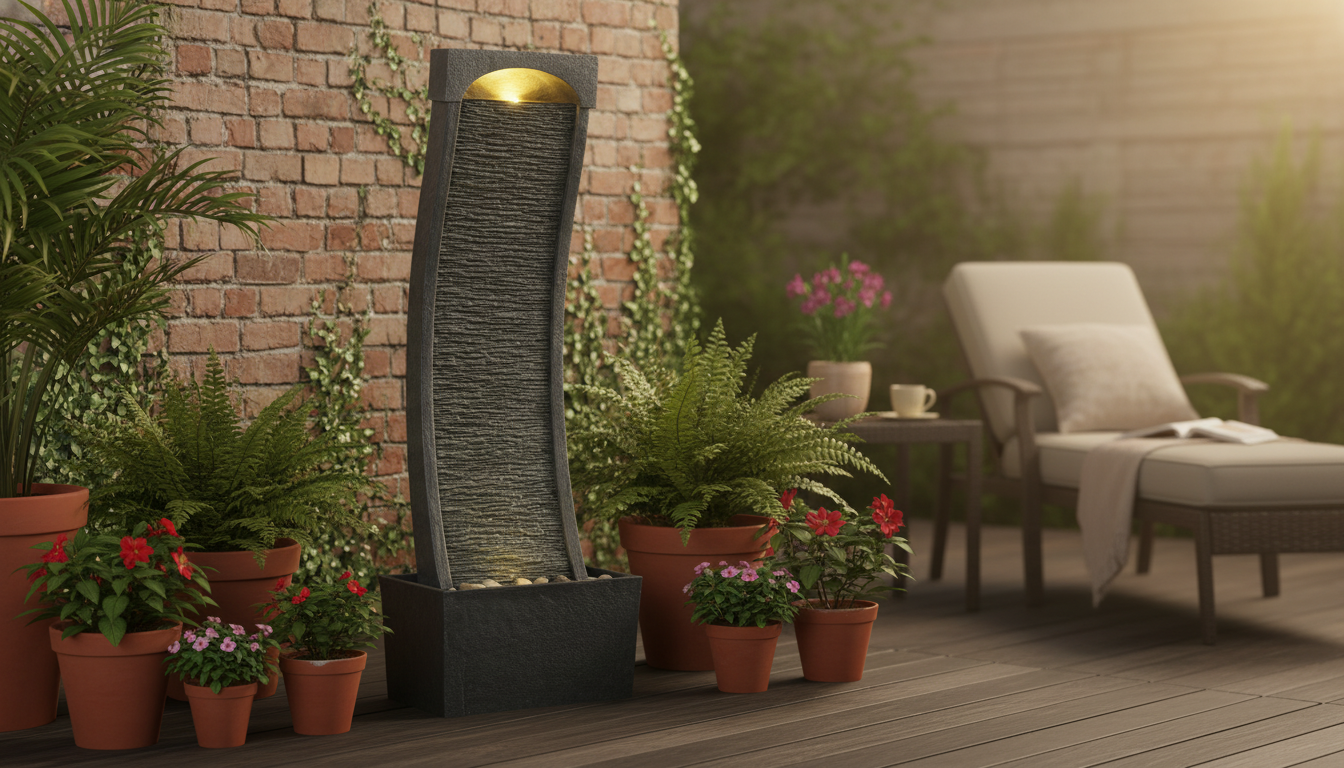
38.58″ Curved Faux Slate Waterfall Fountain with LED Lights for Indoor/Outdoor Use
A curved faux-slate waterfall fountain adds motion, sound, and low-glare lighting to a room, patio, or entryway. This style focuses on a vertical cascade over textured surfaces, creating a calming water flow while integrated LED lights highlight the falling water after dark. Below is a practical breakdown of what to expect, where it fits best, and how to keep it running smoothly across seasons.
What this fountain brings to a space
- Waterfall-style cascade designed to create a consistent, soothing water sound profile (the tone shifts with fill level and pump speed).
- Curved faux slate look that pairs well with modern, rustic, and natural décor without the weight or fragility of real stone.
- Integrated LED lighting to add evening ambience and improve visibility of the water flow.
- Suitable for flexible placement: living rooms, covered porches, sunrooms, patios, and garden nooks depending on exposure.
Curved faux slate design: look, texture, and fit
The curved face is more than a design detail—it helps the water read as a continuous sheet rather than splitting into thin, uneven strands. That “waterfall wall” effect is especially noticeable when the unit is level and the water is filled high enough to keep the pump flowing smoothly.
- Textured faux slate adds visual depth; LEDs and nearby lamps tend to catch on ridges and edges for a more dimensional glow.
- A vertical silhouette works best where the front is visible from seating or a main walkway, not tucked behind tall furniture or dense railings.
- Backdrops that complement faux slate: neutral walls, stone/brick accents, wood slats, or greenery that frames the cascade.
LED lighting: evening ambience without harsh glare
Integrated LEDs draw attention to the moving water, creating a softer focal point than overhead fixtures. To keep the lighting relaxing (not distracting), aim for an angle that highlights the texture without shining directly into your eyes.
- If LEDs feel bright at night, avoid placing the fountain directly at eye level from your favorite chair; offset it slightly to the side.
- Indoors, match nearby bulbs (warm vs. cool) so the fountain lighting feels intentional rather than mismatched.
- Outdoors, combine the fountain glow with path lights or string lights for layered, comfortable illumination.
Indoor placement ideas (sound, splash, and surfaces)
- Best rooms: entryway corners, a living room feature wall, a reading nook, or near indoor plants where humidity is a bonus.
- Set on a level surface; even small tilts can cause uneven water flow and increase splash.
- Use a protective mat or shallow tray under the base on hardwood, laminate, or delicate flooring to guard against minor drips during top-offs.
- Sound control: a higher water level typically softens the sound; a lower level tends to increase splash and volume.
Outdoor placement ideas (weather, stability, and visibility)
- Best locations: covered patios, porch corners, near seating walls, or along a garden path where the LED glow shows at dusk.
- Keep it stable: avoid soft soil that shifts after rain; use pavers or a compacted base so the unit stays level.
- Wind exposure can increase splash and evaporation; a sheltered spot reduces refilling frequency.
- If temperatures drop below freezing, plan seasonal storage or winterization to protect the pump and internal water paths from ice damage.
Indoor vs Outdoor Placement Checklist
| Consideration | Indoor | Outdoor |
|---|---|---|
| Surface | Level floor; add a waterproof mat if needed | Pavers or firm base; avoid shifting soil |
| Water loss | Low evaporation; occasional top-offs | Higher evaporation/wind splash; more frequent top-offs |
| Sound | Adjust by water level to suit quiet rooms | Ambient outdoor noise may allow a livelier splash |
| Electrical | Keep cords away from walkways; use GFCI where required | Use outdoor-rated GFCI outlets and weather-protected connections |
| Seasonal care | Year-round use with routine cleaning | Winterize or store if freezing conditions occur |
Setup and day-to-day care
A fountain runs best when it’s level, clean, and consistently topped off. Most long-term issues (extra noise, weaker flow, inconsistent sheeting) trace back to low water or a pump intake that needs a quick rinse.
- Initial setup: place the fountain, fill to the recommended level, and confirm the pump is fully submerged before powering on.
- Top off routinely so the pump never runs dry; low water is the most common cause of noise changes and premature wear.
- Cleaning cadence: wipe surfaces and rinse as needed to prevent mineral buildup; frequency depends on water hardness and outdoor debris.
- Distilled water (when practical) helps reduce scale; outdoors, a fountain cover can limit leaves and dust between cleanings.
Safety and efficiency basics
For additional electrical safety guidance, review outdoor and household recommendations from the Electrical Safety Foundation International (ESFI) and the U.S. Consumer Product Safety Commission (CPSC).
Styling ideas for a finished look
Shop in-stock picks
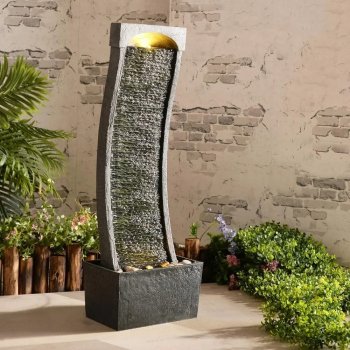
- 38.58″ Curved Faux Slate Waterfall Fountain with LED Lights for Indoor/Outdoor Use
- Ready for Winter Ready for Anything – Winter Sport Gear Basics eBook, Complete Cold Weather Gear Guide, Layering & Equipment Checklist for Winter Sports
- Cozy Cuddly Cowboy Bear Plush Toy – Soft Hugging Companion
FAQ
Can this fountain be used outdoors year-round?
Yes, it can be used outdoors in suitable conditions, but freezing temperatures require draining, drying, and storing or winterizing to protect the pump and prevent ice damage.
How often does the water need to be refilled?
Refill frequency depends on evaporation, wind, splash, and heat. Outdoor placements usually need more frequent top-offs than indoor settings, especially during hot or breezy weather.
Why is the pump getting louder over time?
Common causes include low water level, debris in the pump intake, mineral buildup, or the fountain becoming slightly unlevel. Topping off, cleaning the pump, and re-leveling the unit typically resolves the issue.
Recommended for you

Odor-Free Shoes Routine: Natural Freshness Checklist
May 21, 2026










Leave a comment