-
Shop
- Advanced Technologies
- AI Career Advantage Collection
- AI Skills Mastery 2026 Collection
- Arts, Crafts & Hobbies
- Bathroom
- Best-Sellers
- Car Accessories
- Dating & Social Skills
- Denim
- 7FOR
- AGOLDE
- Antony Morato
- Armani Exchange
- Boss
- Brunello Cucinelli
- Calvin Klein Jeans
- Costume National
- Desigual
- Diesel
- Dolce & Gabbana
- Dsquared²
- Ermanno Scervino
- Fendi
- Gianni Lupo
- Guess Jeans
- Ichi
- Just Cavalli
- Lee
- Levi's
- Liu Jo
- Morgan De Toi
- Mother Denim
- Only
- Pepe Jeans
- Pinko
- Replay
- Valentino
- Vero Moda
- Digital Resources
- Education & Learning
- Family & Parenting
- Fashion
- Furniture
- Gadgets
- Health & Beauty
- Health & Wellness
- Home & Garden
- Kids & Babies
- Kitchen
- Lighting
- Patio, Lawn & Garden
- Personal Growth
- Pet Care
- Pet Supplies
- Pets
- Sport & Outdoors
- TikTok Growth & Monetization Mastery
- Travel
- Wealth
- Popular
- Best deals
Rotatable HD Bike Handlebar Mirror for Safer Rear Views
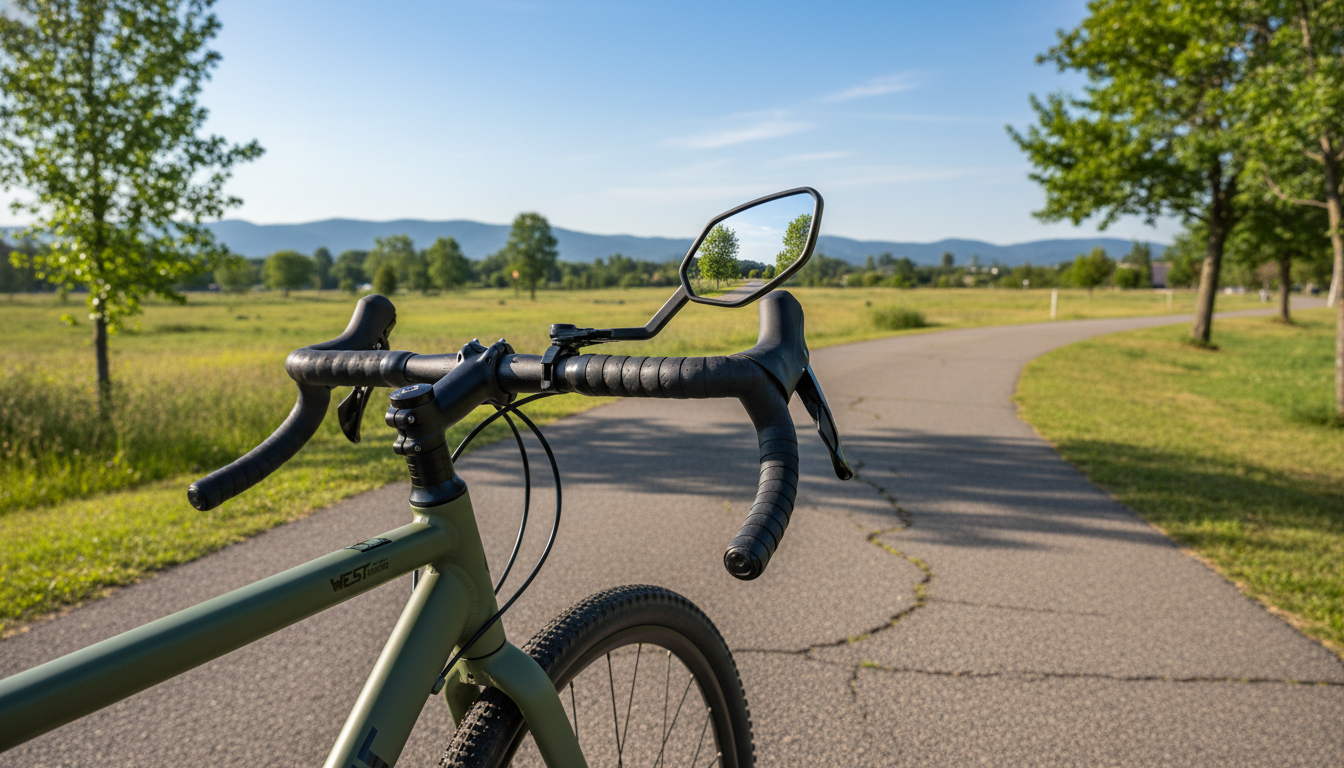
360° Rotatable HD Bike Handlebar Rear View Mirror
A handlebar-mounted rear view mirror can improve awareness in traffic, on shared paths, and during group rides—without constant shoulder checks. This rotatable HD mirror is designed for quick angle changes, a wider usable field of view, and clearer visibility in varying light so riders can monitor what’s behind while keeping a steady line.
Why a handlebar rear view mirror matters on real rides
Riding well isn’t only about what’s in front of your wheel—it’s also about what’s closing in behind you. On commutes, mixed-use trails, and busy weekend routes, a rear view mirror adds a steady stream of information that’s hard to replicate with shoulder checks alone.
- Helps track approaching cars, faster cyclists, and e-bikes on commutes and mixed-use trails.
- Reduces frequent over-the-shoulder checks that can cause drifting, especially at higher speeds.
- Improves decision timing for lane positioning, turning, and signaling.
- Useful for group rides to monitor spacing and close gaps safely.
- Adds confidence for riders carrying loads (panniers/child seats) where head movement may be limited.
Safety organizations consistently emphasize visibility and predictable riding behavior. A mirror supports both by helping you hold a clean line while staying aware. For broader bicycle safety guidance, see resources from the National Highway Traffic Safety Administration (NHTSA) and the CDC’s bicycle safety page.
What “360° rotatable” changes in day-to-day use
Rotatability sounds like a small feature—until you ride in different clothing, switch hand positions, or share a bike. A 360° rotatable mirror makes “good enough” alignment less likely, because dialing in the exact angle becomes quick instead of fussy.
- Fine-tunes the viewing angle for different hand positions (tops/hoods/drops on road bars, varied grips on flat bars).
- Makes it easier to share one setup across multiple riders or bikes without re-mounting.
- Allows quick correction after bumps, transport, or bike parking.
- Helps accommodate different shoulder widths and riding posture (upright vs. aggressive).
- Supports on-the-fly adjustments for changing environments (city streets vs. open roads).
On a practical level, rotation also helps when cockpit space is tight. If you’re balancing a bell, light, phone mount, and shifters, being able to rotate the mirror head (instead of re-clamping hardware) can keep your bars cleaner and your view more consistent.
HD mirror clarity: what to look for and what to expect
Mirror clarity is about more than seeing “something back there.” A sharper reflection makes it easier to read closing speed and distance—especially when you’re deciding whether to hold your line, move over, or wait before merging.
- Clearer image improves identification of closing speed and distance (useful when deciding to merge or hold line).
- Better edge-to-edge visibility can reduce “blind” corners in the mirror’s usable area.
- Aim for a stable, low-distortion reflection; minor vibration is normal on rough surfaces.
- Positioning tip: set the mirror so a small slice of your elbow is visible—this usually maximizes the lane behind.
- Night and low-light: mirrors help, but should be paired with lights and reflective gear.
Expect some vibration blur on chipseal, gravel, or broken pavement. The goal is to keep the mirror stable enough that you can still interpret what you’re seeing at a glance—vehicle shape, relative speed, and whether it’s safe to maintain position.
Fit and placement: getting a clean view without clutter
Installation is straightforward, but placement is what determines whether you’ll actually use the mirror. The best setup is the one that gives a readable view without forcing you to move your hands or crane your neck.
- Mount where it won’t interfere with brake levers, shifters, bell, or front light.
- Test visibility with typical riding gloves; micro-adjust so it stays readable without hand repositioning.
- Check handlebar sweep and rider posture—upright setups often benefit from slightly wider outward angle.
- For trail riding, consider a position that reduces branch contact and keeps mirror protected.
- After installation, do a short roll test and re-tighten as needed.
Quick comparison: mirror features that affect usability
| Feature | Why it matters | What to check before riding |
|---|---|---|
| 360° rotation | Easier angle dialing for posture and bike changes | Confirm it can rotate without slipping after tightening |
| HD mirror surface | Improves detail and distance judgment | Look for a crisp reflection with minimal distortion |
| Mount stability | Reduces vibration blur and re-aiming | Recheck fasteners after a short test ride |
| Mirror size/shape | Balances field of view and handlebar clearance | Ensure it doesn’t hit knees, cables, or the wall when storing |
| Weather resistance | Helps maintain visibility in drizzle and grime | Wipe clean; verify no fogging or loosening after wet rides |
Setup steps and safety checks before the first commute
Shop in-stock picks
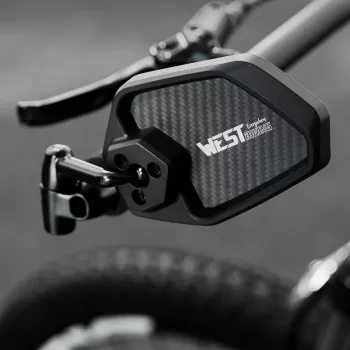
- 360° Rotatable HD Bike Handlebar Rear View Mirror — a handlebar-mounted mirror designed for quick angle changes and clearer rear visibility.
- Ready for Winter Ready for Anything – Winter Sport Gear Basics eBook — a cold-weather gear and layering checklist to help keep winter rides comfortable and predictable.
FAQ
Where should a handlebar rear view mirror be aimed for the best view?
Aim it so a small portion of your elbow or arm is visible at the inner edge of the mirror. This usually confirms the mirror matches your natural posture while maximizing the lane behind you.
Do handlebar mirrors work on rough roads and trails?
They can, but vibration may blur the image on rough surfaces. Prioritize a secure mount, re-tighten after the first ride, and choose a position that reduces hits from branches or impacts.
Is a rear view mirror enough for riding in traffic?
It’s a helpful layer of awareness, not a replacement for safe positioning, signaling, lights, and checking your surroundings when changing lanes. Use the mirror for timing and confidence while continuing to ride predictably and follow local rules.













Leave a comment