-
Shop
- Advanced Technologies
- AI Career Advantage Collection
- AI Skills Mastery 2026 Collection
- Arts, Crafts & Hobbies
- Bathroom
- Best-Sellers
- Car Accessories
- Dating & Social Skills
- Denim
- 7FOR
- AGOLDE
- Antony Morato
- Armani Exchange
- Boss
- Brunello Cucinelli
- Calvin Klein Jeans
- Costume National
- Desigual
- Diesel
- Dolce & Gabbana
- Dsquared²
- Ermanno Scervino
- Fendi
- Gianni Lupo
- Guess Jeans
- Ichi
- Just Cavalli
- Lee
- Levi's
- Liu Jo
- Morgan De Toi
- Mother Denim
- Only
- Pepe Jeans
- Pinko
- Replay
- Valentino
- Vero Moda
- Digital Resources
- Education & Learning
- Family & Parenting
- Fashion
- Furniture
- Gadgets
- Health & Beauty
- Health & Wellness
- Home & Garden
- Kids & Babies
- Kitchen
- Lighting
- Patio, Lawn & Garden
- Personal Growth
- Pet Care
- Pet Supplies
- Pets
- Sport & Outdoors
- TikTok Growth & Monetization Mastery
- Travel
- Wealth
- Popular
- Best deals
Use AI Chatbots to Buy a Car Smarter: Budget to Deal

How AI Chatbots Can Guide Smarter Car Buying Decisions
Car buying is a series of trade-offs—budget vs. features, monthly payment vs. total interest, “perfect” model vs. what’s actually available today. An AI chatbot can act like a practical assistant that keeps your priorities clear, compares options faster, and helps you show up prepared for quotes, test drives, and negotiation. The key is using AI for structure and questions while verifying details with current listings, official documents, and reliable sources.
What an AI chatbot can (and can’t) do during car shopping
An AI chatbot can translate your goals into a manageable plan: it can help you define a realistic price range, identify body styles that fit your routine, and surface common ownership-cost considerations (insurance, fuel/charging, maintenance). It can also speed up comparisons across trims and model years, draft seller questions, and generate checklists for inspections and paperwork.
Where it can’t replace real work: it may be wrong, outdated, or missing context. Features change by year and trim, incentives expire, and a car’s condition can’t be confirmed through chat. Always verify numbers and claims using official sources, the listing itself, and documents you can review in writing.
Privacy reminder: keep chatbot conversations general. Avoid sharing sensitive identifiers like your Social Security number, full address, banking details, account logins, or a driver’s license number.
Step 1: Define your “must-haves” and budget with AI
Start by turning lifestyle details into vehicle requirements. Tell the chatbot about commute length, passengers, cargo, parking constraints, weather, and whether you’ll tow or need AWD. Then ask it to separate “must-haves” from “nice-to-haves” so you don’t drift into paying for features you won’t use.
Next, build a realistic total budget. A “$400/month” target can hide big differences in total cost depending on term length, APR, fees, and add-ons. Use AI to estimate a safe purchase price range based on your down payment, loan term, and rate assumptions, then sanity-check those numbers with lender quotes.
Quick prompts that turn preferences into a workable plan
| Goal | Prompt to ask an AI chatbot | Output to look for |
|---|---|---|
| Clarify needs | Ask me 10 questions to identify the right vehicle type for my commute, passengers, cargo, and weather. | Vehicle type recommendation + must-have features |
| Set budget | Given a monthly payment limit of $X and down payment of $Y, estimate a safe purchase price range at APR Z% for 60 months. | Purchase price range + payment estimate assumptions |
| Prioritize features | Help rank my features by value and suggest which trims usually include them. | Ranked list + trim guidance |
| Avoid common mistakes | Create a list of red flags for used cars and how to verify each one. | Checklist + verification steps |
Step 2: Build a shortlist and compare options efficiently
Once your requirements are clear, ask the chatbot to propose 5–8 models that fit—ideally including one “value pick” and one “long-term reliability” pick. Then tighten the list using a consistent comparison framework so you’re not comparing a base trim of one model to a fully loaded trim of another.
AI can also help you weigh new vs. used vs. certified pre-owned (CPO). The useful output isn’t just a general opinion—it’s a side-by-side view of warranty coverage, typical premiums for CPO, and the trade-off between depreciation and peace of mind.
To keep decisions grounded, have the chatbot generate a scoring sheet (1–5) for day-to-day factors like comfort, visibility, tech usability, driving feel, running costs, and resale value. Add your own notes after each test drive so “memory bias” doesn’t pick your car for you.
Step 3: Financing, pre-approval, and the true cost of a deal
Financing is where “looks good” deals can quietly become expensive. Ask AI to explain terms in plain language—APR, term length, total interest, prepayment rules, and how add-on products change the payment and total cost. Then use that understanding to evaluate real quotes.
For trustworthy background reading on loans and borrower rights, reference the Consumer Financial Protection Bureau’s auto loan guidance.
Step 4: Negotiation help that stays practical
If you’re shopping used, review the Federal Trade Commission’s used car buying guide for baseline protections and common pitfalls.
Step 5: Test drive, inspection, and paperwork—using AI as a checklist engine
Also verify recalls directly using the NHTSA recalls lookup.
Safer ways to use AI: verification and privacy basics
A ready-to-use toolkit for chatbot-guided car buying
Helpful resources to keep your process organized
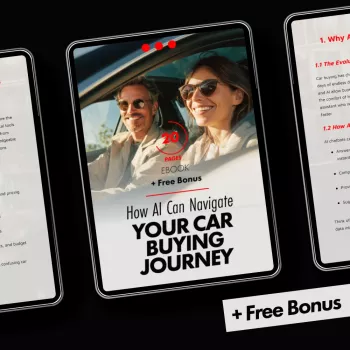
- How AI Can Navigate Your Car Buying Journey: Your Ultimate Guide to Using AI Chatbots for Car Buying Questions and Advice
- Ready for Winter Ready for Anything – Winter Sport Gear Basics eBook, Complete Cold Weather Gear Guide, Layering & Equipment Checklist for Winter Sports
FAQ
Can an AI chatbot tell if a car listing is a good deal?
It can help evaluate pricing factors and generate the right questions, but you still need current comparable listings, an itemized out-the-door quote, and a condition check (history report plus inspection) to confirm whether it’s truly a good deal.
What information should never be shared with a car-buying chatbot?
Don’t share your SSN, bank or credit card numbers, account logins, full home address, or driver’s license details. Keep it to general preferences, a budget range, and non-identifying context.
How can AI help negotiate without being aggressive?
Use AI to draft polite, firm scripts that focus on the out-the-door price, request itemized quotes, and calmly decline add-ons you don’t want. It can also prepare a respectful walk-away message so you maintain leverage without escalating the conversation.














Leave a comment