-
Shop
- Advanced Technologies
- AI Career Advantage Collection
- AI Skills Mastery 2026 Collection
- Arts, Crafts & Hobbies
- Bathroom
- Best-Sellers
- Car Accessories
- Dating & Social Skills
- Denim
- 7FOR
- AGOLDE
- Antony Morato
- Armani Exchange
- Boss
- Brunello Cucinelli
- Calvin Klein Jeans
- Costume National
- Desigual
- Diesel
- Dolce & Gabbana
- Dsquared²
- Ermanno Scervino
- Fendi
- Gianni Lupo
- Guess Jeans
- Ichi
- Just Cavalli
- Lee
- Levi's
- Liu Jo
- Morgan De Toi
- Mother Denim
- Only
- Pepe Jeans
- Pinko
- Replay
- Valentino
- Vero Moda
- Digital Resources
- Education & Learning
- Family & Parenting
- Fashion
- Furniture
- Gadgets
- Health & Beauty
- Health & Wellness
- Home & Garden
- Kids & Babies
- Kitchen
- Lighting
- Patio, Lawn & Garden
- Personal Growth
- Pet Care
- Pet Supplies
- Pets
- Sport & Outdoors
- TikTok Growth & Monetization Mastery
- Travel
- Wealth
- Popular
- Best deals
Money Discipline That Lasts: Simple Systems That Stick
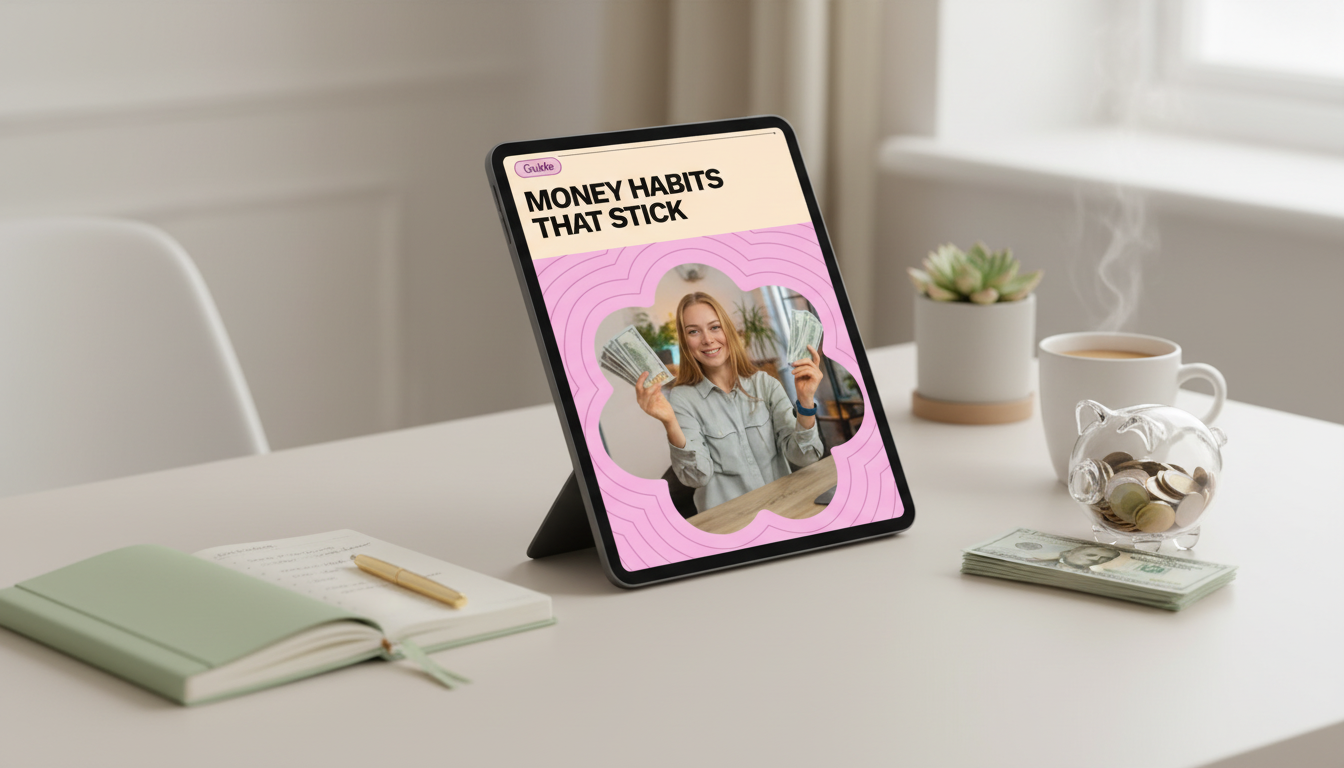
Money discipline is a system, not a mood
Lasting money discipline comes from simple systems repeated consistently, not bursts of motivation. The goal is to make good choices easier than bad ones—through clear priorities, automation, and small rules that reduce decision fatigue. When you can rely on a routine (instead of willpower), progress keeps happening even during busy weeks, stressful seasons, or “oops” spending moments.
If you want a structured, workbook-style companion to turn these ideas into a repeatable routine, Money Habits That Stick: The Ultimate Guide on How to Build Discipline with Money is designed to keep the next step obvious and the system easy to maintain.
Start with a clear “why” and one measurable target
Discipline gets easier when your brain isn’t juggling ten goals at once. Pick one primary outcome for the next 60–90 days: stop overdrafts, build a starter emergency fund, or pay off one specific credit card.
- Translate the outcome into one number and one date (example: “$500 emergency fund by May 30”).
- Write a short reason that matters emotionally: sleep better, protect your family, reduce stress, or gain job flexibility.
- Keep the target visible where money decisions happen—wallet note, banking app memo, or lock screen.
Examples of targets that are easy to track
| Goal | Tracking metric | Weekly action |
|---|---|---|
| Stop overspending | Total discretionary spend | Set a weekly cap and check midweek |
| Build emergency buffer | Savings balance | Auto-transfer every payday |
| Pay down debt | Highest-interest balance | Pay extra on payday |
| Spend intentionally | Number of no-spend days | Schedule 2–3 no-spend days |
Build a simple money system (fewer decisions, more consistency)
A “good enough” system that you repeat beats a perfect system you avoid. Keep the structure simple so it runs on autopilot even when life gets loud.
- Use a three-bucket structure: bills, spending, and goals (savings/debt).
- Create one weekly “money day” (10–15 minutes) to review balances, upcoming bills, and progress.
- Choose one budgeting style and stick with it for a month before changing (zero-based, 50/30/20, or envelope-style).
- Reduce friction: fewer accounts, fewer cards in rotation, fewer categories.
If you want credible budgeting tools and explanations, the Consumer Financial Protection Bureau (CFPB) budgeting resources are a solid reference for building a plan you can actually follow.
Automate the habits that matter most
Automation turns discipline into infrastructure. The trick is starting small and making it sustainable.
- Set automatic transfers for savings on payday, even if it starts at $5 or $10.
- Automate minimum debt payments to avoid missed fees; add extra payments manually when possible.
- Use bill autopay only after confirming the account consistently has a buffer to prevent overdrafts.
- Create a “sinking fund” transfer for predictable irregular expenses (car repairs, gifts, annual fees).
Many households face financial volatility at some point; the Federal Reserve’s report on the economic well-being of U.S. households offers helpful context on why building even a small buffer can make day-to-day decisions easier.
Use rules that prevent impulse spending
Rules protect you from “in-the-moment you.” Think of them as speed bumps that create just enough pause for your priorities to catch up.
- Adopt a 24-hour rule for nonessential purchases above a threshold (example: $50).
- Replace random browsing with a wish list note; revisit weekly on money day.
- Add small speed bumps: remove saved card info, unsubscribe from promo emails, and mute shopping apps.
- Set a weekly cash allowance for fun spending to make limits tangible.
Make spending align with values (without feeling deprived)
Deprivation backfires. Values-based spending is the middle path: spend confidently where it matters and cut hard where it doesn’t.
- Pick 1–2 categories to spend freely on (high joy) and cut ruthlessly in low-joy areas.
- Create a “default plan” for meals, transportation, and entertainment to avoid last-minute expensive choices.
- Try a “one in, one out” rule for discretionary purchases (especially clothing and gadgets).
- Schedule low-cost alternatives: library holds, community events, or shared subscriptions (with clear household rules).
For many people, spending is tied to stress. The American Psychological Association’s stress resources can help you spot patterns that sabotage the budget and replace them with healthier resets.
Set up a fast feedback loop: track, adjust, repeat
Tracking doesn’t need to be complicated—it needs to be frequent enough to steer. Choose one weekly number that predicts success and keep it visible.
- Track one weekly metric: discretionary spend, savings rate, or debt principal reduction.
- Review bank and card transactions once a week and label the top three leaks without judgment.
- If the plan fails, shrink the change (save $10/week before trying $50/week).
- Celebrate process wins: three money days completed, automatic transfer running, a no-overdraft month.
Handle setbacks without losing momentum
A practical reset plan for the next 14 days
Guide to deepen your routine and stay consistent
If confidence and self-talk are part of what drives spending patterns, pairing financial habits with a mindset reset can help. Body Confidence Blueprint | Ebook Guide on How to Build Body Confidence, Self-Image & Everyday Confidence supports daily consistency by strengthening how you show up for your goals.
FAQ
How long does it take to build money discipline?
Many people notice improvement within a few weeks, especially after setting one automatic transfer and doing a weekly check-in. More stable, low-effort habits usually take a few months of consistent repetition.
What’s the easiest money habit to start today?
Schedule a weekly 10–15 minute money day and set a small payday auto-transfer (even $5). Starting small reduces resistance and builds confidence quickly.
How can spending be controlled without feeling deprived?
Use values-based spending: keep 1–2 “high-joy” categories and cut low-joy areas aggressively. A planned weekly fun-money amount helps prevent binge spending because enjoyment is built into the plan.
Recommended for you


Boss Black Lace-Up Sneakers: Fall-to-Winter Style
Jun 23, 2026












Leave a comment