-
Shop
- Advanced Technologies
- AI Career Advantage Collection
- AI Skills Mastery 2026 Collection
- Arts, Crafts & Hobbies
- Bathroom
- Best-Sellers
- Car Accessories
- Dating & Social Skills
- Denim
- 7FOR
- AGOLDE
- Antony Morato
- Armani Exchange
- Boss
- Brunello Cucinelli
- Calvin Klein Jeans
- Costume National
- Desigual
- Diesel
- Dolce & Gabbana
- Dsquared²
- Ermanno Scervino
- Fendi
- Gianni Lupo
- Guess Jeans
- Ichi
- Just Cavalli
- Lee
- Levi's
- Liu Jo
- Morgan De Toi
- Mother Denim
- Only
- Pepe Jeans
- Pinko
- Replay
- Valentino
- Vero Moda
- Digital Resources
- Education & Learning
- Family & Parenting
- Fashion
- Furniture
- Gadgets
- Health & Beauty
- Health & Wellness
- Home & Garden
- Kids & Babies
- Kitchen
- Lighting
- Patio, Lawn & Garden
- Personal Growth
- Pet Care
- Pet Supplies
- Pets
- Sport & Outdoors
- TikTok Growth & Monetization Mastery
- Travel
- Wealth
- Popular
- Best deals
Single-Parent Stress Relief: 10-Minute Resets & Calm Routines
Single-Parent Stress Relief That Works in Real Life
Single parenting often means carrying the mental load, the logistics, and the emotional weight at the same time. Stress relief becomes realistic when it fits into real schedules: school drop-offs, work shifts, dinner, homework, and the moments when everything feels like it’s happening at once. The goal isn’t a perfect, peaceful day—it’s building small routines that reduce pressure, protect energy, and create steadier emotional support for both parent and child.
If stress has started to feel like your “normal,” it helps to know you’re not alone—and you’re not failing. According to the American Psychological Association (APA), stress can affect the body, mood, and behavior, especially when it’s ongoing. The good news: small, repeatable resets can make life feel more manageable without requiring more time than you actually have.
What stress looks like in single-parent life (and why it’s not a personal failure)
Single-parent stress often looks less like one big event and more like a constant stream of decisions and responsibilities. Common patterns include nonstop problem-solving, financial strain, no true backup, and interrupted sleep. When there’s no one to tag in, even minor setbacks can feel enormous.
Then there are the “invisible tasks” that quietly multiply overwhelm: coordinating appointments, school forms, meal planning, keeping track of supplies, remembering birthdays, managing emotions (yours and your child’s), and running the household. This is real labor, even when nobody sees it.
Chronic stress can show up physically (tight shoulders, headaches, stomach issues, fatigue) and emotionally (irritability, numbness, guilt, feeling “on edge”). A helpful reframe: stress is often a signal that your support systems and routines need adjusting—not proof of inadequacy.
The 10-minute reset: a simple routine for hard moments
This reset is designed for the exact moments when you can’t take a “self-care hour.” It’s short, doable, and flexible—use it in the bathroom, in the car before pickup, or standing at the sink.
Step 1 (1 minute): Name the moment
Identify the immediate stressor without self-judgment: “The kitchen is a mess,” “The bill is overdue,” “My child is melting down,” or “I’m running late.” Naming reduces mental noise.
Step 2 (2 minutes): Downshift the body
Put both feet on the floor. Drop your shoulders. Unclench your jaw. Breathe in normally, then exhale a little longer than you inhale. Even a few longer exhales can help settle your nervous system.
Step 3 (3 minutes): Reduce the problem size
Choose the next single action that makes things 5% better: send one email, start a load of laundry, set a timer for five minutes of tidying, or jot one note on what needs to happen next.
Step 4 (2 minutes): Emotional support checkpoint
Ask: “What feeling is driving this?” Fear, frustration, loneliness, exhaustion, embarrassment, or grief can all fuel overwhelm. Naming the feeling often lowers its intensity.
Step 5 (2 minutes): Boundary micro-script
Use one short phrase to protect energy: “I can handle one thing at a time.” “Not now—later.” “Good enough is enough.” “We’re doing the next right thing.”
Build calm routines that work with kids, not against them
Routines work best when they reduce negotiation and decision fatigue. Instead of building a “perfect schedule,” attach routines to triggers that already happen:
- After school: bags down, shoes off, snack bin.
- Before dinner: quick hand-wash, set a timer for a 5-minute tidy.
- Bedtime: lights dim, one story, two-minute room reset.
On busy days, aim for “minimum viable routines”—the smallest version that still counts. A five-minute tidy is still a tidy. One story is still connection. Two minutes of prep still helps tomorrow.
Emotional support that doesn’t require long talks
Protect your energy with boundaries and realistic backup plans
For financial stress, micro-steps matter: automate minimum payments when possible, use calendar reminders for due dates, and schedule one small money task weekly (one phone call, one bill check, one budget glance). For sleep, aim for “better,” not perfect: a consistent wind-down cue and less late-night scrolling can help. The National Institute of Mental Health (NIMH) and the CDC both emphasize practical coping steps that support mental well-being over time.
A weekly reset plan you can actually repeat
| Time | Task | What it prevents |
|---|---|---|
| 5 min | Scan calendar + school messages | Last-minute surprises and missed deadlines |
| 10 min | Pick 3 dinners + 2 backups | Decision fatigue and takeout stress |
| 5 min | Prep one “grab-and-go” snack bin | After-school meltdowns and hangry conflicts |
| 5 min | Laundry or outfit check for 2 days | Morning chaos and running late |
| 5 min | One supportive message or help request | Isolation and carrying everything alone |
When stress feels too heavy: signs it’s time for additional help
A practical guide that supports daily calm routines
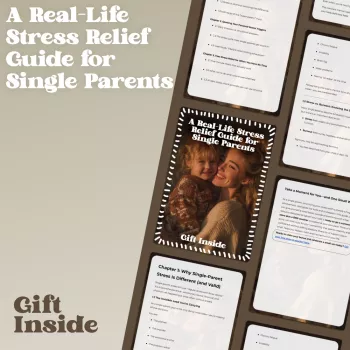
- A Real-Life Stress Relief Guide for Single Parents (practical eBook) focuses on realistic routines, emotional support check-ins, and repeatable reset plans.
- Body Confidence Blueprint (eBook) supports self-image and everyday confidence—helpful when stress and burnout start to affect how you feel about yourself.
FAQ
What if there’s no time for stress relief routines?
Use micro-routines (1–3 minutes) that attach to something you already do, like brushing your teeth, starting the car, or turning off the lights. Consistency matters more than duration.
How can a single parent calm down quickly during a child’s meltdown?
Start with body downshifting (slower breathing, relaxed shoulders), then use fewer words and a calmer voice. Briefly label what your child is feeling and choose one next step that prioritizes safety and connection.
When does stress become a mental health concern?
If symptoms are persistent, worsening, or interfere with daily functioning (sleep, work, parenting, safety), it’s time to seek professional support. If there’s any risk of harm, use urgent local resources right away.














Leave a comment