-
Shop
- Advanced Technologies
- AI Career Advantage Collection
- AI Skills Mastery 2026 Collection
- Arts, Crafts & Hobbies
- Bathroom
- Best-Sellers
- Car Accessories
- Dating & Social Skills
- Denim
- 7FOR
- AGOLDE
- Antony Morato
- Armani Exchange
- Boss
- Brunello Cucinelli
- Calvin Klein Jeans
- Costume National
- Desigual
- Diesel
- Dolce & Gabbana
- Dsquared²
- Ermanno Scervino
- Fendi
- Gianni Lupo
- Guess Jeans
- Ichi
- Just Cavalli
- Lee
- Levi's
- Liu Jo
- Morgan De Toi
- Mother Denim
- Only
- Pepe Jeans
- Pinko
- Replay
- Valentino
- Vero Moda
- Digital Resources
- Education & Learning
- Family & Parenting
- Fashion
- Furniture
- Gadgets
- Health & Beauty
- Health & Wellness
- Home & Garden
- Kids & Babies
- Kitchen
- Lighting
- Patio, Lawn & Garden
- Personal Growth
- Pet Care
- Pet Supplies
- Pets
- Sport & Outdoors
- TikTok Growth & Monetization Mastery
- Travel
- Wealth
- Popular
- Best deals
10FT Flat Cord Power Strip: 6 Outlets, 3 USB, Surge
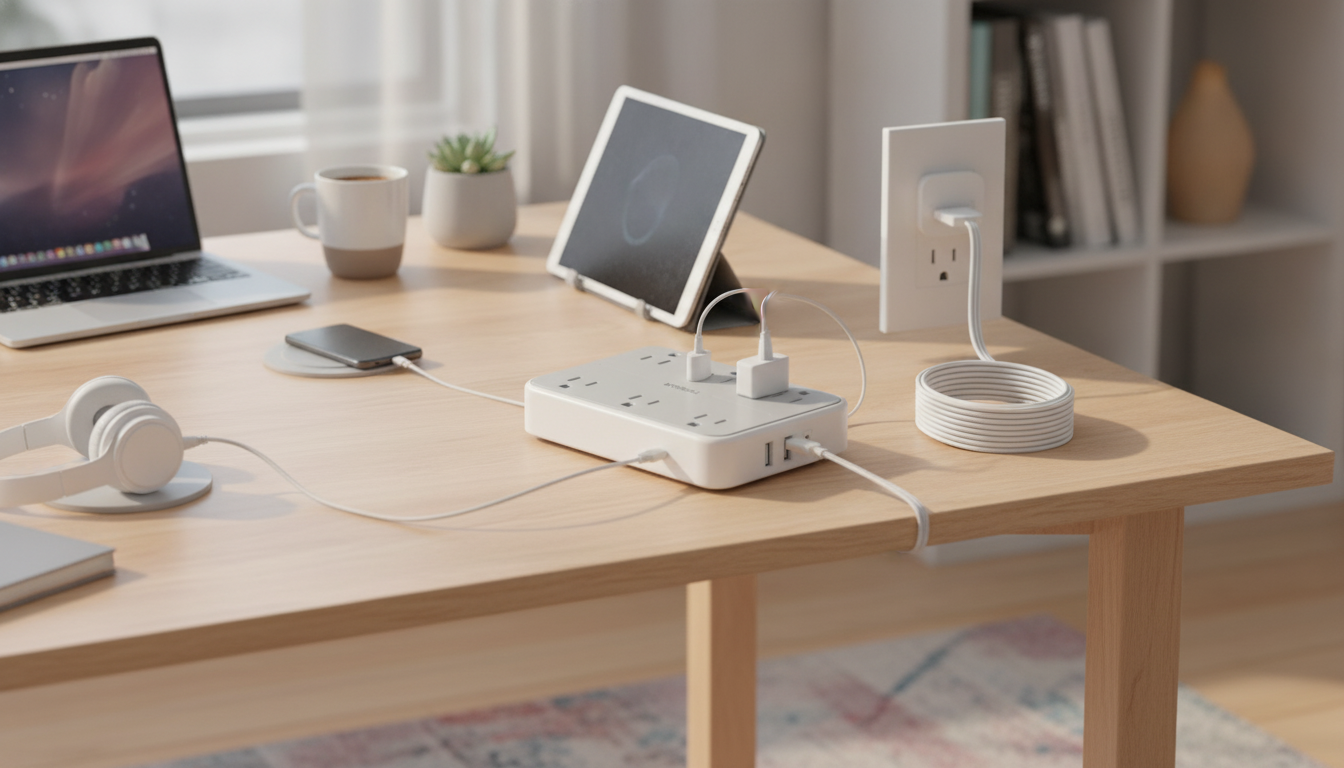
Power Where You Need It: A 10FT Flat Extension Cord Power Strip for Modern Setups
A flat extension cord power strip solves two everyday hassles at once: reaching an inconvenient wall outlet and powering multiple devices safely in one centralized spot. With a 10-foot, low-profile cord that routes neatly along baseboards, behind headboards, or under desks, this style of strip is built for real rooms—tight furniture gaps, crowded workstations, and bedside charging zones. Add six AC outlets, three USB ports, and surge protection, and it becomes a practical upgrade for home offices, dorm rooms, living rooms, and media centers.
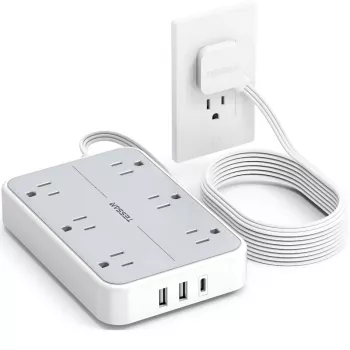
If you’re setting up a tidy charging hub, consider the 10FT Flat Extension Cord Power Strip with 6 Outlets, 3 USB Ports & Surge Protection as an all-in-one solution for everyday electronics.
What this power strip is designed to do
- Extend reach with a 10-foot cord so power can land exactly where it’s needed—nightstands, workstations, TV stands, and charging hubs.
- Reduce plug juggling by combining 6 AC outlets plus 3 USB ports for phones, tablets, and accessories.
- Add surge protection to help shield sensitive electronics from common voltage spikes.
- Use a flat cord profile that routes more cleanly than many round cords around furniture and along walls.
Key features at a glance
- 6 AC outlets for standard plugs—ideal for lamps, monitors, laptop chargers, printers, speakers, and small electronics within the strip’s electrical rating.
- 3 USB ports for direct charging without bulky adapters—especially useful for bedside and desk setups.
- Surge protection for electronics such as laptops, routers, modems, TVs, and game consoles.
- 10FT flat extension cord for tight routing behind couches, headboards, or desks where space is limited.
- Single-strip layout that centralizes charging and helps reduce cable clutter in one area.
Quick comparison: AC outlets vs USB ports and typical uses
| Connection type | Count | Best for | Notes |
|---|---|---|---|
| AC outlets | 6 | Lamps, monitors, laptop chargers, small electronics | Keep high-heat/high-watt devices within the strip’s electrical rating |
| USB ports | 3 | Phones, earbuds, tablets, small gadgets | Charging speed depends on device and port output |
| Surge protection | Yes | Sensitive electronics and chargers | Useful for typical spikes; not a guarantee against all events (e.g., direct lightning strike) |
Best places to use a 10-foot flat cord power strip
- Behind a sofa or media console: reach a distant wall outlet and keep cords from bunching where they can snag during cleaning.
- Bedside charging station: power a lamp and alarm clock while charging phone/tablet via USB—no adapter pile required.
- Home office: plug in monitor, laptop charger, desk light, and speakers, while USB handles small accessories to free up AC outlets.
- Dorm room or small apartment: add outlets where older rooms may have limited receptacles and limited furniture clearance.
- Workbenches and hobby tables: organize chargers and low-to-moderate draw tools (avoid loads that exceed rating).
Surge protection basics that matter for everyday electronics
Surge protection is meant to reduce the impact of short, sudden voltage spikes that can gradually wear down or instantly damage electronics. For everyday setups—routers, modems, streaming devices, game consoles, laptop chargers—using surge-protected outlets is generally a safer choice than relying on a basic extension cord.
- Surge protectors are intended to limit transient spikes; they’re a layer of defense for common electrical disturbances.
- Replace a surge protector if it’s visibly damaged, has been through a significant event, or the protection indicator (if present) no longer shows protection.
- Avoid daisy-chaining (plugging one power strip into another), which increases overload and overheating risk.
For additional electrical safety guidance, review resources from the National Fire Protection Association (NFPA) on electrical safety in the home and certification information related to surge protective devices from UL.
Setup and placement tips for a cleaner, safer layout
During storms and outages, unplugging sensitive electronics can further reduce risk; see practical outage guidance from Ready.gov.
Common fit checks before buying
When this power strip is a strong choice
Related in-stock picks for organized spaces
- 10FT Flat Extension Cord Power Strip with 6 Outlets, 3 USB Ports & Surge Protection — a centralized power and charging hub with a flat 10-foot cord.
- High-Pressure Portable Bike Floor Pump 160 PSI with Dual-Valve Head — a useful garage/entryway companion to keep bikes ready without searching for a shop pump.
- Heavy-Duty 4-Digit Chain Lock for Bikes, E-Bikes & Motorcycles — a sturdy option for securing rides in apartments, dorms, or shared storage areas.
FAQ
Can a power strip with surge protection be used for a TV, router, and game console?
Yes. This is a common setup—just keep the combined power draw within the strip’s rating, avoid plugging one power strip into another, and replace the unit if it’s damaged or after a major surge event.
Is it safe to run a flat extension cord under a rug?
Generally not recommended. Cords under rugs can overheat and are more likely to be damaged by foot traffic or furniture; routing along baseboards or behind furniture is typically safer.
Do the USB ports charge as fast as a dedicated wall charger?
It depends on the USB port output and the device’s fast-charging requirements. Many phones and small devices will charge normally, but maximum fast-charging speeds can vary by protocol and power rating.












Leave a comment