-
Shop
- Advanced Technologies
- AI Career Advantage Collection
- AI Skills Mastery 2026 Collection
- Arts, Crafts & Hobbies
- Bathroom
- Best-Sellers
- Car Accessories
- Dating & Social Skills
- Denim
- 7FOR
- AGOLDE
- Antony Morato
- Armani Exchange
- Boss
- Brunello Cucinelli
- Calvin Klein Jeans
- Costume National
- Desigual
- Diesel
- Dolce & Gabbana
- Dsquared²
- Ermanno Scervino
- Fendi
- Gianni Lupo
- Guess Jeans
- Ichi
- Just Cavalli
- Lee
- Levi's
- Liu Jo
- Morgan De Toi
- Mother Denim
- Only
- Pepe Jeans
- Pinko
- Replay
- Valentino
- Vero Moda
- Digital Resources
- Education & Learning
- Family & Parenting
- Fashion
- Furniture
- Gadgets
- Health & Beauty
- Health & Wellness
- Home & Garden
- Kids & Babies
- Kitchen
- Lighting
- Patio, Lawn & Garden
- Personal Growth
- Pet Care
- Pet Supplies
- Pets
- Sport & Outdoors
- TikTok Growth & Monetization Mastery
- Travel
- Wealth
- Popular
- Best deals
4-Digit Heavy-Duty Chain Lock: Daily Parking Security
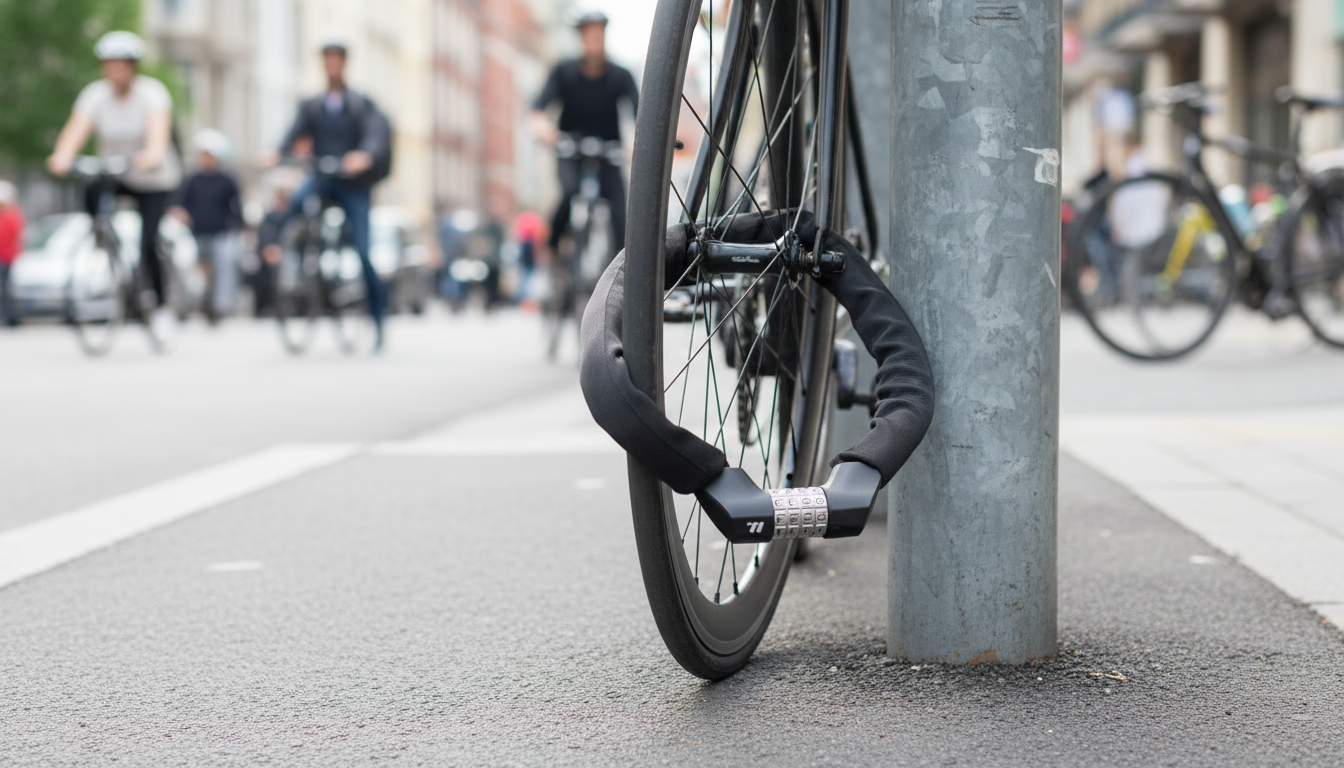
Heavy-Duty 4-Digit Chain Locks: Practical Protection for Daily Parking
A dependable chain lock needs to be quick to use, hard to defeat, and tough enough for real-world weather and wear. A heavy-duty 4-digit chain lock checks a lot of boxes for everyday riders because it combines flexible reach with keyless convenience—two factors that often determine whether a lock gets used consistently. Below is what actually matters when choosing and using one, plus simple habits that can reduce theft risk for bikes, e-bikes, scooters, and motorcycles.
What a heavy-duty 4-digit chain lock does well
Chain locks are popular for day-to-day parking because they’re adaptable. A 4-digit combination format adds speed and reduces the “lost key” problem that can lead to skipping the lock entirely.
- Keyless access: A resettable combination can streamline quick stops and errands—dial, open, wrap, and go.
- Chain-style flexibility: Chains wrap around bulky frames, thick racks, poles, and awkward anchors where rigid locks may not fit.
- Good for mixed fleets: One chain can serve a standard bike today and an e-bike or scooter tomorrow, especially if you routinely park at varied racks.
- Convenient enough to use every time: For routine parking, a slightly heavier but easier-to-use lock often beats a stronger lock that stays at home.
Security fundamentals that matter more than brand claims
Real security comes from how the lock is used as much as the lock itself. A strong chain can still fail if it’s attached to a weak object or left on the ground where it’s easy to attack.
1) Lock to something that can’t be moved
Look for solid bike racks installed into concrete, thick metal posts, or purpose-built motorcycle anchors. Avoid thin sign poles, wood fences, or anything that can be cut, unbolted, or lifted out of the ground.
2) Lock the frame first (then add wheels if you can)
Prioritize the main frame triangle on bikes, or a strong frame section on step-through frames. If the chain length allows, capture a wheel too—especially the rear wheel, which is often more valuable and harder to replace.
3) Keep the chain off the ground
A raised chain reduces leverage and limits certain attacks that rely on bracing cutters against pavement. Pull the chain snug, minimize slack, and position the locking body where it’s less accessible.
4) Choose smarter parking, not just stronger hardware
Well-lit, high-traffic areas increase the chance a thief gets interrupted. If you’re unsure, choose visibility over isolation. For general riding safety guidance, the National Highway Traffic Safety Administration (NHTSA) bicycle safety resources are a solid reference point for practical street habits.
Fit and compatibility for bikes, e-bikes, and motorcycles
“Will it fit?” is more than chain length—think about frame shapes, tube thickness, and where the chain can pass through without forcing it.
Bikes
- Aim to capture frame + at least one wheel when possible.
- On quick stops, prioritize the rear triangle and rear wheel to reduce the chance of roll-away theft.
E-bikes
Motorcycles
Quick comparison: chain locks vs common alternatives
| Lock type | Best for | Main limitation |
|---|---|---|
| Chain lock (4-digit) | Flexible locking around varied anchors; quick, keyless routine stops | Heavier than some options; security varies with chain/lock build and locking technique |
| U-lock | High security for bikes with compatible racks/anchors | Can’t fit around large posts or odd parking setups |
| Folding lock | Portability and moderate security on urban errands | Joint weak points can be targeted on lower-quality models |
| Cable lock | Securing accessories or as a secondary lock | Typically not sufficient as a primary theft deterrent |
For additional guidance on security ratings and what different classifications mean, Sold Secure is a widely referenced source for lock testing and standards.
Setting and using a 4-digit combination without hassle
Getting the most protection from one lock
- Use layered deterrence: Add a secondary lock for wheels or use locking skewers when parking longer.
- Reduce attractive targets: Remove lights, bags, and displays. For e-bikes, take the battery when feasible.
- Avoid predictable schedules: Vary parking locations and times when possible—predictability can create opportunity.
- Register and document: Save your serial number and photos. Services like Bike Index can help with recovery and proof of ownership.
Featured option: Heavy-Duty 4-Digit Chain Lock for Bikes, E-Bikes & Motorcycles
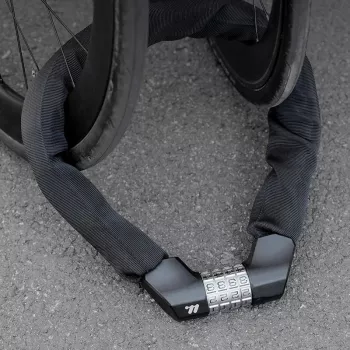
If your parking routine involves different racks, posts, and anchor shapes, a flexible chain can make daily locking simpler. The Heavy-Duty 4-Digit Chain Lock for Bikes, E-Bikes & Motorcycles is a practical keyless option built for riders who want quick locking without carrying keys.
Helpful add-on for daily riding
Keeping tires properly inflated reduces pinch flats and improves handling—especially on heavier e-bikes. The High-Pressure Portable Bike Floor Pump 160 PSI with Dual-Valve Head makes it easier to maintain consistent pressure at home or on the go.
FAQ
Is a 4-digit combination lock secure enough for an e-bike or motorcycle?
It can be, but security depends on the chain and lock build, the quality of the anchor, and how you position the lock. For longer parking or higher-risk areas, pairing the chain with a second lock and choosing a high-visibility spot adds meaningful deterrence.
How should a chain lock be placed to reduce cutting risk?
Lock high and tight, keep the chain off the ground, and minimize slack so it’s harder to get leverage. Prioritize a frame-to-immovable-object connection before trying to capture extra components.
What’s a good combination code to set on a 4-digit lock?
Avoid common patterns, repeated digits, and personal dates that could be guessed. Pick a random-but-memorable number and test locking and unlocking several times before making it your daily code.












Leave a comment