-
Shop
- Advanced Technologies
- AI Career Advantage Collection
- AI Skills Mastery 2026 Collection
- Arts, Crafts & Hobbies
- Bathroom
- Best-Sellers
- Car Accessories
- Dating & Social Skills
- Denim
- 7FOR
- AGOLDE
- Antony Morato
- Armani Exchange
- Boss
- Brunello Cucinelli
- Calvin Klein Jeans
- Costume National
- Desigual
- Diesel
- Dolce & Gabbana
- Dsquared²
- Ermanno Scervino
- Fendi
- Gianni Lupo
- Guess Jeans
- Ichi
- Just Cavalli
- Lee
- Levi's
- Liu Jo
- Morgan De Toi
- Mother Denim
- Only
- Pepe Jeans
- Pinko
- Replay
- Valentino
- Vero Moda
- Digital Resources
- Education & Learning
- Family & Parenting
- Fashion
- Furniture
- Gadgets
- Health & Beauty
- Health & Wellness
- Home & Garden
- Kids & Babies
- Kitchen
- Lighting
- Patio, Lawn & Garden
- Personal Growth
- Pet Care
- Pet Supplies
- Pets
- Sport & Outdoors
- TikTok Growth & Monetization Mastery
- Travel
- Wealth
- Popular
- Best deals
5-Ton Electric Hydraulic Jack Kit: Wrench + Inflator
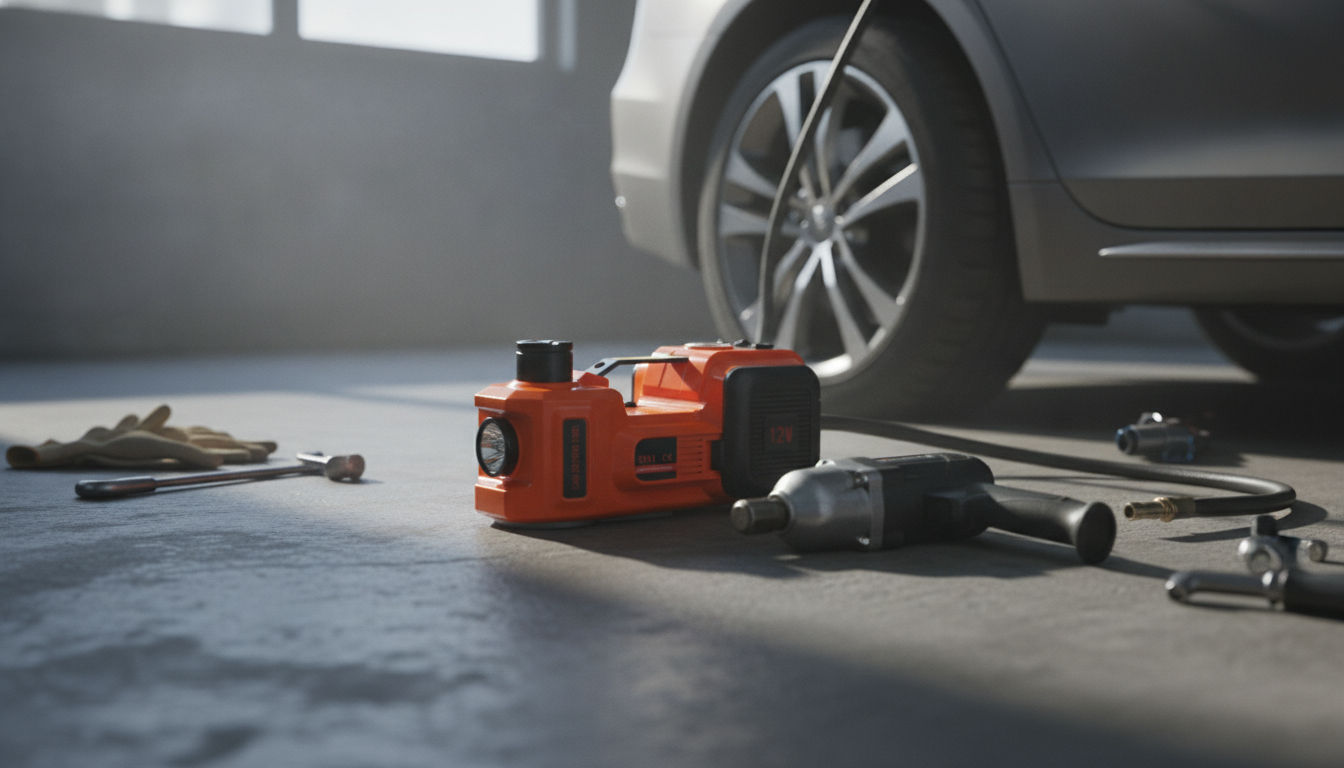
5-Ton Electric Hydraulic Car Jack Kit with Impact Wrench & Tire Inflator
A roadside flat or garage tire swap goes faster when lifting, lug removal, and inflation are handled by one coordinated kit. This 5-ton electric hydraulic jack set combines powered lifting with an impact wrench and tire inflator to reduce effort, improve consistency, and keep essentials in one case.
What the kit is designed to solve
Traditional emergency tools can get the job done, but they often demand more strength, time, and patience than most drivers want on the shoulder of the road. An electric hydraulic jack kit is built to streamline the entire sequence—from raising the vehicle to reinstalling the wheel and setting tire pressure.
- Reduces manual cranking and hand-lug work during tire changes
- Consolidates lifting, lug removal/installation, and inflation into a single portable setup
- Helps improve stability and control compared with emergency scissor jacks when used correctly with proper support
- Suited for roadside emergencies and routine garage swaps when a full shop setup isn’t available
For broader tire safety basics (including pressure checks and tread guidance), review NHTSA Tire Safety. For general workplace-style safety guidance around lifting and support practices, see OSHA.
What’s included and how each piece is used
The value of a bundled kit is that the tools are sized and intended to work together in one workflow: lift, remove, install, inflate, and pack away.
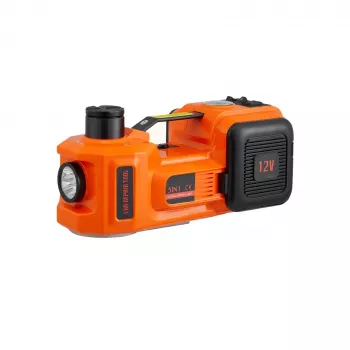
- Electric hydraulic jack: lifts the vehicle at designated jack points to create wheel clearance
- Impact wrench: loosens tight lug nuts and speeds reinstallation (final torque should be verified with a torque wrench when possible)
- Tire inflator: tops up pressure after mounting the spare or reseating the wheel
- Carry case and accessories: keeps parts organized and reduces the chance of missing components during an emergency
Quick role guide for each tool
| Component | Primary job | Best-use moment |
|---|---|---|
| Electric hydraulic jack | Raise the vehicle safely at jack points | After securing the vehicle and before removing the wheel |
| Impact wrench | Remove and snug lug nuts quickly | After lifting; use hand-tightening pattern before lowering |
| Tire inflator | Set tire pressure to the door-jamb spec | After the spare or repaired tire is mounted |
| Case/accessories | Storage, organization, readiness | Keep in trunk/garage to avoid missing parts |
Vehicle fit: capacity, clearance, and common use cases
A “5-ton” rating sounds universal, but smart fit checks keep a helpful tool from becoming a frustrating one. The best match depends on your vehicle’s weight, jack point design, and clearance.
- A 5-ton rating is generally intended for many sedans, crossovers, SUVs, and light trucks; always confirm vehicle weight and lifting requirements in the owner’s manual
- Check minimum lift height versus the vehicle’s ground clearance, especially for low-profile cars
- Confirm the jack saddle contacts a reinforced jack point without slipping; avoid lifting on plastic trim or thin pinch weld areas not intended for jacking
- For uneven shoulders or soft ground, plan for a stable base (solid board or jack pad) to prevent sinking and tilting
Common real-world scenarios include a nail puncture on the commute, swapping a spare in a parking lot, and seasonal tire changes at home when a full-size floor jack and air compressor aren’t available.
Power and portability considerations
Electric convenience depends on planning. Before relying on any powered roadside tool, confirm how it’s powered and where it will live in the vehicle.
- Verify the power source and connector type used by the kit before relying on it for roadside support
- Avoid running the vehicle battery down during repeated lifts; if possible, keep the engine running in a safe, ventilated area while operating electrical accessories
- Store the kit where it’s accessible (trunk side pocket or under-floor storage) and protect it from moisture
- Before long trips, test the jack and wrench briefly at home to ensure all components function
How to use the kit during a tire change
A calm, repeatable sequence reduces mistakes. The goal is a stable vehicle, controlled lifting, and correct torque and pressure at the end.
Safety essentials that matter more than speed
Care, storage, and readiness checks
When an electric hydraulic kit is the right choice (and when it isn’t)
Shop in-stock essentials
- 5-Ton Electric Hydraulic Car Jack Kit with Impact Wrench & Tire Inflator
- High-Pressure Portable Bike Floor Pump 160 PSI with Dual-Valve Head (hand-powered backup for topping up in a pinch)
FAQ
Can the impact wrench be used to fully tighten lug nuts?
It’s great for removal and for snugging lug nuts quickly, but final tightening should follow your vehicle’s specified torque. When possible, confirm the final torque with a torque wrench to avoid over- or under-tightening.
Is it safe to work under the vehicle with only the electric jack supporting it?
No. A jack is for lifting, not for safely supporting a vehicle while you’re underneath it. For any undercar work, use properly rated jack stands on solid ground and lift only at manufacturer-approved points.
What tire pressure should the inflator be set to?
Use the pressure listed on the driver-side door-jamb placard or in the owner’s manual, not the number molded into the tire sidewall. After driving a short distance, recheck pressure to confirm it’s still at the recommended spec.













Leave a comment