-
Shop
- Advanced Technologies
- AI Career Advantage Collection
- AI Skills Mastery 2026 Collection
- Arts, Crafts & Hobbies
- Bathroom
- Best-Sellers
- Car Accessories
- Dating & Social Skills
- Denim
- 7FOR
- AGOLDE
- Antony Morato
- Armani Exchange
- Boss
- Brunello Cucinelli
- Calvin Klein Jeans
- Costume National
- Desigual
- Diesel
- Dolce & Gabbana
- Dsquared²
- Ermanno Scervino
- Fendi
- Gianni Lupo
- Guess Jeans
- Ichi
- Just Cavalli
- Lee
- Levi's
- Liu Jo
- Morgan De Toi
- Mother Denim
- Only
- Pepe Jeans
- Pinko
- Replay
- Valentino
- Vero Moda
- Digital Resources
- Education & Learning
- Family & Parenting
- Fashion
- Furniture
- Gadgets
- Health & Beauty
- Health & Wellness
- Home & Garden
- Kids & Babies
- Kitchen
- Lighting
- Patio, Lawn & Garden
- Personal Growth
- Pet Care
- Pet Supplies
- Pets
- Sport & Outdoors
- TikTok Growth & Monetization Mastery
- Travel
- Wealth
- Popular
- Best deals
Bad Alternator vs Bad Battery: Test It in Minutes
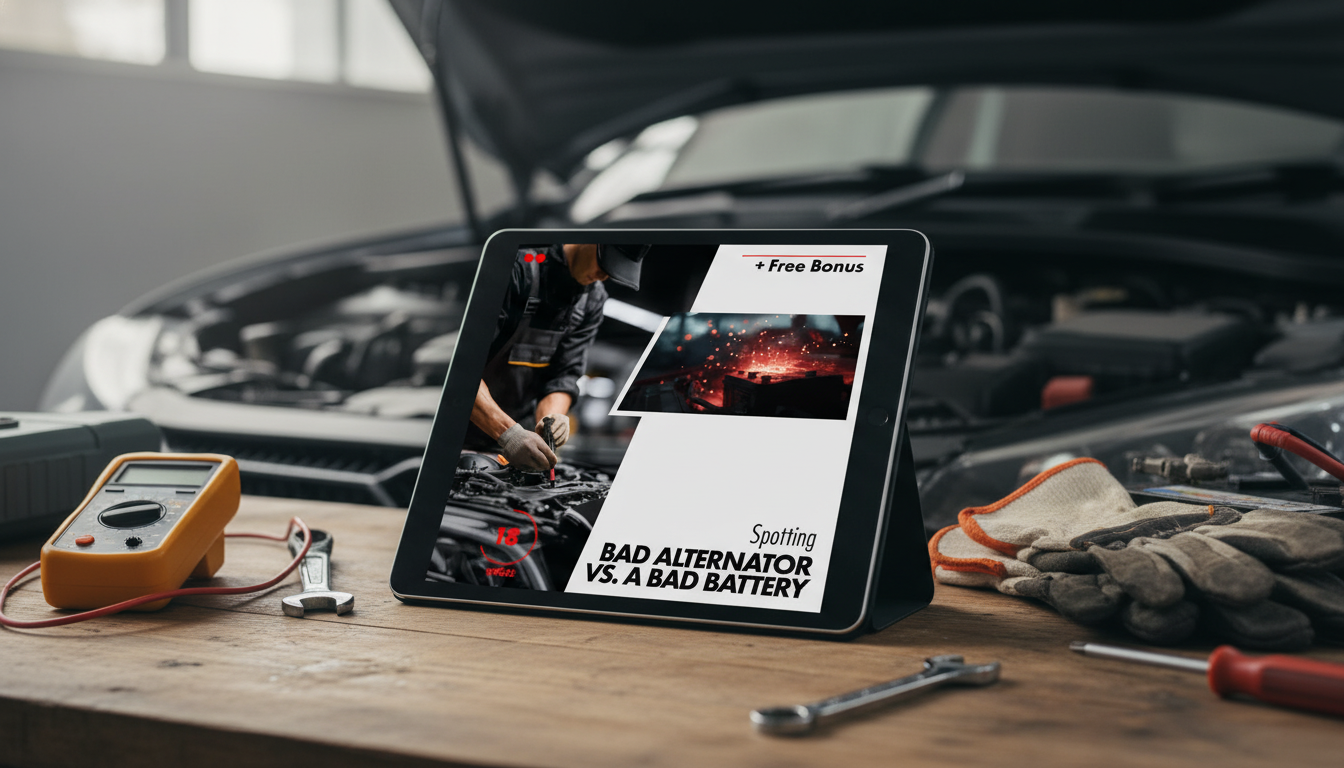
Bad Alternator or Bad Battery? A Practical, No-Guesswork Troubleshooting Guide
When a car won’t start or the dash lights start acting strange, the battery and alternator are the two most common suspects. The fastest way to avoid replacing the wrong part is to notice when the problem appears (right at start-up vs. while driving) and confirm it with a couple of simple checks. The steps below focus on reliable signs, quick multimeter readings, and the safest next move when things don’t add up.
Start With the Situation: When the Problem Happens Matters
- No-crank or slow-crank after sitting: often points to a weak battery, dirty/loose battery connections, or a parasitic draw draining the battery overnight.
- Starts with a jump but dies later: commonly points to alternator/charging problems. The jump provides a temporary boost, but the battery isn’t being replenished.
- Electrical glitches while driving: flickering lights, warning messages, gauges acting up, or dimming/brightening are more consistent with unstable charging voltage.
- Intermittent issues after rain or bumps: check loose terminals, corroded grounds, and belt condition before condemning the battery or alternator.
Most Telling Signs: Alternator vs. Battery
A simple rule of thumb: batteries tend to fail at the moment of starting, while alternators tend to fail once the engine is running and electrical demand increases (lights, HVAC blower, rear defroster, wipers, audio, etc.).
- A battery can fail from age (often 3–5 years), sulfation, extreme heat/cold, or chronic undercharging.
- An alternator can fail from worn brushes, failing rectifier diodes, voltage regulator problems, or a slipping belt/tensioner.
Quick comparison of common symptoms
| Symptom | More likely battery-related | More likely alternator/charging-related |
|---|---|---|
| Slow crank / clicking at start | Yes (weak charge, internal failure, corroded terminals) | Sometimes (if battery drained because it wasn’t being charged) |
| Starts with jump, then runs fine for short trip | Yes (battery can’t hold charge) | Sometimes (alternator may be marginal and not replenishing) |
| Car dies while driving | Uncommon (unless battery connection opens) | Yes (charging stops; ignition/fuel systems lose voltage) |
| Battery/charge warning light while driving | Rare | Yes (belt slip, alternator output low, regulator issue) |
| Headlights brighten/dim with RPM changes | No | Yes (voltage regulation or belt/alternator output issue) |
| Burning rubber smell / squeal near front of engine | No | Yes (belt slipping, alternator load high, pulley issues) |
| Repeated dead battery after being parked overnight | Yes (aging battery or parasitic draw) | Not directly (unless alternator diodes create key-off drain) |
Two Simple Checks That Settle Most Cases (No Special Tools Beyond a Multimeter)
If you can access the battery terminals, a basic multimeter can answer most “battery vs. alternator” questions in minutes.
1) Check battery resting voltage (engine off)
- After the car has been sitting (ideally a few hours), measure across the battery terminals.
- About 12.6V is typically fully charged.
- Roughly 12.2V suggests the battery is significantly discharged.
- About 12.0V or below indicates a very low state of charge and may also hint at a failing battery (or a serious drain).
2) Check charging voltage (engine idling, then under load)
- Start the engine and measure voltage at the battery again.
- Many vehicles charge around 13.7V–14.7V depending on temperature and strategy.
- Turn on loads (headlights, blower motor, rear defroster). If voltage drops and stays low or fluctuates wildly, suspect alternator output, belt slip, wiring, or a charging fuse/fusible link.
Interpreting the results: if voltage rises appropriately when running but the car still won’t restart later, the battery is the stronger suspect. If voltage doesn’t rise with the engine running, focus on the charging system (alternator, belt, wiring, fuses) before buying a battery.
Fast Visual and Sound Checks Before Buying Parts
- Battery terminals: look for white/green corrosion, loose clamps, frayed cable ends, or a swollen battery case.
- Ground connections: confirm the battery negative cable and engine ground strap are tight and clean. A poor ground can mimic alternator failure and cause weird dash behavior.
- Serpentine belt and tension: cracks, glazing, chirping/squealing, or a weak tensioner can prevent proper charging—especially when accessories are on.
- Alternator connections: inspect the main output cable and plug connector for looseness, heat damage, or oil contamination.
- Smells and noises: squealing, burning odor, grinding, or a high-pitched whine near the alternator can indicate mechanical drag or internal electrical issues.
Decision Path: What to Do Based on Results
When It’s Not Safe to Keep Driving
A Step-by-Step Troubleshooting Reference (Digital)
Extra Tips for Battery and Charging System Longevity
A little prevention reduces “mystery no-start” mornings. For deeper maintenance basics and safety guidance, these references are helpful: Car Care Council, AAA, and Battery Council International.
Compare related options such as Money Habits That Stick: The Ultimate Guide on How to Build Discipline with Money to match features, dimensions, and use case before choosing.
FAQ
Can a bad alternator mimic a bad battery?
Yes. If the alternator isn’t charging, the battery will drain and act weak even if it’s relatively new. The key difference is that charging voltage won’t rise appropriately once the engine is running.
If the car starts with a jump, does that mean the alternator is fine?
Not necessarily. A jump can provide enough power to start the engine even with a failing alternator. Confirm by checking charging voltage at the battery while idling and with accessories turned on.
Why does the battery keep dying overnight even after it tests okay?
Common causes include parasitic draw (a module or light staying on), poor connections that prevent full charging, or alternator diode problems that drain the battery with the key off.
Recommended for you


Modern Nordic Geometric Tea Table: Small-Space Guide
May 16, 2026












Leave a comment