-
Shop
- Advanced Technologies
- AI Career Advantage Collection
- AI Skills Mastery 2026 Collection
- Arts, Crafts & Hobbies
- Bathroom
- Best-Sellers
- Car Accessories
- Dating & Social Skills
- Denim
- 7FOR
- AGOLDE
- Antony Morato
- Armani Exchange
- Boss
- Brunello Cucinelli
- Calvin Klein Jeans
- Costume National
- Desigual
- Diesel
- Dolce & Gabbana
- Dsquared²
- Ermanno Scervino
- Fendi
- Gianni Lupo
- Guess Jeans
- Ichi
- Just Cavalli
- Lee
- Levi's
- Liu Jo
- Morgan De Toi
- Mother Denim
- Only
- Pepe Jeans
- Pinko
- Replay
- Valentino
- Vero Moda
- Digital Resources
- Education & Learning
- Family & Parenting
- Fashion
- Furniture
- Gadgets
- Health & Beauty
- Health & Wellness
- Home & Garden
- Kids & Babies
- Kitchen
- Lighting
- Patio, Lawn & Garden
- Personal Growth
- Pet Care
- Pet Supplies
- Pets
- Sport & Outdoors
- TikTok Growth & Monetization Mastery
- Travel
- Wealth
- Popular
- Best deals
Workout Motivation Checklist: Start in 2 Minutes
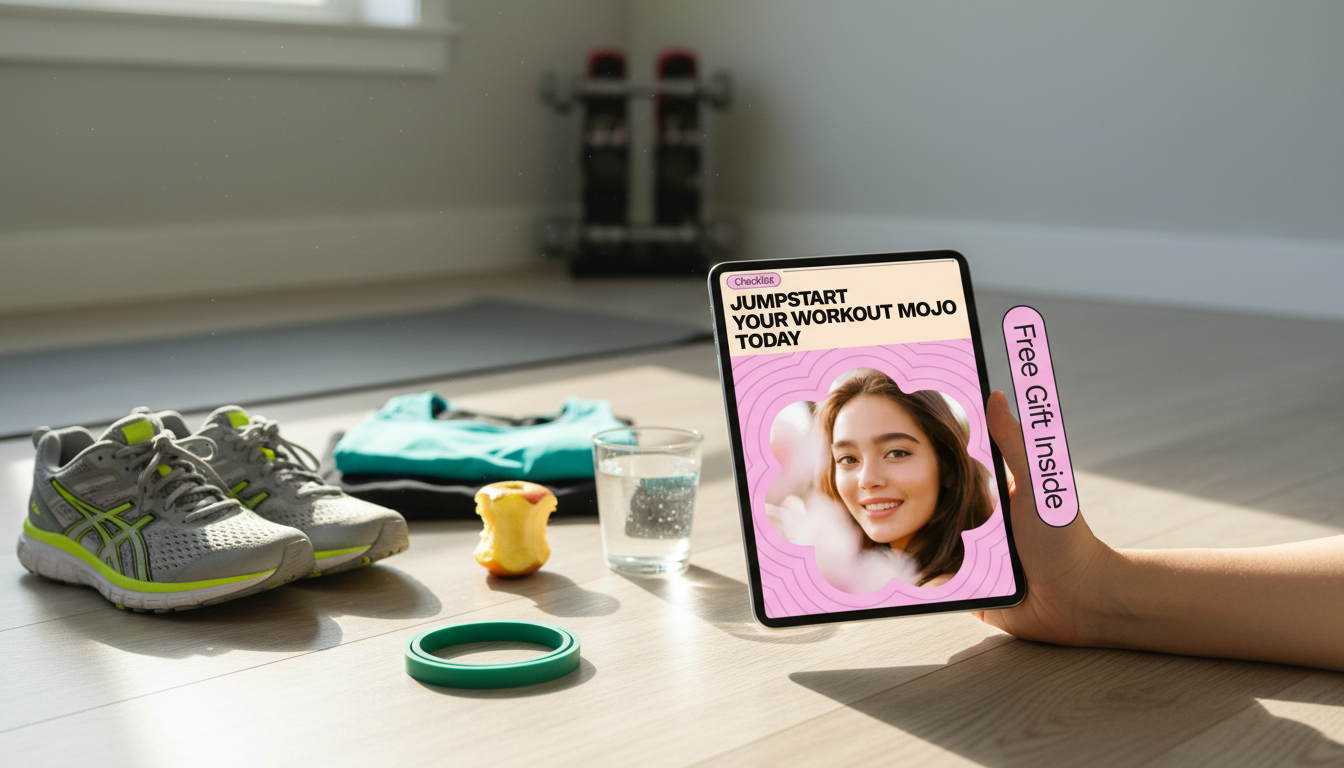
Jumpstart Your Workout Mojo Today: A Checklist That Makes Motivation Easier
Motivation usually shows up after a small action—not before it. When energy is low, the goal isn’t to “feel inspired,” it’s to reduce friction so starting becomes the default. The checklist-style approach below makes workouts feel more automatic by shrinking the first step, clarifying your reason, and building a plan that survives real life. For more guidance, see Testing ways to encourage exercise – NIH.
Start With a 2-Minute “Show Up” Rule
If starting feels heavy, make the start almost laughably small. Your job is to begin—momentum can decide the rest. For further reading, see What can you do to maintain exercise motivation? – Harvard Health.
- Choose the smallest possible start: shoes on, water bottle filled, or a 2-minute walk.
- Treat starting as the goal; continuing is optional (and momentum often follows).
- Pre-decide your time window (example: 6:30–7:00) so you don’t negotiate daily.
- Keep the first week intentionally easy to protect the habit.
Quick-start options for low-motivation days
| Motivation level | Start action (2 minutes) | If it feels good, continue with… |
|---|---|---|
| Very low | Put on workout clothes and do 5 deep breaths | 5-minute mobility flow |
| Low | Walk to the end of the street and back | 10-minute brisk walk |
| Medium | 10 bodyweight squats + 10 wall push-ups | 1–2 strength circuits |
| High | Warm-up timer: 2 minutes | Full planned workout |
Define a Clear “Why” That Works on Bad Days
A strong “why” isn’t dramatic—it’s usable when you’re tired, stressed, or short on time.
- Pick one identity-based reason: “I’m someone who keeps promises to myself.”
- Pick one immediate payoff: better mood, less stress, or more energy later today.
- Write a one-sentence commitment and keep it visible (phone lock screen or a note).
- Avoid vague goals; tie workouts to life outcomes like sleep, stamina, and confidence.
Tip: If your “why” only makes sense on perfect days, it’s too fragile. Build one that still matters when the day is messy.
Make It Ridiculously Easy to Begin
Most workout plans fail at the doorway: hunting for socks, deciding what to do, or realizing your headphones are dead. Reduce the number of steps between “I should” and “I’m moving.”
- Pack a grab-and-go kit the night before: shoes, headphones, hair ties, towel.
- Remove barriers with a plan you can do anywhere (home, gym, outdoors).
- Use one default workout for busy days—no browsing routines.
- Set a visible cue: shoes by the door, mat in the hallway, bands near the couch.
If you want an easy “start button,” keep a simple prompt list on paper. A ready-made option is Jumpstart Your Workout Mojo Today – Checklist for How to Get Motivated to Exercise, designed to cut decision fatigue when you’re not in the mood.
Use a Weekly Plan That Leaves Room for Real Life
Consistency beats intensity, especially early on. A plan that assumes you’ll be busy is a plan you’ll actually follow.
- Schedule 3 “anchor” sessions (20–40 minutes) and 2 “optional” micro-sessions (5–15 minutes).
- Decide your minimum effective dose for the week (example: 2 workouts = success).
- Pair workouts with a stable routine: after coffee, after school drop-off, after work.
- Add one recovery day on purpose to avoid the all-or-nothing cycle.
For reference, widely used adult guidelines recommend regular activity across the week; see the CDC’s adult physical activity guidance and the American Heart Association recommendations. Use those as a long-term target, not a pass/fail test for today.
Motivation Boosters That Don’t Depend on Willpower
Willpower is unreliable. Systems are dependable. Use “outside help” that makes showing up easier.
- Temptation bundling: only listen to a favorite podcast or playlist while moving.
- Body-doubling: train with a friend, take a class, or do a virtual check-in.
- Use a timer: commit to 10 minutes; stopping is allowed when the timer ends.
- Create a “done list” (workouts completed) instead of only chasing numbers.
If cold weather is the thing that breaks your routine, prepare the environment—not just your mindset. A practical companion for outdoor plans is Ready for Winter Ready for Anything – Winter Sport Gear Basics eBook, which focuses on layering and gear checklists so you’re not improvising when temperatures drop.
Track Progress Without Obsessing
Tracking should create clarity, not pressure. Keep it small and review it weekly like a quick reset.
- Choose 1–2 simple metrics: days exercised, steps, workouts/week, or minutes moved.
- Add one non-scale win: sleep quality, mood, strength confidence, or stress level.
- Review weekly: what worked, what didn’t, and what to simplify next week.
- Reward consistency (new playlist, relaxing bath, upgraded water bottle), not perfection.
A helpful rule: if tracking makes you avoid workouts, you’re tracking too much.
A Printable Checklist to Keep on the Fridge
Use this as a quick daily script—especially on low-energy days.
Recommended Tool: “Jumpstart Your Workout Mojo Today” Checklist
Find it here: Jumpstart Your Workout Mojo Today – Checklist for How to Get Motivated to Exercise.
FAQ
What if motivation never shows up before a workout?
That’s normal—action often comes first. Use the 2-minute start, lower the bar to “show up,” and rely on cues (shoes by the door, a set time window) so beginning becomes automatic.
How many days a week should someone exercise to build a habit?
Start with 2–4 days per week based on your schedule, then add optional micro-sessions as a bonus. Defining a minimum success threshold (like 2 sessions = a win) helps you stay consistent without burning out.
What’s the best workout to do when energy is low?
Choose something simple: an easy walk, a short mobility flow, or a light strength circuit on a 10-minute timer. The best low-energy workout is the one you’ll actually do, because consistency builds momentum.















Leave a comment