-
Shop
- Advanced Technologies
- AI Career Advantage Collection
- AI Skills Mastery 2026 Collection
- Arts, Crafts & Hobbies
- Bathroom
- Best-Sellers
- Car Accessories
- Dating & Social Skills
- Denim
- 7FOR
- AGOLDE
- Antony Morato
- Armani Exchange
- Boss
- Brunello Cucinelli
- Calvin Klein Jeans
- Costume National
- Desigual
- Diesel
- Dolce & Gabbana
- Dsquared²
- Ermanno Scervino
- Fendi
- Gianni Lupo
- Guess Jeans
- Ichi
- Just Cavalli
- Lee
- Levi's
- Liu Jo
- Morgan De Toi
- Mother Denim
- Only
- Pepe Jeans
- Pinko
- Replay
- Valentino
- Vero Moda
- Digital Resources
- Education & Learning
- Family & Parenting
- Fashion
- Furniture
- Gadgets
- Health & Beauty
- Health & Wellness
- Home & Garden
- Kids & Babies
- Kitchen
- Lighting
- Patio, Lawn & Garden
- Personal Growth
- Pet Care
- Pet Supplies
- Pets
- Sport & Outdoors
- TikTok Growth & Monetization Mastery
- Travel
- Wealth
- Popular
- Best deals
Stop Car Rust: Remove, Repair, and Protect for Years
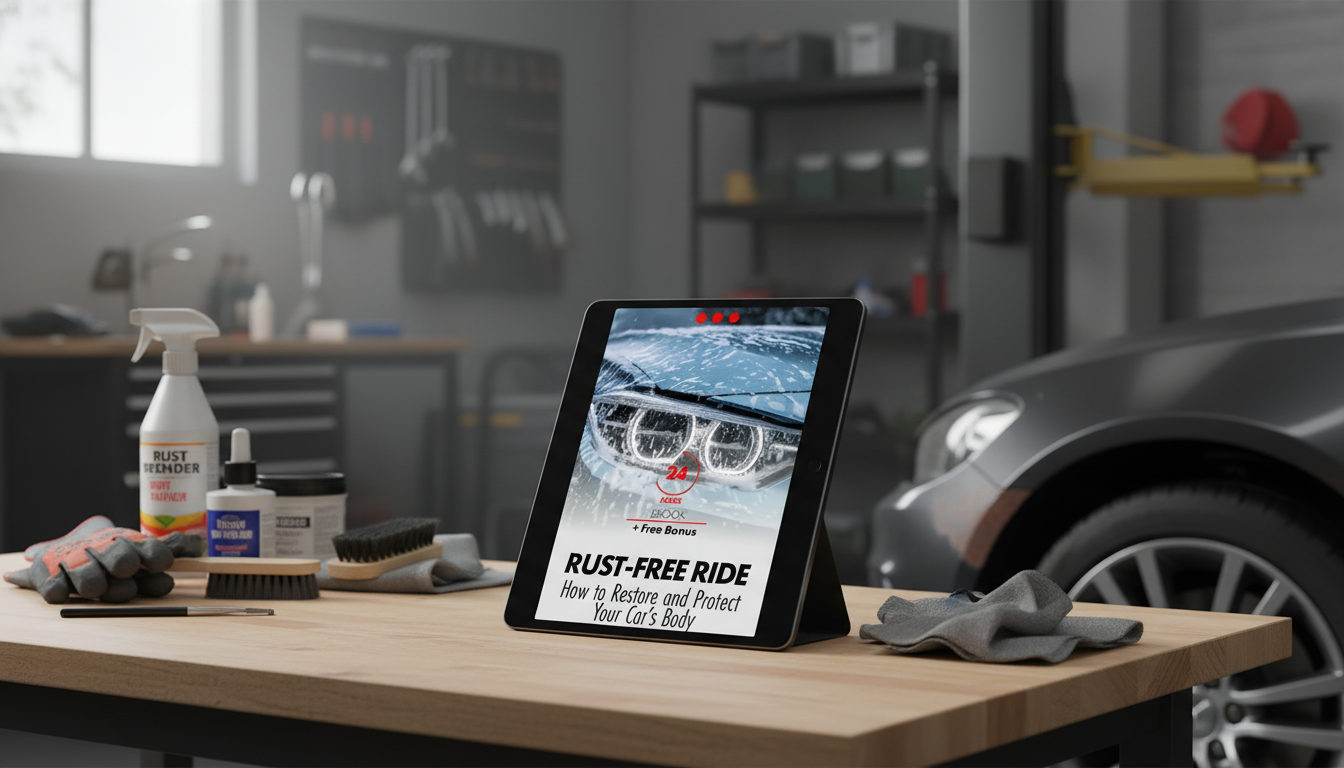
Rust-Free Ride: Restore and Protect Your Car’s Body
Rust starts small, spreads fast, and can quietly undermine both appearance and structural integrity. The good news: most rust problems can be stopped for the long haul when you match the repair to the severity, remove or stabilize corrosion correctly, and rebuild the protective layers that keep oxygen, moisture, and salt away from bare steel.
Why Rust Forms (and Why It Keeps Coming Back)
Rust is oxidation—steel reacts with oxygen and moisture to form iron oxide. Add road salt and the process accelerates dramatically, which is why winter driving can turn tiny chips into bubbling paint in a single season. The trickiest part is that rust often begins where you can’t easily see it, then “blooms” outward under paint.
Common moisture traps include wheel arches, rocker panels, door bottoms, trunk seams, windshield channels, and underbody seams where panels overlap. These areas hold wet debris, and once water is trapped, it keeps feeding corrosion even after the outside looks dry.
Quick cover-ups fail because paint over rust doesn’t remove contamination or stop the reaction. Any remaining oxide and moisture continue working beneath the coating, causing bubbles, cracking, and rapid return. Knowing the difference between cosmetic and structural rust helps you choose a repair that lasts: surface rust is usually manageable, while scale rust and perforation can demand aggressive removal or metal replacement.
Rust Assessment: Decide What Level of Repair You Need
Start by identifying what you’re dealing with. Surface rust is mostly discoloration with light roughness; scale rust flakes and pits deeper; perforation means actual metal loss or holes. If you can press a screwdriver through a “soft” spot, that’s past cosmetic.
Also look for safety red flags: rust near suspension mounting points, frame rails, seat belt anchors, and structural pinch welds. When in doubt, get a qualified inspection—vehicle safety guidance is available from NHTSA.
Rust severity and typical approach
| Rust type | What it looks like | Typical fix | Risk if ignored |
|---|---|---|---|
| Surface rust | Orange/brown staining, light roughness | Sand/brush to clean metal, treat, prime, paint | Spreads under paint and clear coat |
| Scale rust | Flaking layers, pitting, swollen seams | Grind/strip, treat/encapsulate, seal seams, refinish | Weakens panels; moisture stays trapped |
| Perforation | Holes, soft spots, missing metal | Cut out, weld patch or replace panel, seal and refinish | Structural compromise, water intrusion |
Tools, Materials, and Safety Setup
Mechanical removal is your foundation. Use wire wheels and brushes for light corrosion, sanding blocks for controlled flattening, and flap discs or grinders for thicker scale—always matching aggressiveness to the metal thickness and rust severity. The goal is to get back to solid, sound material without overheating or thinning the panel.
Chemistry is the backup plan for what tools can’t reach. Rust converters chemically transform remaining iron oxide into a more stable compound, while rust encapsulators act like a sealing barrier to block oxygen and moisture. Most lasting repairs use both concepts: remove as much as possible, then stabilize what remains, then seal.
For refinishing, prioritize clean prep and compatible layers: degreaser, tack cloth, epoxy primer for bare metal, then base coat and clear coat. Seam sealer is essential wherever panels join—because seams are where water returns first.
For protection, choose products based on location. Cavity wax is ideal for inside doors and rockers; undercoating is best underneath where abrasion from gravel and slush is constant. Ventilation matters—solvents and paints can contain VOCs, and safe handling guidance is available through the EPA.
Step-by-Step: Remove Rust and Restore the Panel
1) Clean and inspect
Wash thoroughly, then degrease and dry. Mark the rust boundary beyond visible bubbling—corrosion typically extends farther than the paint defect suggests.
2) Strip to sound material
3) Treat remaining oxidation
4) Seal the surface
5) Smooth and blend
6) Paint and protect
7) Seal seams and edges
Long-Term Protection: Stop Rust Before It Starts
HTML quick-reference table
| Area | Best protection | How often to check |
|---|---|---|
| Wheel arches | Chip repair + seam/edge sealing + periodic rinse | Monthly in winter |
| Rocker panels/door bottoms | Cavity wax + keep drains clear | Seasonally |
| Underbody | Appropriate undercoating + spot touch-ups | Before and after winter |
| Hood/fenders leading edge | Touch-up + protective film/wax as needed | After long highway trips |
Common Mistakes That Cause Rust to Return
What the “Rust-Free Ride” eBook Guide Helps With
If you want a clear, repeatable workflow (especially when juggling prep, treatment, primer, paint, and protection), the Rust-Free Ride: How to Restore and Protect Your Car’s Body – Ultimate eBook Guide for Rust Removal & Protection lays out the sequence that helps repairs hold up through weather and road salt.
For drivers preparing for harsh salt season, the Ready for Winter Ready for Anything – Winter Sport Gear Basics eBook can be a useful companion for planning cold-weather readiness that often overlaps with rust season habits (frequent rinsing, safer winter routines, and gear checklists).
Quick Maintenance Routine for a Rust-Resistant Car
FAQ
Can rust be fully stopped once it starts?
Yes in many cases—if active rust is removed or chemically stabilized, then sealed from oxygen and moisture with the right primer/coating and maintained. If corrosion is left under paint or seams aren’t sealed, it commonly returns.
What’s the difference between a rust converter and a rust encapsulator?
A converter chemically transforms iron oxide into a more stable compound, while an encapsulator primarily seals remaining corrosion from air and moisture. The right choice depends on how completely you can remove rust mechanically and where the repair is located.
Is it safe to drive with rust on the body?
Light surface rust is usually cosmetic, but rust near structural areas or suspension mounting points can become a safety issue. Any perforation, soft metal, or rust near critical mounting points should be assessed promptly.
Recommended for you


EMS Body Shaping Machine Guide: Safe Home Toning
May 30, 2026












Leave a comment