-
Shop
- Advanced Technologies
- AI Career Advantage Collection
- AI Skills Mastery 2026 Collection
- Arts, Crafts & Hobbies
- Bathroom
- Best-Sellers
- Car Accessories
- Dating & Social Skills
- Denim
- 7FOR
- AGOLDE
- Antony Morato
- Armani Exchange
- Boss
- Brunello Cucinelli
- Calvin Klein Jeans
- Costume National
- Desigual
- Diesel
- Dolce & Gabbana
- Dsquared²
- Ermanno Scervino
- Fendi
- Gianni Lupo
- Guess Jeans
- Ichi
- Just Cavalli
- Lee
- Levi's
- Liu Jo
- Morgan De Toi
- Mother Denim
- Only
- Pepe Jeans
- Pinko
- Replay
- Valentino
- Vero Moda
- Digital Resources
- Education & Learning
- Family & Parenting
- Fashion
- Furniture
- Gadgets
- Health & Beauty
- Health & Wellness
- Home & Garden
- Kids & Babies
- Kitchen
- Lighting
- Patio, Lawn & Garden
- Personal Growth
- Pet Care
- Pet Supplies
- Pets
- Sport & Outdoors
- TikTok Growth & Monetization Mastery
- Travel
- Wealth
- Popular
- Best deals
Outfit Repetition That Looks Intentional: Smart Rotation
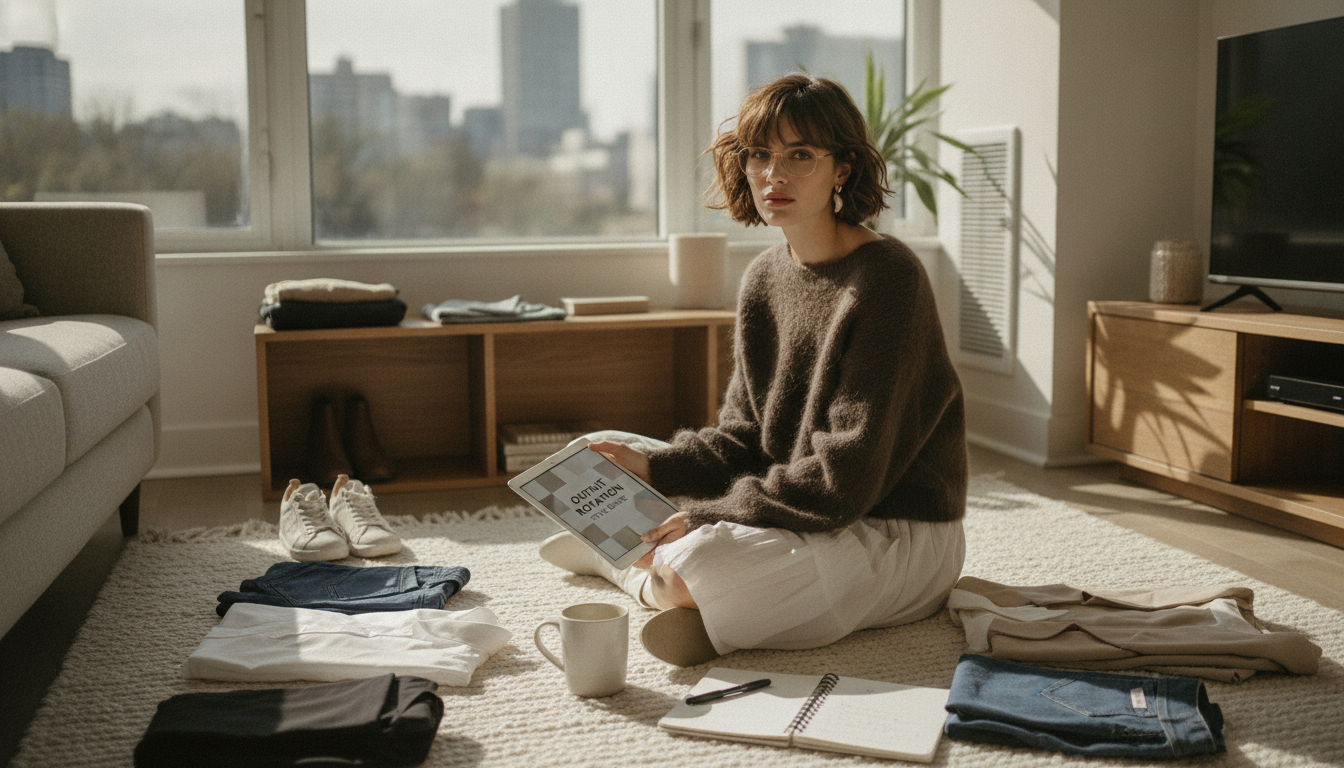
Wearing It Again With Confidence: A Practical Guide to Outfit Repetition, Capsule Mindset, and Smart Rotation
Outfit repetition can feel risky when the goal is to look fresh, put-together, and true to personal style. But with the right rotation system, small styling shifts, and a capsule-minded approach, repeating becomes a confidence tool: fewer decisions, more consistent outfits, and a wardrobe that works harder without constant shopping. It’s also a more sustainable way to dress—especially when the global clothing sector has well-documented environmental impacts (see the International Labour Organization’s overview here).
Why repeating outfits can look intentional (not “samey”)
- Consistency reads as personal style: repeating a silhouette or color family builds recognition and polish. People often remember the “vibe” more than the exact pieces.
- Fewer decisions = better presence: outfit repetition reduces decision fatigue, freeing time and energy for grooming, posture, and a calmer morning. Chronic stress can affect the body in real ways (the American Psychological Association breaks this down here), so removing small daily stressors can add up.
- Intentional repeats look elevated: a great fit, clean lines, and cohesive styling usually read more expensive than constantly changing items that don’t sit right.
- A rotation plan makes repeats less noticeable: items reappear on a rhythm (not back-to-back), which keeps your look feeling “you” without feeling repetitive.
The confidence shift: from “what will people think?” to “this is my uniform”
- Replace “newness” with “fit + finish” as the standard: tailoring, steaming, a lint-free sweater, and clean shoes do more than a new top ever will.
- Pick signature elements: a jacket cut you always reach for, a belt style, a simple jewelry set, a consistent hairstyle, or one accent color. These anchors make repeats look purposeful.
- Use a simple script: “If it works, repeat it—then refine it.” Repetition becomes proof of competence, not a lack of creativity.
- Set boundaries for comparison triggers: if trend pressure or social scrolling makes you second-guess outfits that actually work, shift attention to comfort, movement, and function.
If confidence is the main barrier—not the clothes—pair outfit repetition with mindset support. The Body Confidence Blueprint | Ebook Guide on How to Build Body Confidence, Self-Image & Everyday Confidence is a practical companion for strengthening self-image so repeats feel empowering, not limiting.
Build a capsule wardrobe mindset without going minimalist overnight
- Start with a “core 12–20” that matches real life: include pieces for work, errands, social plans, and at-home comfort. A capsule mindset is about usefulness, not deprivation.
- Choose a base palette: 2–3 neutrals (like black, navy, cream, gray, or olive) and 1–2 accents. This quietly multiplies combinations.
- Prioritize repeatable categories: bottoms, layering pieces, shoes, and outerwear carry outfits longer than statement tops alone.
- Keep bridge pieces: a blazer that works with jeans and trousers, sneakers that work with dresses, a cardigan that works over tanks and tees.
Smart outfit rotation: a simple system that keeps looks feeling new
- Avoid back-to-back repeats: rotate by category—alternate bottoms first, then swap layers. Even small spacing makes a big difference.
- Think in formulas, not one-off outfits: formula = bottom + top + layer + shoe. When you find a formula that works, you’ve basically created a reliable shortcut.
- Use a 2-week loop: repeat favorites after 10–14 days. Repeat basics (coats, bags, everyday shoes) sooner because people expect to see them frequently.
- Track lightly: a notes app list of 10 go-to formulas is enough. The goal is ease, not a complicated system you won’t keep up with.
Outfit Rotation Cheatsheet (Mix, Match, Repeat)
| Base Formula | Repeat Strategy | Quick Refresh Options |
|---|---|---|
| Jeans + tee + blazer + loafers | Repeat weekly with a different tee color or blazer texture | Swap belt, add earrings, change bag |
| Trousers + knit + sneakers | Repeat every 10–14 days with different trouser color | Layer a shirt collar, add a watch, change socks |
| Midi dress + denim jacket + flats | Repeat often; dresses read “complete” even when repeated | Change jacket (leather/cardigan), add scarf |
| Skirt + tank + cardigan + sandals | Repeat through warm seasons with cardigan variations | Switch necklace, hair style, lip color |
| Monochrome set + statement shoe | Repeat frequently; monochrome looks intentional | Swap shoe color, add outerwear, change bag |
Make repeats feel fresh with micro-styling (no new clothes required)
Outfit repetition boundaries: when repeating doesn’t work
A guided approach for effortless repeats
If you want a structured method you can start using right away, Wearing It Again With Confidence – Outfit Repetition Style Guide (Digital Fashion eBook) walks through repeatable outfit formulas, a capsule-minded wardrobe approach, and a simple rotation plan that keeps your style consistent without feeling boring.
FAQ
How often can the same outfit be worn without people noticing?
A practical cadence is every 7–14 days for the same full outfit, while repeating outerwear, bags, and everyday shoes more frequently is completely normal. If you want a refresh, change one element—like shoes, a layer, or accessories—without rebuilding the entire look.
How do you repeat outfits and still look stylish?
Rely on outfit formulas, prioritize fit + finish (pressed pieces and clean shoes), and make micro-styling swaps like a belt, a different hairstyle, or a new layer. Keeping a cohesive palette and a few signature elements also makes repeats look intentional and polished.
What’s the easiest way to start a capsule wardrobe mindset?
Start with a small core set that matches your real weekly activities, pick a limited palette for easy mixing, and keep bridge pieces that work across outfits. Skip strict minimalism—keep a few “joy” items and refine as you notice what you truly repeat.










Leave a comment