-
Shop
- Advanced Technologies
- AI Career Advantage Collection
- AI Skills Mastery 2026 Collection
- Arts, Crafts & Hobbies
- Bathroom
- Best-Sellers
- Car Accessories
- Dating & Social Skills
- Denim
- 7FOR
- AGOLDE
- Antony Morato
- Armani Exchange
- Boss
- Brunello Cucinelli
- Calvin Klein Jeans
- Costume National
- Desigual
- Diesel
- Dolce & Gabbana
- Dsquared²
- Ermanno Scervino
- Fendi
- Gianni Lupo
- Guess Jeans
- Ichi
- Just Cavalli
- Lee
- Levi's
- Liu Jo
- Morgan De Toi
- Mother Denim
- Only
- Pepe Jeans
- Pinko
- Replay
- Valentino
- Vero Moda
- Digital Resources
- Education & Learning
- Family & Parenting
- Fashion
- Furniture
- Gadgets
- Health & Beauty
- Health & Wellness
- Home & Garden
- Kids & Babies
- Kitchen
- Lighting
- Patio, Lawn & Garden
- Personal Growth
- Pet Care
- Pet Supplies
- Pets
- Sport & Outdoors
- TikTok Growth & Monetization Mastery
- Travel
- Wealth
- Popular
- Best deals
Portable 160 PSI Bike Floor Pump With Dual Valve Head
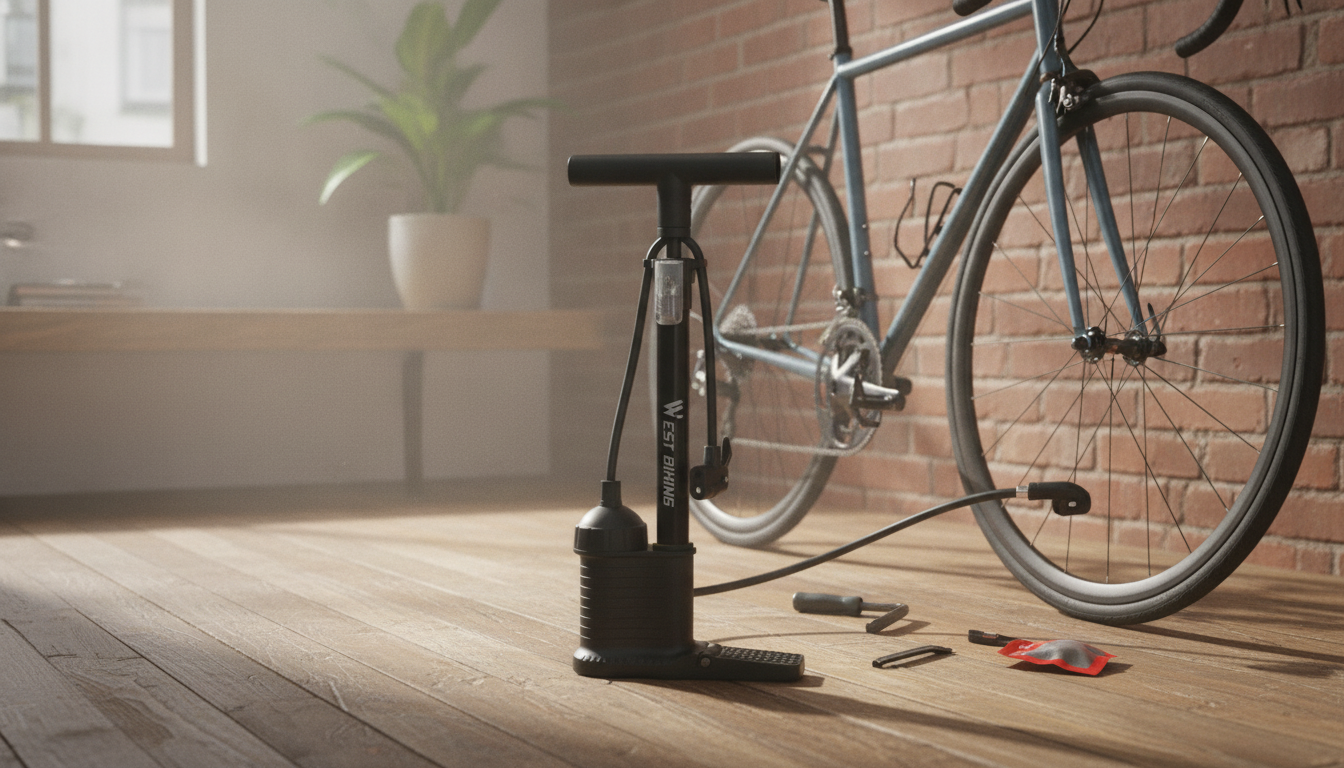
High-Pressure Portable Bike Floor Pump 160 PSI with Dual-Valve Head
A compact floor pump that reaches high pressures can make everyday top-offs faster and roadside fixes less frustrating. A 160 PSI portable floor pump is especially helpful for narrow tires where you need to hit a precise target without exhausting your hands. Pair that with a dual-valve head, and inflation gets simpler across valve types—no digging for adapters, fewer leaks at the head, and less risk of damaging a valve stem when you’re in a hurry.
If you’re shopping for a reliable option for home, commuting, or event-day support, the High-Pressure Portable Bike Floor Pump 160 PSI with Dual-Valve Head is built around that “compact but capable” sweet spot.
What Makes a High-Pressure Portable Floor Pump Different
Portable floor pumps sit between tiny frame/mini pumps and full-size shop pumps. The goal is to preserve the leverage and stability of a floor pump while staying easy to store in an apartment, car trunk, or gear tote.
- Higher max PSI for high-pressure tires: Road and some gravel tires often need pressures that are simply uncomfortable to reach with most mini pumps.
- Floor-style leverage reduces fatigue: A stable base and longer stroke help you pump efficiently, especially above roughly 60 PSI.
- Faster inflation than ultra-compact pumps: More usable barrel volume usually means fewer strokes to reach your target pressure.
- Pressure control with a gauge: A readable gauge (plus consistent pumping technique) helps prevent underinflation that can cause pinch flats, and overinflation that can degrade handling or risk blowouts.
For additional tire-pressure background, Sheldon Brown’s reference guide is a helpful baseline: Bicycle Tire Pressure Guide.
160 PSI Capacity: When It Matters (and When It Doesn’t)
A 160 PSI rating doesn’t mean every tire should be pumped anywhere near that number. It means the pump has enough headroom to reach higher pressures smoothly and consistently when your setup requires it.
- Best suited for: road bikes, fitness bikes, and some gravel setups where recommended pressures can trend higher (especially with narrower tires).
- Often unnecessary for: many modern MTB setups that run low pressures—particularly tubeless—where volume and bead seating can matter more than high PSI.
- More useful with Presta/narrow tires: Higher-pressure capability can make it easier to reach the target without struggling through the last 10–20 PSI.
- Respect limits: Always follow the tire sidewall maximum and any rim manufacturer guidance. Higher pump capacity is not a target.
Typical Pressure Ranges by Bike Type (General Guidance)
| Bike type | Common use case | Approx. pressure range |
|---|---|---|
| Road | Smooth pavement, narrow tires | 70–110 PSI (some setups higher) |
| Gravel | Mixed surfaces, wider tires | 35–70 PSI |
| Hybrid/City | Commuting, comfort-focused | 40–75 PSI |
| MTB | Trails, wider tires | 18–35 PSI (varies by rider, tire, terrain) |
For standards context around tire/rim sizing and compatibility, see the ETRTO overview: European Tyre and Rim Technical Organisation (ETRTO).
Dual-Valve Head: Faster Setup, Fewer Adapters
A dual-valve head is designed to work with both common valve types—Presta and Schrader—without swapping parts or carrying separate adapters. That convenience matters most during quick top-offs, time-crunched pre-ride checks, and roadside fixes.
- Presta + Schrader support: One head for multiple bikes in a household, or mixed fleets like road + hybrid.
- Less fumbling, less damage risk: Minimizes cross-threading (Presta) and helps avoid bending valve stems when you’re attaching under pressure.
- Secure locking action: A firm clamp/lever helps prevent air loss at higher pressures, where tiny leaks become more noticeable.
- Best practices: For Presta, open the valve tip before attaching. For Schrader, press on straight to protect the valve core.
Key Features to Check Before Buying
Two pumps can share the same PSI rating and still feel very different in daily use. Small design details influence accuracy, comfort, and how well the pump protects your valves over time.
Quick Checklist
| Feature | Why it matters | What to look for |
|---|---|---|
| Dual-valve head | Works across bike types | Presta/Schrader support without extra parts |
| High PSI rating | Reaches road pressures | Up to 160 PSI capacity |
| Stable base | Efficient pumping | Wide stance, non-slip feet |
| Accurate gauge | Avoids over/under inflation | Easy-to-read dial, consistent needle |
| Hose design | Protects valve stems | Flexible hose, secure head lock |
How to Inflate Tires Correctly (Presta and Schrader)
Presta valves
Schrader valves
Portability and Storage: Commuting, Travel, and Home Use
- Commuting: Store it where the gauge won’t be bumped and where grit won’t pack into the valve head.
- Travel: Avoid tight hose bends that can stress fittings; keep the head covered if possible.
- Routine stops: Pairing reliable inflation with dependable security helps build a smoother city riding routine. Consider the Heavy-Duty 4-Digit Chain Lock for Bikes, E-Bikes & Motorcycles for quick stops and daily parking.
Care and Troubleshooting
FAQ
Is 160 PSI necessary for a bike pump?
No—many bikes never need pressures that high. A 160 PSI capacity is most helpful for road tires and other narrow setups because it makes reaching the target pressure easier and more controlled; always follow tire and rim limits rather than the pump’s maximum.
Will a dual-valve head work with both Presta and Schrader valves without an adapter?
Yes, a true dual-valve head is designed to fit both valve types without separate adapters. Attach the head straight, lock it firmly to prevent leaks, and open the Presta tip before pumping.
Why does my pump lose air when I remove the head?
A brief puff of air is normal because the hose and head release their own trapped air when disconnected. To minimize loss, fully lock the head while pumping, remove it swiftly and straight, and replace worn gaskets if you notice ongoing leakage.
Recommended for you
Clean Once, Relax More: The 3-Loop Home Reset Plan
Jul 30, 2026











Leave a comment