-
Shop
- Advanced Technologies
- AI Career Advantage Collection
- AI Skills Mastery 2026 Collection
- Arts, Crafts & Hobbies
- Bathroom
- Best-Sellers
- Car Accessories
- Dating & Social Skills
- Denim
- 7FOR
- AGOLDE
- Antony Morato
- Armani Exchange
- Boss
- Brunello Cucinelli
- Calvin Klein Jeans
- Costume National
- Desigual
- Diesel
- Dolce & Gabbana
- Dsquared²
- Ermanno Scervino
- Fendi
- Gianni Lupo
- Guess Jeans
- Ichi
- Just Cavalli
- Lee
- Levi's
- Liu Jo
- Morgan De Toi
- Mother Denim
- Only
- Pepe Jeans
- Pinko
- Replay
- Valentino
- Vero Moda
- Digital Resources
- Education & Learning
- Family & Parenting
- Fashion
- Furniture
- Gadgets
- Health & Beauty
- Health & Wellness
- Home & Garden
- Kids & Babies
- Kitchen
- Lighting
- Patio, Lawn & Garden
- Personal Growth
- Pet Care
- Pet Supplies
- Pets
- Sport & Outdoors
- TikTok Growth & Monetization Mastery
- Travel
- Wealth
- Popular
- Best deals
Clean Once, Relax More: The 3-Loop Home Reset Plan
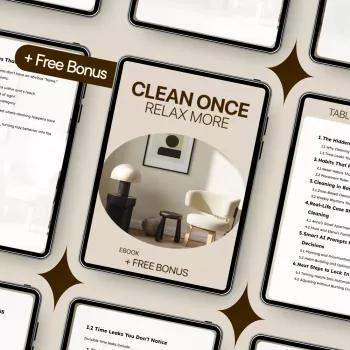
Clean Once, Relax More: A Simple Home Reset System for Stress-Free Cleaning
A calmer home doesn’t require marathon cleaning days. A repeatable reset rhythm—paired with a few “clean once” decisions—can reduce mess build-up, cut decision fatigue, and protect downtime. The goal is simple: set up the space once, maintain it with short resets, and rely on clear triggers instead of waiting for motivation to show up.
What “clean once” really means (and what it doesn’t)
“Clean once” doesn’t mean your home stays spotless forever. It means shifting effort away from repeated, high-friction chores and into one-time setups that permanently make cleaning easier.
- Move effort to setup: declutter the hot spots, create clear homes for essentials, and standardize supplies so you stop hunting for tools.
- Aim for “ready for tomorrow,” not “perfect”: prioritize visible surfaces, hygiene zones, and clear pathways.
- Reduce steps: keep tools where the work happens (wipes under the bathroom sink, a hamper where clothes actually land).
- Swap vague goals for small outcomes: “clear the sink,” “empty the trash,” or “set out tomorrow’s coffee mug” is easier to finish than “clean the whole house.”
For health and hygiene guidance on what actually needs disinfecting (versus what just needs routine cleaning), the CDC’s cleaning and disinfecting recommendations are a helpful reference.
The home reset system: three loops that keep things easy
This system works because it’s repetitive and predictable. You’re not reinventing a plan each day—you’re running the same small loops.
Loop 1 — The 5–10 minute daily reset
- Clear counters and tables (return items to their “homes”).
- Handle dishes: sink cleared or dishwasher running.
- Quick floor pickup (just the obvious items and clutter).
- Fast bathroom touch if needed (wipe sink/faucet, quick mirror check).
Loop 2 — The weekly refresh
Instead of “cleaning the whole house” on one day, rotate one focused zone per day to prevent pileups.
| Day | 10–20 Minute Focus | Quick win to stop buildup |
|---|---|---|
| Monday | Floors: quick vacuum/sweep high-traffic paths | Keep a lightweight tool accessible; do paths first |
| Tuesday | Bathroom reset: sink + toilet + mirror | Store wipes/spray in the bathroom |
| Wednesday | Laundry loop: wash + dry + 10-minute fold | Set a timer; fold only what fits in drawers today |
| Thursday | Kitchen refresh: fridge sweep + trash/recycling | Empty trash before it overflows |
| Friday | Paper + surfaces: clear mail, wipe tables | Add a single inbox tray for papers |
| Saturday | Bedding: change sheets + quick bedroom pickup | Keep spare linens in the same closet |
| Sunday | Buffer day: catch up or do a small upgrade | Choose the one task that will make Monday easier |
Loop 3 — The monthly “clean once” upgrades
- Label one bin that keeps becoming a mystery pile.
- Add hooks where bags, jackets, or towels collect.
- Simplify products to the few you truly use.
- Create a single “drop zone” for items that enter daily (keys, wallet, badges).
Keep the order consistent—entry → kitchen → living area → bathroom → bedrooms—so the routine becomes automatic.
Set up the “reset stations” that eliminate back-and-forth
Reset stations are small, dedicated mini-kits stored where you’ll use them. They remove the biggest friction point: walking all over the house to gather supplies.
- Kitchen station: dish brush, microfiber cloths, all-purpose spray, trash bags—kept together in one cabinet or small caddy.
- Bathroom station: one main cleaner, cloths/wipes, toilet brush—fewer product types means less stalling.
- Floor station: broom/vacuum and dustpan near the crumb zone (often kitchen/entry).
- Laundry station: hamper where clothes drop, stain stick nearby, plus a “not dirty yet” hook to prevent chair piles.
For everyday cleaning how-tos and product-use basics, the American Cleaning Institute has practical, plain-language guidance.
Stress-free habits: triggers, not willpower
Willpower is unreliable on busy days. Triggers are dependable because they piggyback on routines already happening.
- Pair resets with cues: start the dishwasher when coffee finishes, wipe the sink after brushing teeth, reset the living room before hitting play on a show.
- Close-the-loop rule: don’t leave a room empty-handed; return one item to its home as you go.
- Minimum standard: if energy is low, do only the non-negotiables (clear sink, trash if needed, quick bathroom touch).
- Make it visible: a short checklist on the fridge or in your notes app reduces mental load.
Reducing daily stress is also about protecting recovery time; the Mayo Clinic’s stress management basics reinforces why consistent, small habits can be more sustainable than big overhauls.
A fast whole-home reset (20 minutes) for chaotic days
When things feel out of control, don’t “clean.” Reset. Set a timer and work in passes so progress is visible quickly.
Common snags and quick fixes
A ready-to-follow plan that’s easy to repeat
Helpful digital guides (instant access)
- Clean Once, Relax More – Time-Saving Cleaning Guide, Simple Home Reset System, Stress-Free Cleaning Habits, Digital eBook Download
- Body Confidence Blueprint | Ebook Guide on How to Build Body Confidence, Self-Image & Everyday Confidence
FAQ
How long should a daily reset take?
Plan for 5–10 minutes on normal days and up to 20 minutes when the house feels chaotic. Use a timer, focus on counters/sinks and clear pathways first, and stop when the timer ends.
What if there’s no time for weekly cleaning tasks?
Split weekly tasks into 5-minute micro-steps and use a buffer day to catch up. When the week is overloaded, keep only health and hygiene priorities (trash, dishes, bathroom touch-up) so things don’t snowball.
How can cleaning feel less overwhelming?
Follow a fixed order, rely on triggers tied to existing routines, and simplify supplies into a few reset stations. A clear minimum standard keeps the home from falling too far behind, which makes the next reset feel doable.
Recommended for you


5 Everyday Uses of AI That Make Life Easier
Jul 29, 2026











Leave a comment