-
Shop
- Advanced Technologies
- AI Career Advantage Collection
- AI Skills Mastery 2026 Collection
- Arts, Crafts & Hobbies
- Bathroom
- Best-Sellers
- Car Accessories
- Dating & Social Skills
- Denim
- 7FOR
- AGOLDE
- Antony Morato
- Armani Exchange
- Boss
- Brunello Cucinelli
- Calvin Klein Jeans
- Costume National
- Desigual
- Diesel
- Dolce & Gabbana
- Dsquared²
- Ermanno Scervino
- Fendi
- Gianni Lupo
- Guess Jeans
- Ichi
- Just Cavalli
- Lee
- Levi's
- Liu Jo
- Morgan De Toi
- Mother Denim
- Only
- Pepe Jeans
- Pinko
- Replay
- Valentino
- Vero Moda
- Digital Resources
- Education & Learning
- Family & Parenting
- Fashion
- Furniture
- Gadgets
- Health & Beauty
- Health & Wellness
- Home & Garden
- Kids & Babies
- Kitchen
- Lighting
- Patio, Lawn & Garden
- Personal Growth
- Pet Care
- Pet Supplies
- Pets
- Sport & Outdoors
- TikTok Growth & Monetization Mastery
- Travel
- Wealth
- Popular
- Best deals
20 Leadership Qualities Great Leaders Build (With Habits)
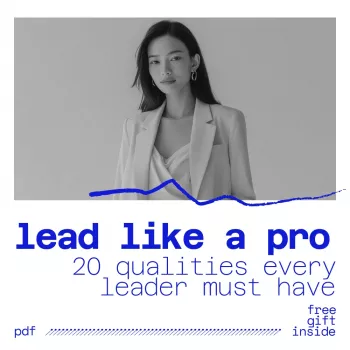
Lead Like a Pro: 20 Essential Qualities Every Great Leader Must Have
Great leadership isn’t a personality trait reserved for a lucky few—it’s a set of learnable habits: how decisions are made, how people are treated, and how outcomes are delivered. The best leaders build trust through consistent behavior, translate goals into clear priorities, and create an environment where people can do their best work. Below are 20 essential leadership qualities and practical ways to strengthen each one, plus a simple weekly plan to turn good intentions into daily performance.
What separates a leader from a title
A title can grant authority, but leadership earns followership. Real leadership shows up as behavior: influence, clarity, accountability, and service to the mission and the team. People don’t experience “leadership potential”—they experience meetings that end with clear next steps, decisions that stick, and feedback that makes them better.
Good intentions aren’t enough without communication, execution, and trust. Even a well-meaning manager can create confusion by changing priorities mid-week, avoiding tough conversations, or failing to close the loop on commitments. Conversely, a team member without formal authority can lead by aligning peers, solving problems early, and setting a standard for reliability.
Leadership qualities look different depending on role: founders set direction amid ambiguity; project leads coordinate across functions; managers balance results with development; and individual contributors lead through expertise and influence. The core behaviors remain the same—only the scale changes.
The 20 essential qualities: a practical roadmap
Use this list as a diagnostic. Pick the qualities that would most improve clarity, speed, or trust on your team.
1) Vision
Set direction people can repeat and act on. A leader’s vision becomes useful when it’s simple enough to guide daily tradeoffs.
2) Integrity
Make values visible through consistent decisions. Integrity is choosing the same standard when it’s costly, not just when it’s convenient.
3) Self-awareness
Know your strengths, blind spots, and impact on others. Leaders who can name their patterns can change them.
4) Emotional intelligence
Read the room, respond with control, and de-escalate tension. Emotional intelligence is closely tied to recognizing and managing emotions effectively.
5) Communication
Simplify, confirm understanding, and keep messages consistent. Repetition isn’t redundancy when stakes are high.
6) Active listening
Ask better questions and reflect back what you heard. Listening reduces rework and increases buy-in.
7) Decisiveness
Choose a path with available data and adjust quickly when needed. Decision quality improves when timelines are clear.
8) Accountability
Own outcomes, clarify ownership, and follow through. Accountability turns “we should” into “I will by Friday.”
9) Empathy
Balance care with standards and direct feedback. Empathy isn’t lowering the bar—it’s helping people clear it.
10) Resilience
Recover from setbacks without spreading panic. Calm leaders protect focus when pressure rises.
11) Adaptability
Change plans without losing principles or momentum. Flexibility plus clarity prevents whiplash.
12) Confidence with humility
Act decisively while staying coachable. The team trusts leaders who are steady and still willing to learn.
13) Strategic thinking
Connect daily work to long-term outcomes. Strategy is deciding what not to do—and explaining why.
14) Problem-solving
Define the real problem before jumping to solutions. Strong leaders separate symptoms from root causes.
15) Delegation
Distribute responsibility with clear expectations and support. Delegation is how leadership scales beyond one person.
16) Coaching mindset
Develop people, not just deliver tasks. Coaching creates capability that outlasts any single project.
17) Conflict management
Address issues early and fairly. Healthy conflict clarifies decisions and prevents silent resentment.
18) Time management
Protect priorities and reduce unnecessary meetings. Time is a leadership resource—treat it like a budget.
19) Influence
Build alignment without relying on authority. Influence grows when you understand incentives, constraints, and concerns.
20) Continuous learning
Seek feedback, refine systems, and grow skills over time. The best leaders stay curious and measurable.
For deeper practice prompts and a structured way to evaluate your leadership week-to-week, consider the digital guide Lead Like a Pro: 20 Essential Qualities Every Great Leader Must Have – Leadership Skills Guide (Digital Download). If confidence and self-image are holding you back in meetings or presentations, Body Confidence Blueprint (Ebook Guide) can complement leadership work by strengthening day-to-day self-trust.
Turn qualities into habits: a weekly practice plan
Quality-to-action quick map
| Quality | What it looks like | One habit to build it | Simple metric |
|---|---|---|---|
| Vision | People can explain priorities | Open each week with top 3 outcomes | Team can restate goals in 60 seconds |
| Communication | Clear, consistent messaging | Send a recap after key meetings | Fewer follow-up clarification pings |
| Accountability | Ownership is explicit | Define “who/what/when” on tasks | On-time completion rate improves |
| Empathy | People feel heard and supported | Ask one personal-context question in 1:1s | Higher engagement in check-ins |
| Delegation | Work scales beyond the leader | Delegate outcomes, not steps | Leader time freed for priorities |
Common leadership traps (and what to do instead)
A focused leadership development tool for daily use
For additional learning and research, explore leadership insights from Harvard Business Review’s leadership topic hub, definitions and context around emotional intelligence from the APA Dictionary of Psychology, and practical framing on what leadership is from Korn Ferry.
FAQ
Can leadership qualities be learned, or are leaders born?
Leadership qualities can be learned through deliberate practice, feedback, and repetition. Coaching, reflection, and small behavior changes compound into noticeable improvement over time.
What are the most important leadership qualities to start with?
Start with communication, self-awareness, and accountability because they directly improve clarity and follow-through. Choose based on where your team struggles most: confusion (communication), friction (self-awareness), or missed commitments (accountability).
How long does it take to improve leadership skills?
Small habit shifts can show results in a few weeks, while consistent behavior change typically takes months. Track progress through feedback and observable outcomes like faster decisions, fewer misunderstandings, and stronger ownership.














Leave a comment