-
Shop
- Advanced Technologies
- AI Career Advantage Collection
- AI Skills Mastery 2026 Collection
- Arts, Crafts & Hobbies
- Bathroom
- Best-Sellers
- Car Accessories
- Dating & Social Skills
- Denim
- 7FOR
- AGOLDE
- Antony Morato
- Armani Exchange
- Boss
- Brunello Cucinelli
- Calvin Klein Jeans
- Costume National
- Desigual
- Diesel
- Dolce & Gabbana
- Dsquared²
- Ermanno Scervino
- Fendi
- Gianni Lupo
- Guess Jeans
- Ichi
- Just Cavalli
- Lee
- Levi's
- Liu Jo
- Morgan De Toi
- Mother Denim
- Only
- Pepe Jeans
- Pinko
- Replay
- Valentino
- Vero Moda
- Digital Resources
- Education & Learning
- Family & Parenting
- Fashion
- Furniture
- Gadgets
- Health & Beauty
- Health & Wellness
- Home & Garden
- Kids & Babies
- Kitchen
- Lighting
- Patio, Lawn & Garden
- Personal Growth
- Pet Care
- Pet Supplies
- Pets
- Sport & Outdoors
- TikTok Growth & Monetization Mastery
- Travel
- Wealth
- Popular
- Best deals
AI-Personalized Workout Plan: Build a Week That Sticks
Build a Workout Plan That Fits: Using AI to Personalize Training for Your Goals
A solid training plan matches your goals, schedule, equipment, and recovery capacity—not someone else’s routine. AI can help organize the moving parts into a clear weekly structure and keep it adjustable as strength, endurance, and time constraints change. The best result is a plan you can actually repeat, progress, and recover from.
What “personalized” really means for training
Personalization is less about novelty and more about fit. A plan is “yours” when it aligns with how you live and how your body responds.
- Goals: strength, muscle gain, fat loss, endurance, mobility, or a mix.
- Constraints: days per week, session length, available equipment, training experience.
- Preferences: lifts and cardio modalities you enjoy enough to repeat.
- Recovery realities: sleep, stress, soreness tolerance, and prior injuries.
- Progress rules: when to add weight/reps, when to deload, and when to swap exercises.
AI is helpful because it can consistently apply these rules across a week (and across weeks) without losing track of the details.
Information to gather before generating a plan
The quality of any plan depends on the inputs. A quick, honest intake prevents “perfect on paper” programs that collapse by week two.
- Training age and baseline: approximate strength levels, cardio capacity, and movement proficiency.
- Weekly schedule: exact days available and realistic session duration.
- Equipment list: full gym, dumbbells only, bands, bodyweight, bike, treadmill, etc.
- Health notes: pain triggers, medical restrictions, and movements to avoid (consider clinician clearance when appropriate).
- Goal timeframe and priority: e.g., 12 weeks to build consistency vs. 8 weeks to increase squat strength.
Quick intake checklist for plan personalization
| Category | Examples to provide | Why it matters |
|---|---|---|
| Schedule | 3–5 days/week, 35–60 min sessions | Determines training split and volume |
| Equipment | Full gym / home dumbbells / bands / cardio machine | Filters exercise selection |
| Experience | Beginner, intermediate, returning after break | Sets starting volume and intensity |
| Goals | Strength + muscle, fat loss, 5K improvement | Guides exercise and conditioning focus |
| Limitations | Knee pain on deep squats, low back sensitivity | Avoids aggravating movements and improves adherence |
Turning inputs into a weekly structure
Once you have the inputs, the next step is building a weekly “container” your training can live in. AI can draft options quickly, but the structure should still follow basic training logic.
- Choose a split that fits the calendar: full-body (2–4 days), upper/lower (4 days), push/pull/legs (5–6 days).
- Assign focus by day: strength, hypertrophy, conditioning, mobility—based on your primary goal.
- Set volume targets: total hard sets per muscle group per week and total conditioning minutes.
- Pick a progression method: double progression (reps then load), RPE/RIR effort targets, or fixed percentage blocks.
- Add guardrails: warm-up flow, technique priorities, and a simple deload plan every 4–8 weeks.
For general health, it helps to keep the big picture in mind: the Physical Activity Guidelines for Americans and the WHO activity guidelines both emphasize regular aerobic activity plus muscle-strengthening work across the week.
Example week templates (adjustable to your level)
Templates are useful because they’re stable: you can swap exercises and progress loads without constantly rebuilding the plan.
- 3 days/week: full-body sessions with one primary lift, one secondary lift, accessories, and a short finisher.
- 4 days/week: upper/lower split with strength emphasis early in the week and higher-rep work later.
- 5 days/week: 3 lifting days + 2 conditioning/mobility days for recovery-friendly volume.
- Beginner bias: fewer exercises, more practice, consistent movement patterns.
- Intermediate bias: more total sets, clearer intensity targets, and planned variation.
Sample 4-day upper/lower structure (template)
| Day | Focus | Main work | Finish |
|---|---|---|---|
| Day 1 | Upper (strength) | Press + row variations, 3–5 sets each | Short interval cardio or carries |
| Day 2 | Lower (strength) | Squat/hinge focus, 3–5 sets each | Core + easy zone 2 |
| Day 3 | Upper (hypertrophy) | Higher reps, accessory emphasis | Mobility and breathing reset |
| Day 4 | Lower (hypertrophy) | Unilateral work + posterior chain | Low-impact conditioning |
How to keep the plan safe and sustainable
A plan only “works” if it’s repeatable. The easiest way to stay consistent is to train hard enough to progress while leaving room to recover.
For resistance training progression ideas, the ACSM position stand on progression models is a practical reference point.
A guided way to generate and refine your AI-assisted plan
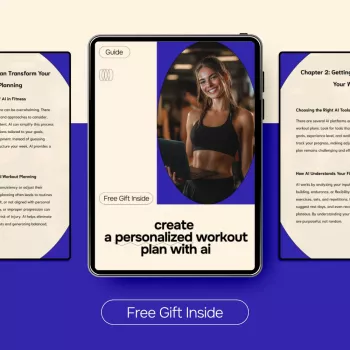
If you want a ready-to-use framework that turns your inputs into a clean, realistic weekly plan, use Create a Personalized Workout Plan with AI – AI Prompt for Creating a Workout Plan Guide. Pairing training progress with mindset and consistency tools can also help on tougher weeks—Body Confidence Blueprint | Ebook Guide on How to Build Body Confidence, Self-Image & Everyday Confidence is a supportive companion for staying steady through plateaus.
For conditioning days that include cycling, a small practical upgrade can remove friction: High-Pressure Portable Bike Floor Pump 160 PSI with Dual-Valve Head helps keep tires properly inflated so easy rides stay easy and interval days feel consistent.
FAQ
How often should a personalized workout plan be updated?
Reassess every 2–4 weeks to adjust sets, exercise choices, and progression targets, then make bigger structure changes every 6–12 weeks. Update sooner if progress stalls, soreness stays unusually high, your schedule changes, or you add new equipment.
Can AI create a plan for home workouts with minimal equipment?
Yes—when you specify constraints like dumbbells/bands/bodyweight, space, and session length, AI can suggest appropriate movements, progressions (reps, tempo, unilateral work), and substitutions that keep the plan challenging without requiring a full gym.
What details help AI make a plan that feels realistic?
Provide days per week, session length, primary goal, experience level, available equipment, injury considerations, preferred exercises, and recovery factors like sleep and stress. The clearer the constraints, the more the weekly plan will match what you can actually complete.













Leave a comment