-
Shop
- Advanced Technologies
- AI Career Advantage Collection
- AI Skills Mastery 2026 Collection
- Arts, Crafts & Hobbies
- Bathroom
- Best-Sellers
- Car Accessories
- Dating & Social Skills
- Denim
- 7FOR
- AGOLDE
- Antony Morato
- Armani Exchange
- Boss
- Brunello Cucinelli
- Calvin Klein Jeans
- Costume National
- Desigual
- Diesel
- Dolce & Gabbana
- Dsquared²
- Ermanno Scervino
- Fendi
- Gianni Lupo
- Guess Jeans
- Ichi
- Just Cavalli
- Lee
- Levi's
- Liu Jo
- Morgan De Toi
- Mother Denim
- Only
- Pepe Jeans
- Pinko
- Replay
- Valentino
- Vero Moda
- Digital Resources
- Education & Learning
- Family & Parenting
- Fashion
- Furniture
- Gadgets
- Health & Beauty
- Health & Wellness
- Home & Garden
- Kids & Babies
- Kitchen
- Lighting
- Patio, Lawn & Garden
- Personal Growth
- Pet Care
- Pet Supplies
- Pets
- Sport & Outdoors
- TikTok Growth & Monetization Mastery
- Travel
- Wealth
- Popular
- Best deals
Build a Calm Self-Care Routine with AI in Minutes
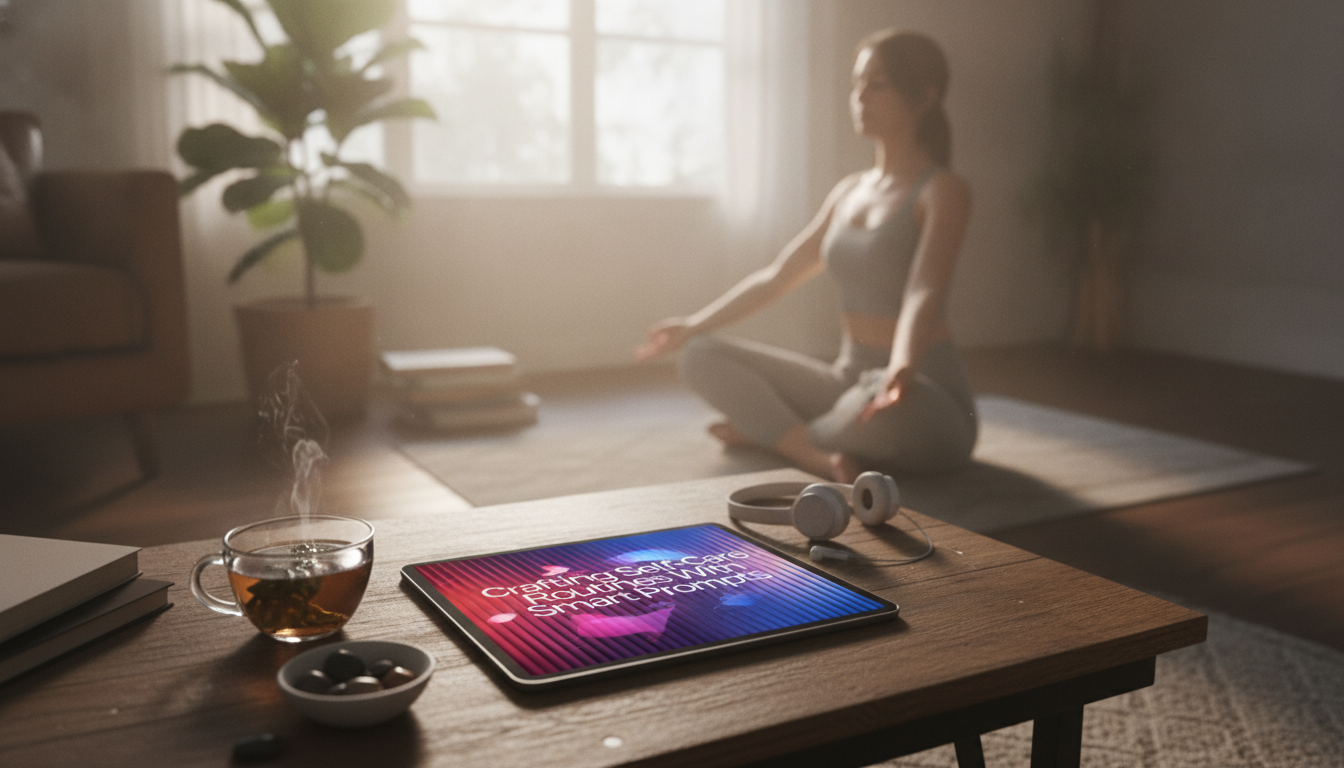
AI & You: A Calm, Repeatable Self-Care Routine You Can Build in Minutes
Self-care works best when it feels doable on ordinary days, not just perfect ones. A simple routine can reduce decision fatigue, support better sleep, and create small pockets of recovery throughout the week. This digital guide is designed to help shape a personal routine with clear, flexible “ask-and-answer” steps you can use with an AI chat tool, so the plan adapts to real energy levels, time limits, and priorities—without turning wellness into another full-time job.
What Makes a Self-Care Routine Actually Stick
The routines that last aren’t usually intense—they’re repeatable. The goal is to make care so simple you can do it even when you’re tired, distracted, or short on time.
- Focus on consistency over intensity: small actions repeated outperform occasional big “reset” days.
- Use a minimum-viable version: keep a 2–5 minute option for low-energy days and an expanded 15–30 minute option for better days.
- Anchor habits to existing moments: after brushing teeth, first cup of water, after logging off, or right after lunch.
- Plan for friction: decide ahead of time what you’ll do when time, motivation, or privacy is limited.
If you only do the smallest version, that still counts. A “small, done” routine builds trust with yourself—and that’s what creates momentum.
How AI Can Support Personalized Self-Care Without Overcomplicating It
When life changes week to week, the hardest part is often figuring out what to do next. A simple AI check-in can help translate a fuzzy need into one clear action.
- Turn vague goals into a next step: “less stressed” becomes “a 4-minute breathing reset after meetings.”
- Generate options that fit constraints: budget-friendly ideas, low-mobility alternatives, or quiet routines for shared spaces.
- Create gentle structure: checklists, weekly themes, and reflection questions to notice what actually helps.
- Keep it values-led: ask for routines that prioritize rest, creativity, connection, or confidence based on what matters most right now.
To keep things grounded, pair your routine with evidence-informed basics like stress management and sleep hygiene guidance from trusted sources such as the American Psychological Association and the National Sleep Foundation.
Inside the AI & You Digital Guide
For anyone who likes clear steps (but doesn’t want a rigid schedule), AI & You: Crafting Self-Care Routines with Smart Questions (Digital Download) is built to be practical on real weekdays.
- A step-by-step method to design a routine for mornings, evenings, and “in-between” moments.
- Ready-to-use AI question sets for energy, mood, boundaries, recovery, movement, and sleep support (written as copy/paste inputs).
- Ways to adapt plans for common realities: irregular schedules, caregiving, burnout, ADHD-friendly structure, or travel days.
- A repeatable check-in system to refine the routine weekly without starting over.
- Digital download format for quick reference on phone, tablet, or desktop.
Build Your Routine in 3 Layers: Micro, Core, and Restore
Layering keeps your routine flexible. You’re not “failing” if you only do the smallest piece—you’re using the version that matches the day.
Micro layer (1–3 minutes)
Pick one action that helps your nervous system settle. Examples: a slow breathing pattern, a glass of water, a quick step outside for sunlight, or a gentle stretch.
Core layer (5–15 minutes)
This is the reliable middle: actions that support daily functioning, like a short walk in place, a simple plan for lunch, a tidy reset, or a few lines of journaling.
Restore layer (15–45 minutes, optional)
Use this when you can: a longer walk, a bath/shower ritual, creative time, extended mobility, or intentional connection with someone safe.
Routine Builder: Example Inputs to Type Into an AI Chat Tool
| When | Goal | What to tell the AI | Possible output to use |
|---|---|---|---|
| Morning (5 min) | Lower anxiety + start gently | Create a 5-minute calming morning routine for a busy weekday. No special equipment. Include one breathing step and one easy movement. | 2-minute breathing + 3-minute neck/shoulder mobility |
| Midday (3 min) | Prevent energy crash | Give three 3-minute reset ideas that can be done at a desk without leaving the room. Prioritize focus and eye strain relief. | 20-20-20 eye break + water + short posture reset |
| Evening (10 min) | Wind down for sleep | Design a 10-minute evening routine that reduces screen stimulation, includes a simple reflection, and ends with a cue for bedtime. | Phone away + quick journal + dim lights + bedtime cue |
| Weekend (30 min) | Restore and reconnect | Suggest a 30-minute self-care plan that balances movement, nourishment, and connection. Keep it low cost and flexible. | Walk + simple snack prep + message a friend |
Common Sticking Points (and Simple Fixes)
Pairing Self-Care With Confidence and Self-Image Work
If confidence and self-image are a current priority, Body Confidence Blueprint eBook pairs well with a simple self-care structure by giving you concrete ways to practice steadier self-talk and self-respect.
A Gentle Weekly Check-In to Keep the Routine Relevant
FAQ
Does this work if the schedule changes every week?
Yes. Use a flexible template (micro/core/restore), keep at least two versions (busy vs. normal), and request options constrained by a specific time window and energy level so the routine fits the day you actually have.
What if using AI feels overwhelming or distracting?
Use it only for planning once a week, limit results to three options, and save a short list of favorites. Keep the routine itself offline while you do it so the practice stays calm and simple.
Is this a good fit for beginners who have never had a self-care routine?
Yes. Start with one anchor habit, build a 2–5 minute default you can do anywhere, and expand gradually only after the small version feels automatic.














Leave a comment