-
Shop
- Advanced Technologies
- AI Career Advantage Collection
- AI Skills Mastery 2026 Collection
- Arts, Crafts & Hobbies
- Bathroom
- Best-Sellers
- Car Accessories
- Dating & Social Skills
- Denim
- 7FOR
- AGOLDE
- Antony Morato
- Armani Exchange
- Boss
- Brunello Cucinelli
- Calvin Klein Jeans
- Costume National
- Desigual
- Diesel
- Dolce & Gabbana
- Dsquared²
- Ermanno Scervino
- Fendi
- Gianni Lupo
- Guess Jeans
- Ichi
- Just Cavalli
- Lee
- Levi's
- Liu Jo
- Morgan De Toi
- Mother Denim
- Only
- Pepe Jeans
- Pinko
- Replay
- Valentino
- Vero Moda
- Digital Resources
- Education & Learning
- Family & Parenting
- Fashion
- Furniture
- Gadgets
- Health & Beauty
- Health & Wellness
- Home & Garden
- Kids & Babies
- Kitchen
- Lighting
- Patio, Lawn & Garden
- Personal Growth
- Pet Care
- Pet Supplies
- Pets
- Sport & Outdoors
- TikTok Growth & Monetization Mastery
- Travel
- Wealth
- Popular
- Best deals
Delivery Driver Pay Boost: Net Earnings, Tips & Miles

Maximize Your Earnings as a Delivery Driver: A Practical Guide to Increasing Side Hustle Income
Delivery driving income rises fastest when strategy beats hustle: smarter scheduling, better order selection, lower vehicle costs, and consistent customer ratings. The goal isn’t just bigger app payouts—it’s stronger take-home pay after fuel, wear-and-tear, and taxes, with fewer dead miles and less burnout.
Start With the Numbers That Actually Matter
If you don’t track the right metrics, it’s easy to feel “busy” while earning less than expected. Start by measuring net earnings—what you keep after fuel, maintenance, depreciation, and taxes—not just what the app shows.
- $/hour online: Total earnings divided by time from “online” to “offline.”
- $/mile driven: Total earnings divided by all miles driven (including repositioning).
- Average wait time per pickup: Chronic delays quietly destroy hourly pay.
Set personal minimums for each shift (for example, a $/mile floor). Then log every shift for 2–4 weeks to identify your best days, zones, and time blocks. Patterns show up fast when the data is consistent.
Pick the Right Hours and Locations for Higher-Paying Orders
Income often changes more from when and where you drive than from how hard you push the pedal. High-demand windows (lunch, dinner, weekends, and event nights) tend to produce more orders, better tips, and more “stacked” opportunities.
- Prioritize lunch rush, dinner rush, weekend evenings, and major local events.
- Work zones with dense restaurants and short parking-to-pickup walks.
- Avoid long-drive suburbs during peak unless payouts reliably beat your $/mile target.
- Use weather and local calendars (sports, concerts, holidays) to anticipate surge periods.
- Reposition intentionally after drop-off—end near merchant clusters instead of drifting.
| Lever | What to change | Why it boosts take-home pay |
|---|---|---|
| Time block | Focus on lunch/dinner peaks and weekend evenings | More orders, more tips, more stacked opportunities |
| Zone choice | Stay near dense restaurant corridors | Shorter dead miles and quicker order turnover |
| Repositioning | Drive back toward hotspots after drop-off (only a short distance) | Faster next offer and less idle time |
| Event strategy | Work near venues before/after events | Higher order volume and frequent surge pricing |
| Weather planning | Go online during rain/snow if safe | Higher demand and often higher incentives |
Improve Order Selection Without Overthinking It
Better order selection is the quickest way to raise hourly earnings. Instead of chasing the biggest single payout, evaluate offers by expected completion time and total miles.
- Judge offers by “profit per minute,” not just payout.
- Use a simple filter: payout, miles, restaurant reliability, and drop-off complexity.
- Avoid repeat time-wasters: long-wait merchants, hard-to-park areas, confusing apartments.
- Be selective with long-distance runs unless pay covers the return drive.
- Prefer stacked orders only when pickups are aligned and routes are clean.
A practical approach: keep a short “avoid list” of merchants and buildings that repeatedly trigger long waits or parking headaches. One avoided 12-minute delay can be the difference between a mediocre shift and a strong one.
Raise Tips and Ratings With Repeatable Habits
Tips and ratings improve most when the customer experience feels effortless. The best habits are simple and consistent—no scripts, no awkward messages.
- Communicate only when it helps: delays, substitutions, or hard-to-find drop-offs.
- Use insulated bags and handle items carefully to reduce spills and soggy food.
- Confirm names, verify items when possible, and follow instructions precisely.
- Deliver quickly without driving aggressively; professionalism increases tip likelihood.
- Avoid message spam—too many pings can backfire.
When a drop-off is tricky, a clear photo and a short note (“Left at side door as requested”) often prevents refunds, complaints, and rating hits—protecting future order quality.
Cut Costs: Fuel, Maintenance, and the “Hidden” Expense of Dead Miles
Every dollar saved on operating costs is a dollar added to your net. Focus on efficiency and preventing downtime.
- Drive smoothly: gentle acceleration, steady speeds, reduced idling.
- Batch errands (fuel, groceries) outside prime delivery windows.
- Stay ahead on maintenance: tire pressure, oil intervals, brakes, lights.
- Use route planning to reduce backtracking; dead miles directly reduce $/mile.
- If using a bike or e-bike, check tires and brakes frequently to avoid lost shifts.
For fuel savings and vehicle comparisons, use FuelEconomy.gov as a practical reference point when estimating cost per mile across vehicles.
Protect Your Earnings: Safety, Security, and Gear That Prevents Lost Shifts
Reducing distraction is part of protecting your “earning capacity.” Review guidance from the NHTSA on distracted driving and keep your phone setup stable and hands-free.
Handle Taxes and Recordkeeping So More Money Stays Yours
To stay current on deductible mileage methods, reference the IRS standard mileage rates page and consult a qualified tax professional for your local rules.
Build a Weekly Routine That Scales Your Income
Helpful gear and resources (in stock)
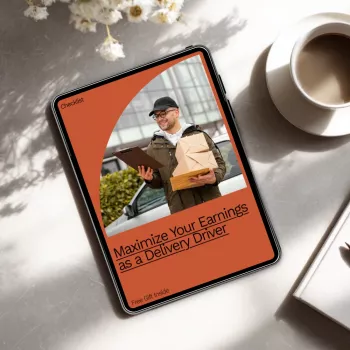
- Maximize Your Earnings as a Delivery Driver – Essential Guide to Boosting Your Delivery Side Hustle Income
- Heavy-Duty 4-Digit Chain Lock for Bikes, E-Bikes & Motorcycles
- High-Pressure Portable Bike Floor Pump 160 PSI with Dual-Valve Head
FAQ
What is a good minimum payout per mile for delivery driving?
Many drivers use a practical floor around $1.50–$2.00+ per mile, then adjust upward for heavy traffic, long waits, and complex drop-offs. For longer trips, factor in return miles so your net earnings still cover fuel, wear, and time.
How can a delivery driver increase tips without being pushy?
Focus on reliability: accurate drop-offs, insulated bags, careful handling, and following instructions closely. Send short, helpful updates only when something changes (like a delay), and avoid excessive messaging.
Should delivery drivers track miles for taxes?
Yes—mileage tracking is commonly used to support deductions and maintain clean records. Keep a contemporaneous log and save receipts for related expenses, and consult a qualified tax professional for rules that apply to your situation.














Leave a comment