-
Shop
- Advanced Technologies
- AI Career Advantage Collection
- AI Skills Mastery 2026 Collection
- Arts, Crafts & Hobbies
- Bathroom
- Best-Sellers
- Car Accessories
- Dating & Social Skills
- Denim
- 7FOR
- AGOLDE
- Antony Morato
- Armani Exchange
- Boss
- Brunello Cucinelli
- Calvin Klein Jeans
- Costume National
- Desigual
- Diesel
- Dolce & Gabbana
- Dsquared²
- Ermanno Scervino
- Fendi
- Gianni Lupo
- Guess Jeans
- Ichi
- Just Cavalli
- Lee
- Levi's
- Liu Jo
- Morgan De Toi
- Mother Denim
- Only
- Pepe Jeans
- Pinko
- Replay
- Valentino
- Vero Moda
- Digital Resources
- Education & Learning
- Family & Parenting
- Fashion
- Furniture
- Gadgets
- Health & Beauty
- Health & Wellness
- Home & Garden
- Kids & Babies
- Kitchen
- Lighting
- Patio, Lawn & Garden
- Personal Growth
- Pet Care
- Pet Supplies
- Pets
- Sport & Outdoors
- TikTok Growth & Monetization Mastery
- Travel
- Wealth
- Popular
- Best deals
Desk Posture Reset: 5-Min Ergonomics + Daily Stretches
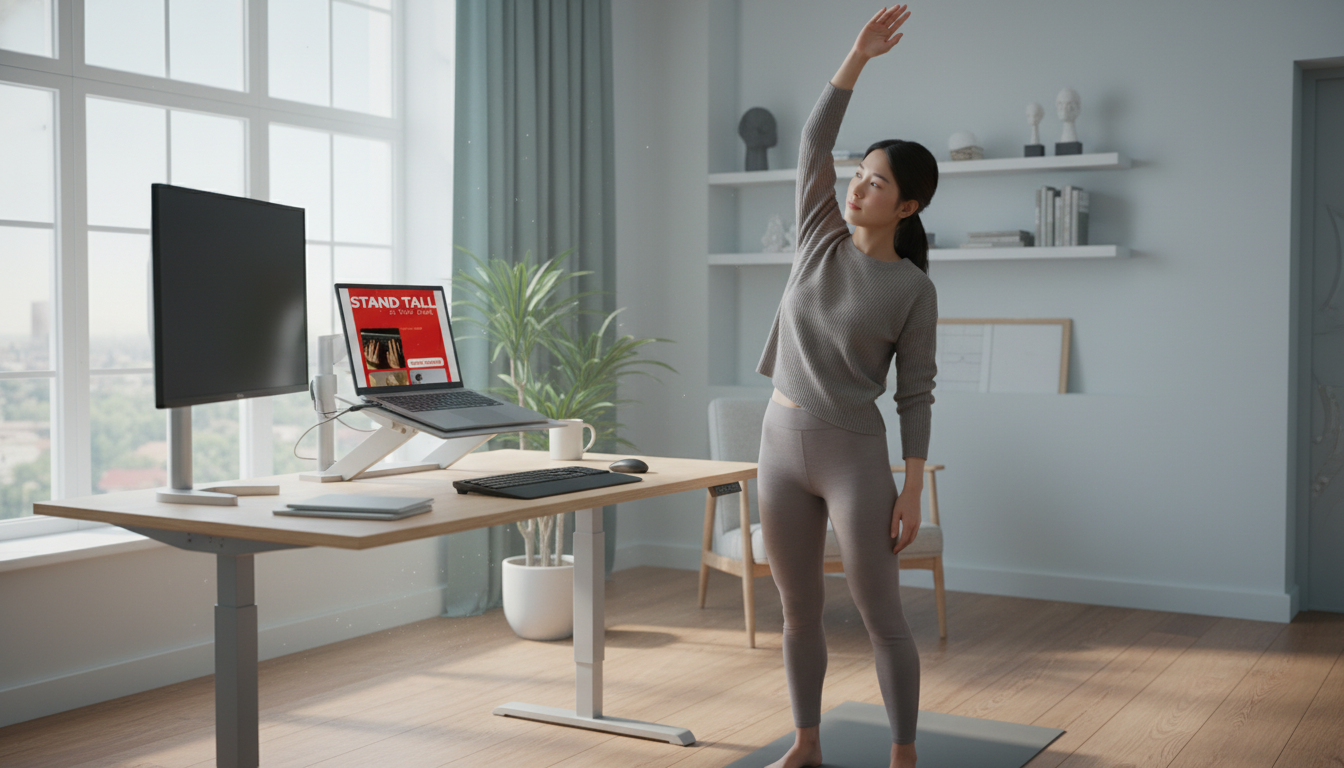
Why desk posture drifts (and what to notice first)
Desk posture rarely “fails” all at once. It drifts in small, repeatable ways—especially during long typing blocks, video calls, and focused work. The most common patterns include a forward head (chin poking toward the screen), a rounded upper back, shoulders creeping up toward the ears, an anterior pelvic tilt (low back over-arching), and locked knees when standing at a sit-stand desk.
Early signs can be subtle: neck tightness, jaw tension, headaches, low-back stiffness, or tingling that shows up after prolonged elbow or wrist compression. Before chasing a perfect posture, start with a quick self-check: are your ears roughly over your shoulders, ribs stacked over the pelvis, feet grounded, and shoulders relaxed away from the ears? That “stacked” feeling is the baseline you’ll keep returning to—briefly and often.
Set up an ergonomic workspace in 5 minutes
A good setup removes friction so you don’t have to “hold” yourself in position all day. Use these fast adjustments as a starting point.
- Chair: Set hips slightly higher than knees. Sit back so the backrest supports the mid-back; add small lumbar support if needed.
- Feet: Keep feet flat on the floor or a footrest. Avoid tucking one leg under your body for long stretches.
- Screen: Place the top third of your monitor near eye level and about an arm’s length away.
- Keyboard and mouse: Keep elbows close to your sides and wrists neutral. Position the mouse at the same height as the keyboard.
- Phone and laptop habits: Use a stand or external keyboard for laptops when possible, and avoid cradling the phone between shoulder and ear.
For additional workstation guidance, see the ergonomics resources from OSHA’s Computer Workstations eTool and the Mayo Clinic’s office ergonomics guide.
The 60-second “stack and breathe” reset (anytime tension spikes)
Use this whenever you notice shoulders hiking up, shallow breathing, or a creeping forward head—especially right after a stressful message or a long meeting.
- Sit tall: Gently slide your ribs down so the lower ribs aren’t flaring. Imagine your head floating up while your chin lightly tucks.
- Shoulders: Roll them up, back, and down once. Then let the shoulder blades rest without squeezing.
- Breathing: Take 4 slow nasal breaths, letting the lower ribs expand. Exhale fully to reduce upper-trap overwork.
- Finish: Relax the jaw, unclench the hands, and soften the gaze to reduce “alert posture.”
A daily desk posture routine (about 8–10 minutes total)
This routine is short on purpose: easy to repeat beats intense and inconsistent. Stay in the “mild tension” zone—no sharp pain, numbness, or joint pinching.
Morning (2 minutes)
- Stack and breathe reset
- 10 gentle chin tucks
- 10 scapular retractions (pull shoulder blades back without shrugging)
Midday (3 minutes)
- Doorway chest opener (20–30 seconds each side)
- Seated thoracic extension over chair back (6–8 slow reps)
Afternoon (3–5 minutes)
- Hip flexor stretch (30–45 seconds each side)
- Glute squeeze holds (5 x 5 seconds)
- Calf/ankle pumps to support circulation
Desk stretches that pair well with typing and mousing
These movements fit into the workday without needing special equipment or a full wardrobe change.
- Neck: Gentle upper-trap stretch (ear toward shoulder) while placing the opposite hand behind your back to avoid yanking.
- Forearms: Wrist flexor and extensor stretches (20–30 seconds each), keeping shoulders down and neck relaxed.
- Upper back: Seated “hug yourself” stretch to widen the shoulder blades and reduce mid-back stiffness.
- Hips: Seated figure-4 stretch or a standing hip hinge to open the posterior chain without rounding the low back.
- Standing option: Wall angels or “goalpost” slides to encourage shoulder mobility without forcing range.
If discomfort is persistent or you’re working around a prior injury, consider reviewing general musculoskeletal guidance from NIOSH’s ergonomics and musculoskeletal disorders resources.
Microbreak schedule that actually fits a workday
Sample posture and movement plan (workday friendly)
| Time trigger | Do this (30–90 seconds) | Why it helps |
|---|---|---|
| Start of day | Stack and breathe + shoulder roll set | Reduces “tensed-up” posture before work begins |
| Every 30–45 minutes | Stand, walk 20–40 steps, ankle pumps | Improves circulation and reduces stiffness |
| Before a long typing block | Chin tucks (8–10) + wrist stretch | Supports neck position and wrist comfort |
| After a meeting | Doorway chest opener (20–30 sec/side) | Counters rounded shoulders and shallow breathing |
| Mid-afternoon slump | Hip flexor stretch + 5 glute squeezes | Helps reduce low-back compensation from tight hips |
Make better alignment the default (without constant reminders)
When to get extra help
A guided option for consistency
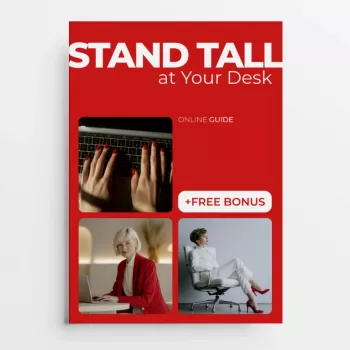
If you prefer a repeatable checklist and a structured sequence, a guided routine can reduce decision fatigue—especially on busy days. For a simple, follow-along format that combines workspace cues, alignment resets, and daily stretches, see Stand Tall at Your Desk – Posture Routine for Desk Workers (Digital Guide).
For sitting comfort during long work blocks, many desk workers also prefer flexible, non-restrictive clothing that doesn’t tug at the hips when seated—options like Ichi Women’s Grey Cotton Stretch Jeans can make it easier to keep feet grounded and hips supported without constant fidgeting.
FAQ
How often should desk workers do posture resets?
Aim for a 30–60 second reset every 30–45 minutes, plus one short routine mid-day. Consistency and gentle effort matter more than doing long sessions once in a while.
Is sitting up straight all day the goal?
No—rigid upright posture can cause fatigue and extra tension. A neutral, relaxed “stacked” alignment plus frequent position changes is typically more comfortable and sustainable.
What are the best stretches for neck and shoulders at a desk?
Chin tucks, a gentle upper-trap stretch, a doorway chest stretch, and scapular retractions cover the basics without needing equipment. Stay out of painful ranges and avoid yanking the neck or forcing the shoulders.
Recommended for you


Guess Women’s Acrylic-Cotton Winter Cap: Warm Fit
May 28, 2026












Leave a comment