-
Shop
- Advanced Technologies
- AI Career Advantage Collection
- AI Skills Mastery 2026 Collection
- Arts, Crafts & Hobbies
- Bathroom
- Best-Sellers
- Car Accessories
- Dating & Social Skills
- Denim
- 7FOR
- AGOLDE
- Antony Morato
- Armani Exchange
- Boss
- Brunello Cucinelli
- Calvin Klein Jeans
- Costume National
- Desigual
- Diesel
- Dolce & Gabbana
- Dsquared²
- Ermanno Scervino
- Fendi
- Gianni Lupo
- Guess Jeans
- Ichi
- Just Cavalli
- Lee
- Levi's
- Liu Jo
- Morgan De Toi
- Mother Denim
- Only
- Pepe Jeans
- Pinko
- Replay
- Valentino
- Vero Moda
- Digital Resources
- Education & Learning
- Family & Parenting
- Fashion
- Furniture
- Gadgets
- Health & Beauty
- Health & Wellness
- Home & Garden
- Kids & Babies
- Kitchen
- Lighting
- Patio, Lawn & Garden
- Personal Growth
- Pet Care
- Pet Supplies
- Pets
- Sport & Outdoors
- TikTok Growth & Monetization Mastery
- Travel
- Wealth
- Popular
- Best deals
Mindful Mornings with AI: 3–15 Minute Calm & Focus
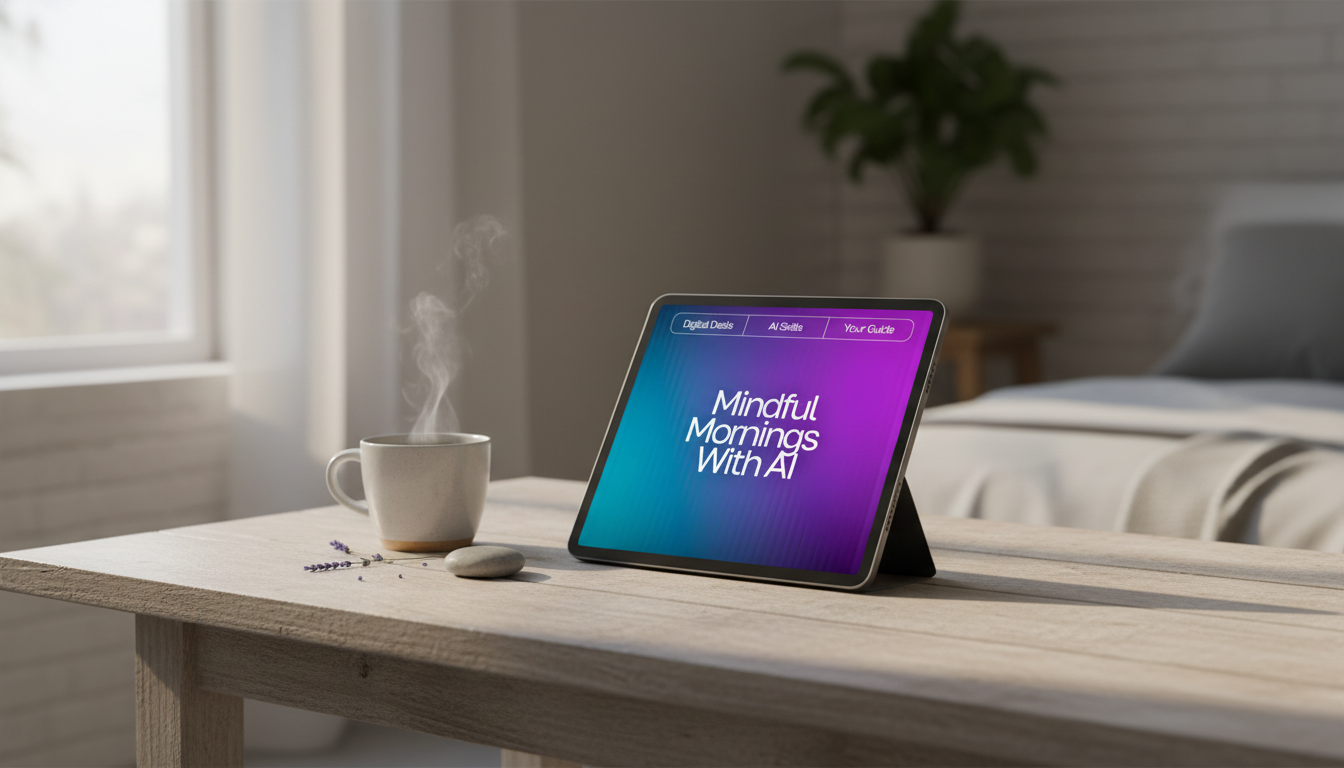
Mindful Mornings with AI: A Simple Digital Guide to Calm, Clarity, and Focus
A steady morning can shape the rest of the day. This digital guide pairs short mindfulness practices with AI-generated ideas to help build a repeatable routine—whether there are 3 minutes or 30—so mornings feel calmer, clearer, and more focused.
What “Mindful Mornings with AI” is designed to do
Some mornings feel like a sprint before your feet even hit the floor. The goal here isn’t to create a “perfect” routine—it’s to build a small, reliable ritual that makes the day easier to steer.
- Turn scattered mornings into a consistent ritual with flexible practice lengths
- Use AI as a supportive tool for variety: fresh reflections, breathing counts, and gentle check-ins
- Reduce decision fatigue with ready-to-use exercise ideas and simple structure
- Support focus by choosing a single theme for the day (energy, patience, courage, clarity)
Mindfulness is widely used for stress management and day-to-day well-being; if you want a quick overview of meditation’s benefits and how to start, the Mayo Clinic’s meditation guide is a helpful reference.
A 3–15 minute framework that works on busy days
Instead of reinventing the morning every day, use one backbone that fits most moods. You’ll repeat the “bookends” (arrive + intention) and rotate the middle so it stays fresh.
- Minute 0–1: Arrival—sit, soften shoulders, and notice three physical sensations
- Minute 1–3: Breath anchor—inhale/exhale count, or box breathing if feeling rushed
- Minute 3–8: Mindfulness exercise—body scan, sound awareness, or mindful sipping of water/tea
- Minute 8–12: AI-guided reflection—one question that surfaces priorities without spiraling
- Minute 12–15: Intention + next action—choose one doable step for the first hour
Pick a morning plan based on time and mood
| Time available | Best when feeling | Practice focus | AI idea to request |
|---|---|---|---|
| 3 minutes | Rushed or restless | Breath + one intention | “Give one calming breath pattern and a 10-word intention for today.” |
| 7 minutes | Foggy or distracted | Body scan + priority cue | “Ask one question that helps identify the single most important task this morning.” |
| 10 minutes | Anxious or tense | Grounding + compassionate self-talk | “Write a short, kind morning mantra tailored to feeling anxious.” |
| 15 minutes | Overloaded or unfocused | Breath + values + plan | “Create a gentle 3-step plan for the next hour aligned with calm focus.” |
Morning mindfulness exercises (with AI variations for freshness)
These are intentionally simple. The point is to practice returning—returning to breath, returning to senses, returning to what matters—without turning your morning into a project.
If you want a deeper, structured foundation beyond quick practices, Mindfulness-Based Stress Reduction (MBSR) is a well-known program; learn more through the University of Massachusetts Chan Medical School MBSR overview.
Using AI without losing the point of mindfulness
A gentle 7-day starter routine (repeatable weekly)
7-day rotation with AI-friendly cues
| Day | Practice | AI cue |
|---|---|---|
| 1 | Breath + intention | “Suggest 3 one-word intentions for a calmer morning.” |
| 2 | Body scan | “Guide a 90-second body scan with gentle, simple wording.” |
| 3 | Listening | “Offer a short mindful listening practice for sounds in the room.” |
| 4 | Kindness practice | “Write 4 loving-kindness phrases that feel natural, not cheesy.” |
| 5 | Movement | “Give 3 slow stretches for waking up the body without strain.” |
| 6 | Grounding | “Create a 60-second grounding script using the 5 senses.” |
| 7 | Weekly reflection | “Ask 3 questions: one win, one lesson, one focus for next week.” |
Common obstacles and quick resets
- No time: Keep a 3-minute minimum ritual (sit, breathe, intention) so you protect continuity even on chaotic mornings.
- Racing mind: Label thoughts softly as “planning” or “worrying,” then return to breath or one physical sensation (feet on floor, hands on mug).
- Low motivation: Attach the practice to an existing habit (kettle boiling, brushing teeth, coffee brewing) so you don’t rely on willpower.
- Sleepiness: Practice standing, keep eyes open, or add gentle movement; if sleep is consistently off, a basic overview from NINDS can help you review core sleep factors.
- Inconsistent mornings: Keep the same first step every day (arrival), and vary only the middle portion to reduce friction.
Digital guide highlights and who it fits best
Simple add-ons that support a calmer morning
- Cozy Cuddly Cowboy Bear Plush Toy – Soft Hugging Companion
- Ichi Women’s Grey Cotton Stretch Jeans (comfortable for a few minutes of gentle morning movement)
- Ready for Winter Ready for Anything – Winter Sport Gear Basics eBook (a practical planning companion for winter mornings when preparation reduces stress)
FAQ
How long should a morning mindfulness practice be to notice benefits?
Consistency matters more than duration. A steady 3–5 minutes daily is a strong starting point, and you can expand to 10–15 minutes on mornings when time and energy allow.
Can AI help with mindfulness without becoming another distraction?
Yes—time-box it and ask for one thing (a short script, a single reflection question, or one mantra), then put the device away. Keeping the output simple helps the practice stay calm and focused.
What if the mind keeps wandering during morning practice?
Mind-wandering is normal; the practice is noticing and returning. Label the thought gently (like “planning” or “worrying”), then come back to breath or one physical sensation, and consider shorter sessions until it feels easier.
Recommended for you



Winter Sport Gear Basics: Layer Smart, Stay Warm
May 15, 2026












Leave a comment