-
Shop
- Advanced Technologies
- AI Career Advantage Collection
- AI Skills Mastery 2026 Collection
- Arts, Crafts & Hobbies
- Bathroom
- Best-Sellers
- Car Accessories
- Dating & Social Skills
- Denim
- 7FOR
- AGOLDE
- Antony Morato
- Armani Exchange
- Boss
- Brunello Cucinelli
- Calvin Klein Jeans
- Costume National
- Desigual
- Diesel
- Dolce & Gabbana
- Dsquared²
- Ermanno Scervino
- Fendi
- Gianni Lupo
- Guess Jeans
- Ichi
- Just Cavalli
- Lee
- Levi's
- Liu Jo
- Morgan De Toi
- Mother Denim
- Only
- Pepe Jeans
- Pinko
- Replay
- Valentino
- Vero Moda
- Digital Resources
- Education & Learning
- Family & Parenting
- Fashion
- Furniture
- Gadgets
- Health & Beauty
- Health & Wellness
- Home & Garden
- Kids & Babies
- Kitchen
- Lighting
- Patio, Lawn & Garden
- Personal Growth
- Pet Care
- Pet Supplies
- Pets
- Sport & Outdoors
- TikTok Growth & Monetization Mastery
- Travel
- Wealth
- Popular
- Best deals
Workplace Resilience: Daily Skills to Recover and Perform
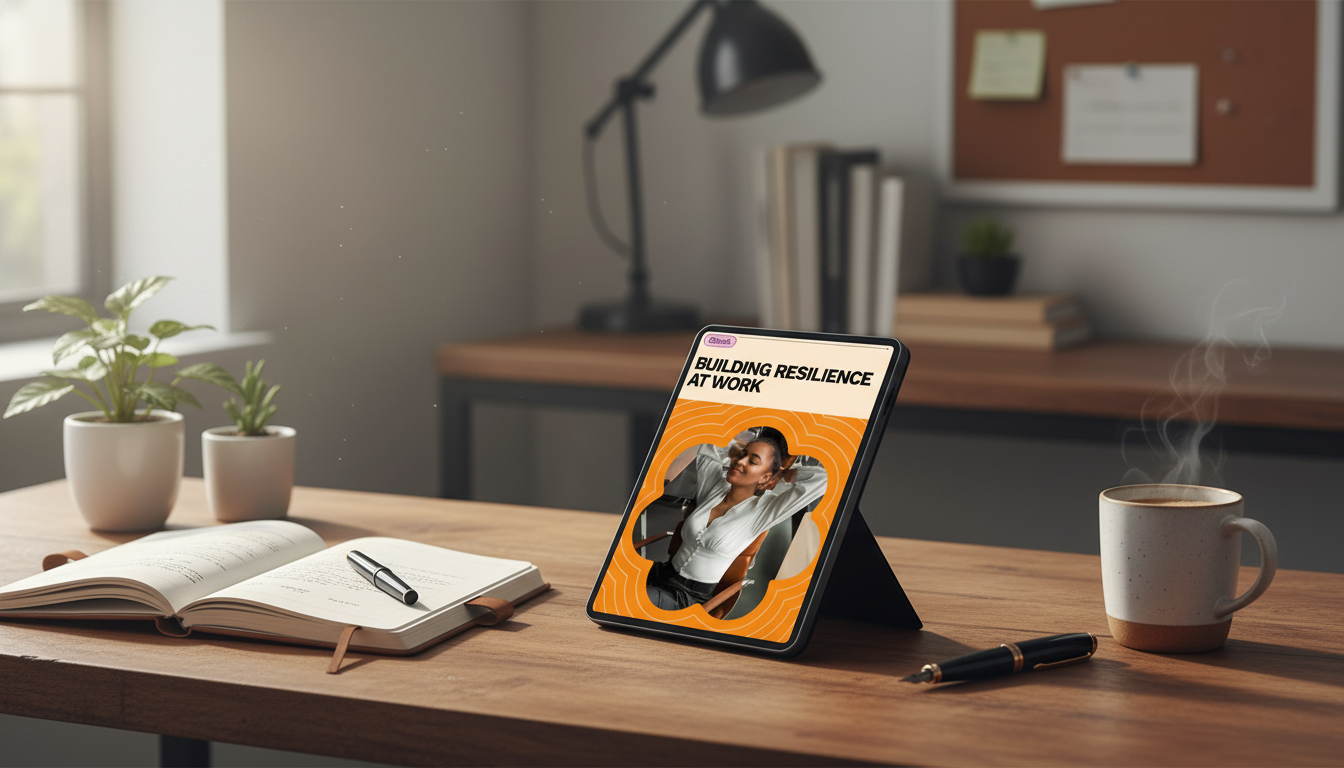
Building Resilience at Work: Practical Skills for Personal Strength and Team Recovery
Workplace pressure is inevitable; the difference is how quickly people and teams can recover, adapt, and keep performing without burning out. Resilience is not a personality trait reserved for a few—it’s a set of skills that can be practiced daily through better thinking habits, supportive relationships, and systems that reduce avoidable stress. This guide breaks resilience into actionable behaviors for individuals and teams, with simple routines that fit real calendars and real workloads.
What resilience at work looks like (and what it doesn’t)
Resilience at work looks like sustained functioning under stress: you’re still able to make decent decisions, protect key relationships, and maintain your health while navigating shifting priorities or uncertainty. It doesn’t mean feeling fine all the time—it means recovering well enough to keep moving without losing yourself in the process.
- Not “toughing it out”: real resilience includes recovery, boundaries, and asking for help early—before stress becomes a crisis.
- Three reinforcing levels: individual habits (how you regulate and focus), team norms (how you communicate and repair), and organizational systems (how work is designed and supported).
- Signals of low resilience: chronic reactivity, avoidance, blame cycles, fatigue, cynicism, and rising errors.
If you want an evidence-aligned foundation, the American Psychological Association’s overview of resilience is a helpful reference point for understanding resilience as a set of learnable processes rather than a fixed trait.
Personal resilience: daily micro-skills that compound over time
Personal resilience is built in small moments—especially the ones that usually trigger spirals (defensiveness, catastrophizing, multitasking, or shutting down). Micro-skills work because they’re repeatable under real constraints.
1) Regulate the body first
When stress rises, the body often leads the mind. Try short resets: a slower breathing cadence for one minute, a brief walk, water and a small snack, or stepping into natural light. These reduce stress escalation and make the next decision easier.
2) Reframe from “threat” to “challenge”
Instead of “This will ruin everything,” name what’s controllable and choose the next smallest step. A good reframe is not positive spin; it’s a practical shift toward action: “I can’t control the change, but I can clarify success criteria and renegotiate scope.”
3) Protect attention for high-stakes work
Resilience often fails through overload. For deep work, single-task whenever possible, set notification rules, and add short meeting buffers (even five minutes) to reduce cognitive whiplash. Fewer context switches often means fewer mistakes and less after-hours cleanup.
4) Build self-efficacy through weekly proof
Once per week, write down wins, lessons, and one small skill to practice. Keep it measurable (example: “Ask one clarifying question before responding to feedback”). Self-efficacy grows when you see progress you can point to.
5) Practice emotional agility
Label emotions accurately (“irritated,” “anxious,” “disappointed”), separate feelings from facts, and choose values-based actions anyway. “I feel anxious” is true; “This will definitely fail” is a prediction. Resilience improves when actions follow values, not the loudest emotion.
Quick practices for common high-stress moments
| Situation | What tends to happen | Resilient response (1–3 minutes) | Follow-up (same day) |
|---|---|---|---|
| Critical feedback | Defensiveness or shutdown | Pause, breathe slowly, ask one clarifying question | Write 2 action items and schedule the first step |
| Sudden priority change | Panic, multitasking, resentment | List what must stop; confirm new success criteria | Update stakeholders with revised timeline |
| Conflict with a teammate | Avoidance or escalation | State impact, ask for their view, propose a next step | Document agreements and check in after 48 hours |
| High workload week | Long hours, poor sleep, mistakes | Pick top 3 outcomes; time-box deep work | Protect one recovery block and one boundary |
Team resilience: norms that reduce friction and speed up recovery
Team resilience isn’t motivational—it’s operational. It’s what your team does when something goes wrong, priorities shift, or stress spikes.
Resilience during change: uncertainty, setbacks, and tough conversations
For broader workplace stress guidance, the NIOSH resources on stress at work provide practical context on common stressors and risk reduction.
Manager playbook: building resilience without pushing people harder
A 14-day resilience sprint for individuals and teams
Guided resource for deeper practice and team exercises
Consistency beats intensity: short weekly practice tends to outperform occasional long sessions. For a structured path, Building Resilience at Work: How to Build Resilience in the Workplace – eBook for Personal and Team Growth offers guided lessons for stress regulation, mindset tools, and practical routines, plus team prompts for capacity check-ins, conflict repair steps, and reflection exercises.
For a simple recovery cue between demanding tasks, some people also benefit from a comforting desk-side reset object at home or in a private workspace. The Cozy Cuddly Cowboy Bear Plush Toy – Soft Hugging Companion can serve as a tangible reminder to pause, breathe, and reset before re-engaging.
FAQ
How long does it take to build resilience at work?
Small improvements can show up within 1–2 weeks when you practice daily micro-skills, especially around recovery and attention. Deeper change often takes 6–12 weeks as habits stabilize and team norms start to reinforce them.
What if the workplace culture is the main source of stress?
Focus on what you can control (boundaries, communication, documentation, and allies) while naming what must be escalated (unsafe workload, harassment, or repeated violations of basic respect). Personal skills help, but sustainable resilience also requires manager and organizational changes.
How can a team build resilience without adding more meetings?
Use lightweight rituals: 2-minute check-ins, better meeting hygiene, brief after-action notes, and async updates. Replace low-value meetings rather than stacking new ones on top of an already full calendar.













Leave a comment