-
Shop
- Advanced Technologies
- AI Career Advantage Collection
- AI Skills Mastery 2026 Collection
- Arts, Crafts & Hobbies
- Bathroom
- Best-Sellers
- Car Accessories
- Dating & Social Skills
- Denim
- 7FOR
- AGOLDE
- Antony Morato
- Armani Exchange
- Boss
- Brunello Cucinelli
- Calvin Klein Jeans
- Costume National
- Desigual
- Diesel
- Dolce & Gabbana
- Dsquared²
- Ermanno Scervino
- Fendi
- Gianni Lupo
- Guess Jeans
- Ichi
- Just Cavalli
- Lee
- Levi's
- Liu Jo
- Morgan De Toi
- Mother Denim
- Only
- Pepe Jeans
- Pinko
- Replay
- Valentino
- Vero Moda
- Digital Resources
- Education & Learning
- Family & Parenting
- Fashion
- Furniture
- Gadgets
- Health & Beauty
- Health & Wellness
- Home & Garden
- Kids & Babies
- Kitchen
- Lighting
- Patio, Lawn & Garden
- Personal Growth
- Pet Care
- Pet Supplies
- Pets
- Sport & Outdoors
- TikTok Growth & Monetization Mastery
- Travel
- Wealth
- Popular
- Best deals
Hot Air Balloon Science for Kids: Lift, Heat & Wind
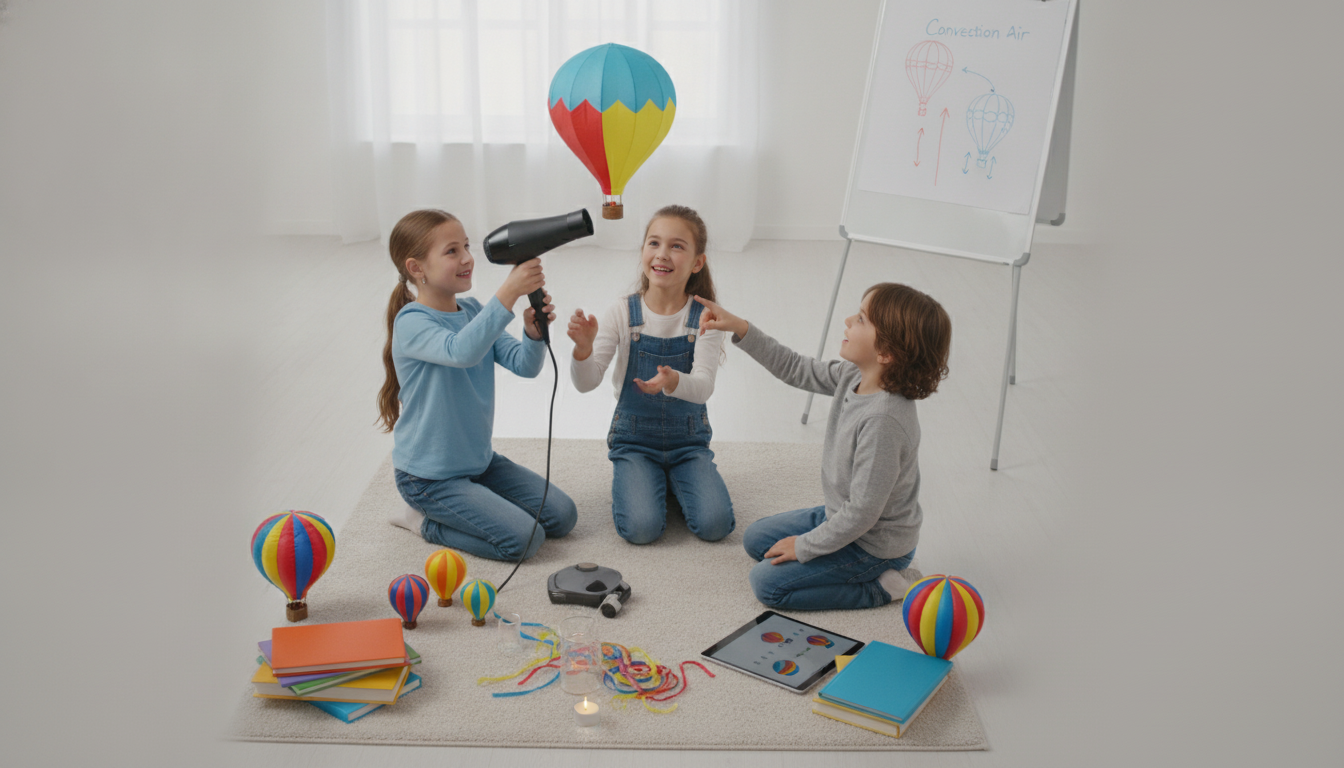
What is the science behind hot air balloons for kids?
A hot air balloon floats because of buoyancy, the same push that makes a beach ball pop up in a pool. When the air inside the balloon is warmed, it spreads out (expands) and becomes less dense than the cooler air outside. That lighter air inside the balloon gets an upward lift from the heavier surrounding air, and the whole balloon system can rise.
How heating air creates lift
Air is made of tiny moving particles. Heat gives those particles more energy, so they move faster and bump into each other more. As the air warms, it takes up more space, which means the same amount of air now weighs less per cubic foot. Since the air outside the balloon is cooler and denser, it pushes up on the balloon more strongly than the warmer air pushes down from inside, creating lift.
Why a big balloon helps
Lift depends on how much air the balloon can “displace,” or take up space in the sky. A larger envelope (the fabric balloon) holds more warm air, so it can displace more cool air and generate more upward force. That’s why hot air balloons are enormous: bigger volume means more lift for the basket, passengers, and equipment.
How balloons go up, down, and sideways
To go up, the burner adds heat, making the inside air even less dense. To go down, the pilot lets some hot air escape through a vent at the top so cooler, denser air replaces it. Sideways movement comes from the wind: balloons don’t “steer” like airplanes, but pilots change altitude to catch winds moving in different directions.
What keeps it safe and stable
The basket hangs below the balloon like a pendulum, helping it stay upright. The envelope fabric is designed to handle heat near the burner opening, and instruments track altitude, climb rate, and fuel. Weather matters most—calm, predictable winds make ballooning gentler and safer.
Want a playful balloon theme for a child’s space? See this guide to a cozy felt balloon and astronaut nursery mobile: https://fatelle.com/guide-wooden-crib-mobile-felt-balloons-astronauts/.
FAQ
Why do hot air balloons usually fly in the morning or evening?
Those times often have calmer winds and steadier air. Midday sun can create bumpy rising air (thermals) that makes flights less smooth.















Leave a comment