-
Shop
- Advanced Technologies
- AI Career Advantage Collection
- AI Skills Mastery 2026 Collection
- Arts, Crafts & Hobbies
- Bathroom
- Best-Sellers
- Car Accessories
- Dating & Social Skills
- Denim
- 7FOR
- AGOLDE
- Antony Morato
- Armani Exchange
- Boss
- Brunello Cucinelli
- Calvin Klein Jeans
- Costume National
- Desigual
- Diesel
- Dolce & Gabbana
- Dsquared²
- Ermanno Scervino
- Fendi
- Gianni Lupo
- Guess Jeans
- Ichi
- Just Cavalli
- Lee
- Levi's
- Liu Jo
- Morgan De Toi
- Mother Denim
- Only
- Pepe Jeans
- Pinko
- Replay
- Valentino
- Vero Moda
- Digital Resources
- Education & Learning
- Family & Parenting
- Fashion
- Furniture
- Gadgets
- Health & Beauty
- Health & Wellness
- Home & Garden
- Kids & Babies
- Kitchen
- Lighting
- Patio, Lawn & Garden
- Personal Growth
- Pet Care
- Pet Supplies
- Pets
- Sport & Outdoors
- TikTok Growth & Monetization Mastery
- Travel
- Wealth
- Popular
- Best deals
Cold Weather EV Range Loss: Winter Driving Guide
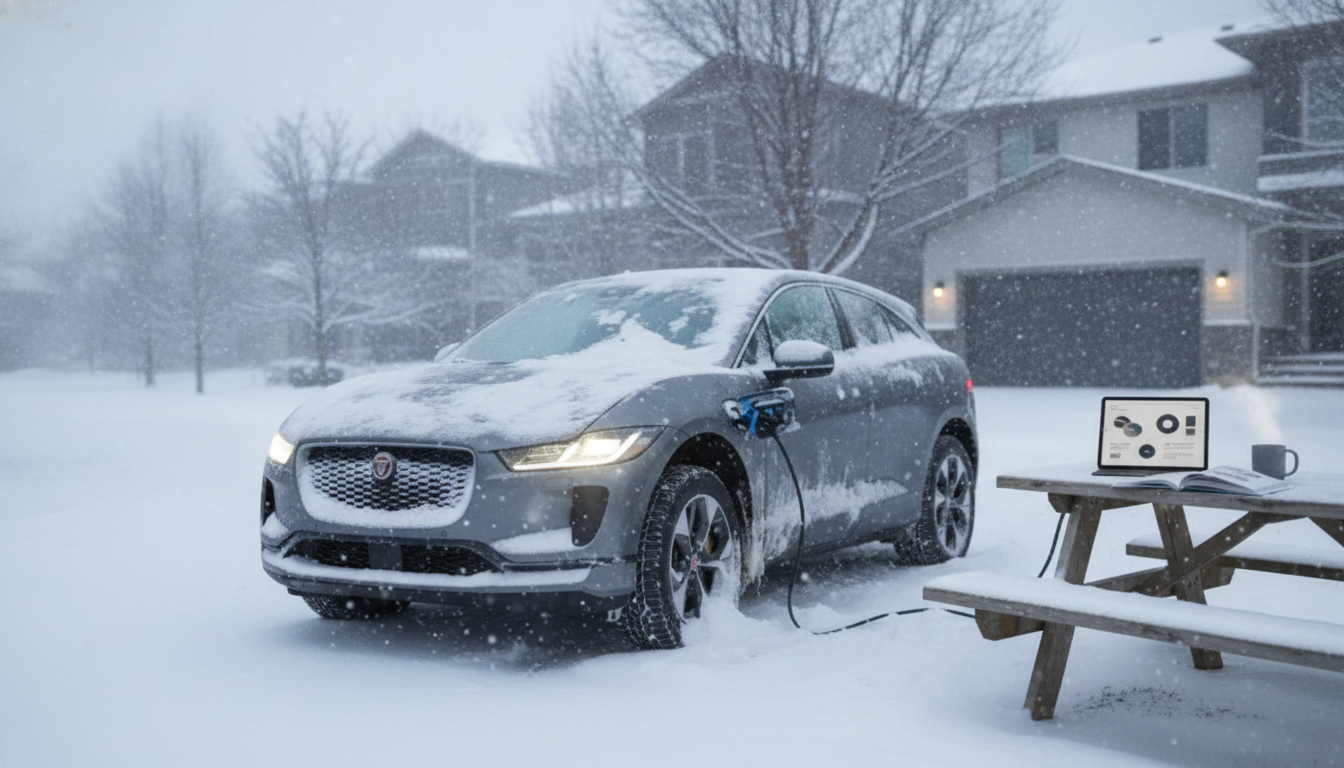
How Cold Weather Impacts Your Electric Car’s Range
Winter driving can cut EV range far more than most drivers expect—not because the battery is “bad,” but because cold temperatures slow battery chemistry and increase energy use for heating and traction. The good news is that most winter losses are predictable, and a few routine changes can preserve range, improve charging speed, and keep the car comfortable when temperatures drop.
Why EV range drops in cold weather
Electric vehicles are efficient year-round, but they’re also sensitive to temperature. In winter, several small penalties stack up at the same time.
- Battery chemistry slows as temperatures fall, which increases internal resistance and reduces the energy the pack can deliver efficiently.
- A cold-soaked battery may temporarily limit regen and acceleration to protect the pack, changing driving feel and reducing energy recovery on decel.
- Winter roads add rolling resistance (wet pavement, slush, snow), so it takes more energy to keep the car moving.
- Cold air is denser, increasing aerodynamic drag—especially noticeable at highway speeds.
- Cabin heat can be a major load, particularly on short trips where the heater runs hard to bring the interior up to temperature.
| Factor | What changes | Typical impact on range |
|---|---|---|
| Cold battery | Lower usable energy, reduced power/regen, slower charging until warmed | Moderate to high (varies by temperature and vehicle) |
| Cabin heat | High continuous draw; worst on short trips | Moderate to high |
| Snow/slush | Higher rolling resistance and drivetrain load | Low to moderate (can be high in heavy snow) |
| Higher air density | More aero drag at speed | Low to moderate (higher at highway speeds) |
| Cold tires / low pressure | More rolling resistance; underinflation reduces efficiency | Low to moderate |
How much range loss to expect at different temperatures
There’s no single number that fits every EV, but planning with temperature “bands” helps. Real-world results depend on vehicle efficiency, heater type, speed, wind, precipitation, and how long the car has been sitting outside.
- Mild cold (around 40°F / 4°C): Efficiency can dip, especially on short trips with frequent heating cycles.
- Freezing (around 32°F / 0°C): Reduced regen, higher heating demand, and slower charging are common.
- Deep cold (below 0°F / -18°C): The pack may need significant warming; highway speeds plus cabin heat can compound losses quickly.
- Heat pumps help compared with resistive heaters, but all EVs lose range when the battery itself is very cold.
- Short trips look worse because warm-up energy is spread over fewer miles.
| Outside temperature | What drivers usually notice | Planning buffer |
|---|---|---|
| 45–35°F (7–2°C) | Slightly slower regen; more heater use | Add ~10–20% extra buffer |
| 32–15°F (0 to -9°C) | Charging slows until warm; heater becomes major load | Add ~20–30% extra buffer |
| Below 15°F (-9°C) | Strong limits on regen/power until warmed; biggest efficiency hit | Add ~30–40% extra buffer |
Battery temperature, regen limits, and charging speed in winter
Winter doesn’t just affect how far you go; it affects how fast you can refill. A cold battery can’t accept high charging power safely, so DC fast charging may start at a low kW and only ramp up after the pack warms.
- Expect slower fast-charging starts if the battery has been sitting in the cold for hours.
- Use built-in navigation to the fast charger when your EV supports preconditioning. This can meaningfully improve charge acceptance on arrival.
- Reduced regen is normal early in the drive. Leave more coasting distance and don’t be surprised if friction brakes do more work at first.
- In extreme cold, fewer longer DC sessions can be more time-efficient than multiple short stops that never let the pack stabilize.
- Reduce cold soak when possible (garage parking, wind shelter, even a sunny spot can help a little).
Cabin comfort without crushing range
Staying warm is non-negotiable, but the most efficient strategy is to move as much heating as possible off the battery and onto the grid.
Driving and route habits that protect winter range
Maintenance and gear that make winter driving easier
Putting it all together: a simple winter routine
Recommended resources (in stock)
- How Cold Weather Impacts Your Electric Car’s Range: The Ultimate Guide for Winter EV Drivers
- High-Pressure Portable Bike Floor Pump 160 PSI with Dual-Valve Head (useful for topping off tires during cold snaps)
- Heavy-Duty 4-Digit Chain Lock for Bikes, E-Bikes & Motorcycles (for securing micromobility gear during winter commutes)
Authoritative winter EV research
- U.S. Department of Energy — Cold Weather Reduces Electric Vehicle Range
- AAA — Electric Vehicle Range Drops in Cold Weather Testing
- National Renewable Energy Laboratory (NREL) — Transportation and EV research
FAQ
How cold does it need to be before EV range drops noticeably?
Range can drop noticeably even around 40°F (4°C), especially on short trips where the car spends a larger share of energy warming the cabin and battery. Losses typically grow near freezing and become much more significant below that.
Does preheating while plugged in really help range?
Yes—preheating while plugged in usually helps because the grid supplies much of the cabin (and sometimes battery) heating. It also improves initial comfort and reduces the early-drive battery drain that can make winter efficiency look especially bad.
Why is DC fast charging slower in winter?
A cold battery can’t safely accept high charging power, so the session may start at a lower kW and only ramp up after the pack warms. Navigating to the charger to trigger preconditioning (if available) and driving a bit before charging can improve speeds.
Recommended for you

Levi’s Men’s Black Cotton Crew Tee: Fit, Feel & Care
Jul 31, 2026












Leave a comment