-
Shop
- Advanced Technologies
- AI Career Advantage Collection
- AI Skills Mastery 2026 Collection
- Arts, Crafts & Hobbies
- Bathroom
- Best-Sellers
- Car Accessories
- Dating & Social Skills
- Denim
- 7FOR
- AGOLDE
- Antony Morato
- Armani Exchange
- Boss
- Brunello Cucinelli
- Calvin Klein Jeans
- Costume National
- Desigual
- Diesel
- Dolce & Gabbana
- Dsquared²
- Ermanno Scervino
- Fendi
- Gianni Lupo
- Guess Jeans
- Ichi
- Just Cavalli
- Lee
- Levi's
- Liu Jo
- Morgan De Toi
- Mother Denim
- Only
- Pepe Jeans
- Pinko
- Replay
- Valentino
- Vero Moda
- Digital Resources
- Education & Learning
- Family & Parenting
- Fashion
- Furniture
- Gadgets
- Health & Beauty
- Health & Wellness
- Home & Garden
- Kids & Babies
- Kitchen
- Lighting
- Patio, Lawn & Garden
- Personal Growth
- Pet Care
- Pet Supplies
- Pets
- Sport & Outdoors
- TikTok Growth & Monetization Mastery
- Travel
- Wealth
- Popular
- Best deals
Deep Cleaning Made Simple: Room-by-Room Order & Checklist
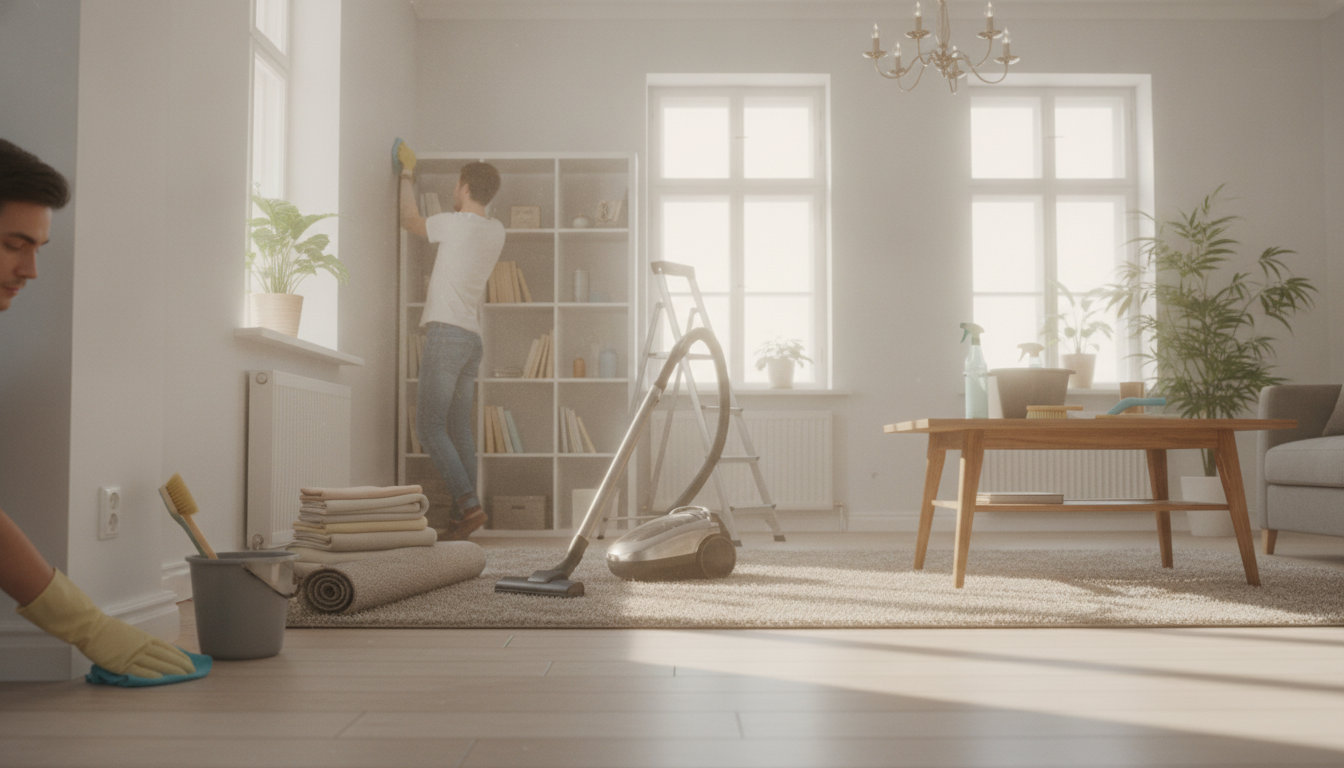
Deep Cleaning, Finally Explained: The Ultimate Guide to Mastering Your Home’s Deep Clean
Deep cleaning is the reset that tackles hidden grime, buildup, and the “out of sight” areas that routine tidying misses. Done right, it’s less about scrubbing everything twice and more about following a practical order—so you remove dust, grease, soap scum, and allergens without creating extra work. Below is a clear plan for what to do, in what order, and how to finish with a home that stays cleaner longer.
Deep Cleaning vs. Regular Cleaning: What Actually Changes
Regular cleaning keeps the day-to-day mess under control: counters, dishes, a quick vacuum, and a fast bathroom wipe-down. Deep cleaning goes after what builds up slowly—think baseboards, vents, behind appliances, grout lines, and cabinet fronts that collect a faint (but stubborn) film.
The goal isn’t perfection. It’s removing layers that quietly accumulate over time: dust in corners, grease near the stove, mineral scale around faucets, and residue that makes surfaces look dull no matter how often they’re wiped. For most homes, deep cleaning works best when broken into zones rather than tackled as one marathon session.
| Category | Regular cleaning | Deep cleaning |
|---|---|---|
| Frequency | Daily/weekly | Monthly/seasonal |
| Focus | Visible mess | Buildup + hidden areas |
| Tools | Basic supplies | Detail tools + degreasers/descalers |
| Time | 15–90 minutes | 2–8 hours (split across zones) |
Set Up for Success: Supplies, Safety, and a 10-Minute Prep
Before you start, gather supplies so you don’t lose momentum mid-task. A reliable setup includes microfiber cloths, a scrub brush, an old toothbrush for tight details, baking soda, dish soap, all-purpose cleaner, glass cleaner, a degreaser, a descaler for mineral buildup, a vacuum/mop with attachments, trash bags, and gloves.
Ventilation matters when using chemicals. Open windows, run fans, and follow label directions. Never mix bleach with ammonia or acids. For more on safer product use and labeling, the EPA’s Safer Choice program is a helpful reference: https://www.epa.gov/saferchoice. If you’re running appliances or working in tight spaces, basic ventilation awareness is also covered by the CPSC: https://www.cpsc.gov/Safety-Education/Safety-Education-Centers/Carbon-Monoxide-Information-Center.
Two quick prep moves make the biggest difference:
- Declutter fast: Use a “move basket” per room to scoop items that don’t belong. Put them away later instead of stopping constantly.
- Start laundry early: Toss in bath mats, washable shower curtains, slipcovers, or throw blankets so machines run while you clean.
Quick supply checklist
| Item | Best for | Tip |
|---|---|---|
| Microfiber cloths | Dusting + polishing | Color-code by room (kitchen vs. bath) |
| Vacuum attachments | Edges/vents/sofas | Crevice tools work great on baseboards |
| Degreaser | Stovetop/cabinet fronts | Let dwell time do the work before wiping |
| Descaler | Showerheads/faucets | Rinse thoroughly after use |
The Order That Prevents Rework (Top-to-Bottom, Dry-to-Wet)
A deep clean feels harder than it is when the order is backwards. The simplest rule is top-to-bottom: ceiling corners and vents first, then walls and surfaces, then floors. Pair that with dry-to-wet so dust and crumbs are removed before anything gets damp and turns into paste.
- Work in a loop: Start at the far corner of a room and finish at the doorway.
- Use dwell time: Spray soap scum, oven grease, or hard-water scale and let it sit while you clean another area.
Room-by-Room Deep Clean Checklist (Printable-Style)
Kitchen
- Degrease cabinet fronts and handles (especially near the stove).
- Clean backsplash and spot-clean walls around the cooking zone.
- Scrub the sink and disposal splash guard; wipe faucet base.
- Wipe inside the microwave; deep-clean the stovetop.
- Wipe appliance exteriors; vacuum fridge coils if accessible.
- Mop under small appliances (toaster oven, coffee maker, etc.).
Bathroom
- Descale showerhead and faucets; rinse and dry to reduce spotting.
- Scrub grout and caulk lines; rinse thoroughly.
- Clean the exhaust fan cover and dust vents.
- Disinfect high-touch points: handles, switches, flush lever.
- Wash bath mats and shower curtain liner (if washable).
- Clean behind the toilet and around the base.
Bedroom
Living areas
A Simple Deep Clean Timeline (Split Across a Weekend)
| Time block | Focus | Tasks |
|---|---|---|
| Friday night (30–45 min) | Prep | Declutter baskets, start laundry, set out supplies |
| Saturday (2–4 hrs) | Kitchen + living areas | Degrease surfaces, detail appliances, vacuum upholstery, dust vents |
| Sunday (2–4 hrs) | Bathrooms + bedrooms | Descale shower, scrub grout, wash textiles, vacuum mattress, finish floors |
| Sunday (15–30 min) | Reset | Return items, empty trash, open windows to air out |
Trouble Spots and How to Fix Them Fast
For a clear distinction between cleaning and disinfecting (and when each matters), the CDC provides straightforward guidance: https://www.cdc.gov/hygiene/cleaning/index.html.
Keep the Results: A Light Maintenance Rhythm
A Guided Deep Clean Plan to Follow Step-by-Step
- Deep Cleaning, Finally Explained: The Ultimate Guide to Mastering Your Home’s Deep Clean (digital guide)
- Body Confidence Blueprint | Ebook Guide on How to Build Body Confidence, Self-Image & Everyday Confidence (helpful for staying consistent when big resets feel overwhelming)
FAQ
How often should a home be deep cleaned?
Most homes benefit from a deep clean every 3–6 months, or seasonally. Pets, allergies, frequent cooking, and high-traffic households may need it more often; rotating one deep-clean zone monthly can reduce the need for full overhauls.
How long does a deep clean take for an average home?
Plan on several hours to a full weekend, depending on home size and how much buildup has accumulated. Splitting the work by rooms (kitchen/living one day, bathrooms/bedrooms another) keeps progress steady without burnout.
What should be cleaned first during a deep clean?
Start with top-to-bottom, dry-to-wet steps: dust high areas, then vacuum edges and upholstery before any wet wiping. Kick off laundry early and use dwell time by soaking showers or degreasing the stove while you work in another zone.














Leave a comment