-
Shop
- Advanced Technologies
- AI Career Advantage Collection
- AI Skills Mastery 2026 Collection
- Arts, Crafts & Hobbies
- Bathroom
- Best-Sellers
- Car Accessories
- Dating & Social Skills
- Denim
- 7FOR
- AGOLDE
- Antony Morato
- Armani Exchange
- Boss
- Brunello Cucinelli
- Calvin Klein Jeans
- Costume National
- Desigual
- Diesel
- Dolce & Gabbana
- Dsquared²
- Ermanno Scervino
- Fendi
- Gianni Lupo
- Guess Jeans
- Ichi
- Just Cavalli
- Lee
- Levi's
- Liu Jo
- Morgan De Toi
- Mother Denim
- Only
- Pepe Jeans
- Pinko
- Replay
- Valentino
- Vero Moda
- Digital Resources
- Education & Learning
- Family & Parenting
- Fashion
- Furniture
- Gadgets
- Health & Beauty
- Health & Wellness
- Home & Garden
- Kids & Babies
- Kitchen
- Lighting
- Patio, Lawn & Garden
- Personal Growth
- Pet Care
- Pet Supplies
- Pets
- Sport & Outdoors
- TikTok Growth & Monetization Mastery
- Travel
- Wealth
- Popular
- Best deals
Interview Outfit Guide: Dress to Impress With Confidence
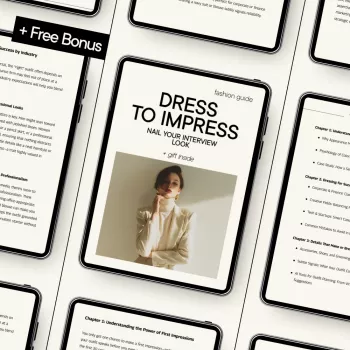
Dress to Impress: Nail Your Interview Look
An interview outfit does more than meet a dress code—it signals judgment, preparation, and confidence before the first answer is spoken. A polished look helps the focus stay on your skills, not your styling. Use the guidance below to match the role and company culture, build a reliable outfit formula, and avoid common mistakes—whether you’re interviewing in person or on camera.
Start With the Role, Then Match the Company Culture
Start by mapping the job to a typical dress level: corporate/conservative (finance, law, executive leadership), business professional (many office roles), business casual (common in modern workplaces), or smart casual (only when clearly appropriate). When your outfit matches the environment, it reads as situational awareness—an underrated professional strength.
- Calibrate with real signals: check the company careers page, LinkedIn team photos, and any interview instructions. Look at what people wear in client-facing photos versus behind-the-scenes posts.
- When uncertain, go one step more formal: it’s easier to soften a look (remove a blazer, simplify accessories) than to recover from showing up underdressed.
- Match the responsibilities: roles with presentations, client meetings, or stakeholder interaction typically call for sharper structure and more formal finishing (blazer, closed-toe shoes, cleaner lines).
If you need a quick reference point for role expectations and industry norms, the U.S. Bureau of Labor Statistics Occupational Outlook Handbook can help you understand typical environments and work settings across careers.
A Simple Outfit Formula That Works Most of the Time
A dependable interview outfit is built around structure, clean lines, and restraint. This formula works across many industries and can be adjusted up or down depending on the culture.
- Anchor piece: a blazer or structured jacket in a neutral (navy, charcoal, black, or camel depending on formality).
- Base layer: a crisp button-down, elevated knit, or modest blouse with minimal sheerness and secure closures.
- Bottoms: tailored trousers or a knee-length skirt with clean lines; avoid distracting slits, extreme crops, or overly tight fits.
- Shoes: closed-toe flats, loafers, or low-to-mid heels; prioritize stability and a quiet, clean finish.
- Palette: keep it to 2–3 colors and let fit and fabric do the work.
Interview Outfit Quick Match
| Interview setting | Safe outfit formula | Color guidance | Avoid |
|---|---|---|---|
| Corporate / finance / law | Suit (blazer + matching trousers or skirt) + button-down | Navy, charcoal, black, white, light blue | Loud prints, flashy accessories, casual sneakers |
| Business professional | Blazer + tailored trousers + blouse/knit | Neutrals with one muted accent | Wrinkled fabrics, very high heels, oversized logos |
| Business casual | Structured blazer or cardigan + tailored pants + polished top | Earth tones, navy, soft pastels | Denim (unless explicitly acceptable), overly casual tees |
| Creative / startups (polished) | Modern blazer + elevated knit + tailored pants | Neutrals with one intentional statement piece | Costume-like fashion, heavy fragrance, noisy jewelry |
| Virtual interview | Solid top + light structure (blazer or neat cardigan) + simple neckline | Solid colors that contrast the background | Busy patterns, shiny fabrics, low necklines |
Fit, Fabric, and Comfort: The Details That Read as “Put Together”
Two people can wear the same “interview outfit” on paper and get very different results in real life. The difference is usually fit, fabric, and comfort.
- Fit first: shoulder seams aligned, sleeves near the wrist, and trousers hemmed to the right break. Simple tailoring often matters more than brand.
- Fabric check: choose materials that hold shape and resist wrinkles; avoid thin, clingy, or overly shiny fabrics that can look harsh under bright office lighting or camera lights.
- Comfort plan: sit, stand, and walk-test the outfit. Confirm no gaping buttons, slipping straps, tight waistbands, or scratchy tags that will pull attention away from your answers.
- Maintenance cues: pressed clothing, lint-free surfaces, and clean shoes communicate readiness immediately.
For additional workplace-ready guidance, resources from the Society for Human Resource Management (SHRM) are a helpful benchmark for professional norms.
Accessories, Hair, and Grooming That Support the Message
Accessories and grooming should support your presence, not compete with it. The best choices look intentional and feel forgettable while you’re speaking.
If you want a step-by-step approach you can reuse for future interviews, the digital guide Dress to Impress: Nail Your Interview Look – Interview Outfit Guide, Professional Style eBook is a quick way to turn these principles into a repeatable routine.
Common Interview Outfit Mistakes (and Fast Fixes)
Confidence also shows up in posture, eye contact, and how comfortable you feel in your own skin. If self-image tends to spike nerves, Body Confidence Blueprint | Ebook Guide on How to Build Body Confidence, Self-Image & Everyday Confidence can support the mindset side of showing up strongly.
Day-Before Checklist for a Calm, Confident Morning
A Practical Style Guide for Building Career Confidence
For more guidance on professional presentation standards, Harvard Business Review offers widely used workplace advice that aligns with what many hiring teams expect: polished, appropriate, and distraction-free.
FAQ
Is it better to dress up or dress down for an interview?
Dress one step more formal than the expected daily dress code, especially if you’re unsure. Use company photos and any interview instructions to decide whether business professional or business casual is the better match.
What colors are safest for interview outfits?
Navy, charcoal, black, white, and light blue are consistently safe choices. Keep your palette to 2–3 colors, and use muted accents sparingly so your outfit looks intentional rather than attention-seeking.
What should be avoided in a virtual interview outfit?
Avoid busy patterns, shiny fabrics, low necklines, and distracting jewelry that catches light or makes noise. Choose solid colors that contrast your background, and check your framing and lighting so your face is clearly visible.
Recommended for you
WD-40 for Car Body Rust: What It Can and Can’t Do
Jul 27, 2026









Leave a comment