-
Shop
- Advanced Technologies
- AI Career Advantage Collection
- AI Skills Mastery 2026 Collection
- Arts, Crafts & Hobbies
- Bathroom
- Best-Sellers
- Car Accessories
- Dating & Social Skills
- Denim
- 7FOR
- AGOLDE
- Antony Morato
- Armani Exchange
- Boss
- Brunello Cucinelli
- Calvin Klein Jeans
- Costume National
- Desigual
- Diesel
- Dolce & Gabbana
- Dsquared²
- Ermanno Scervino
- Fendi
- Gianni Lupo
- Guess Jeans
- Ichi
- Just Cavalli
- Lee
- Levi's
- Liu Jo
- Morgan De Toi
- Mother Denim
- Only
- Pepe Jeans
- Pinko
- Replay
- Valentino
- Vero Moda
- Digital Resources
- Education & Learning
- Family & Parenting
- Fashion
- Furniture
- Gadgets
- Health & Beauty
- Health & Wellness
- Home & Garden
- Kids & Babies
- Kitchen
- Lighting
- Patio, Lawn & Garden
- Personal Growth
- Pet Care
- Pet Supplies
- Pets
- Sport & Outdoors
- TikTok Growth & Monetization Mastery
- Travel
- Wealth
- Popular
- Best deals
AI Job Loss Forecast: Roles Most at Risk Next

What jobs will be lost to AI in the future?
Jobs most likely to be lost (or sharply reduced) are those built around predictable, repeatable tasks with lots of historical data to learn from. AI doesn’t “take” entire industries overnight; it tends to automate specific duties first. That means many roles will change before they disappear, with fewer openings, leaner teams, and higher expectations for human workers who remain.
Roles at highest risk
Data entry and basic clerical work are prime targets because they follow clear rules and rely on structured information. Routine customer support (password resets, order status, returns, simple troubleshooting) is also increasingly handled by chatbots and automated call systems, especially when questions are repetitive.
Transcription and basic translation are shrinking as speech-to-text and machine translation improve, particularly for straightforward, high-volume content. Scheduling, booking, and simple coordination tasks may be consolidated as assistants and platforms automate reminders, follow-ups, and rescheduling.
Knowledge work that may be “unbundled”
Some white-collar jobs won’t vanish, but many entry-level tasks will. For example, junior paralegal document review, basic bookkeeping, standardized report writing, and simple marketing assets can be partly automated. The risk is highest where work is template-driven and quality can be checked against objective rules.
Creative and technical roles aren’t immune
AI can generate images, code snippets, product descriptions, and short videos. That can reduce demand for purely production-focused roles—especially when speed matters more than originality. However, humans remain essential for strategy, brand decisions, complex problem-solving, and quality control, so many teams will shift toward “editor/manager” responsibilities rather than pure creation.
How to stay ahead
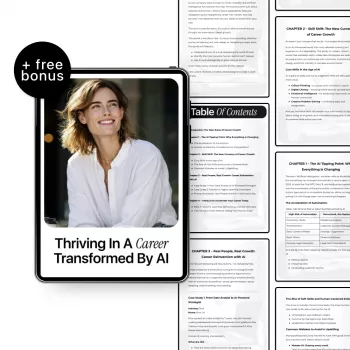
The safest path is to move toward work that’s harder to automate: complex judgment, relationship-building, leadership, hands-on skilled trades, and roles requiring accountability in messy real-world conditions. For a deeper breakdown of AI-resilient careers and practical ways to adapt, see this guide to AI-resilient careers.
FAQ
What jobs are most safe from AI automation?
Jobs that rely on human trust, nuanced judgment, and physical work in unpredictable environments tend to be safer. Examples include skilled trades, healthcare roles with direct patient care, leadership positions, and work centered on complex relationships or accountability.
Recommended for you


Calvin Klein Men’s Blue Jeans: Fit, Sizing & Care
Jun 26, 2026
AI-Proof Jobs by 2030: Roles Hard to Automate
Jun 26, 2026












Leave a comment